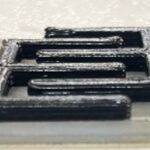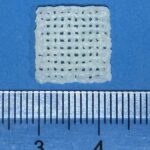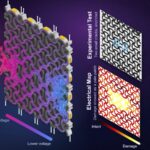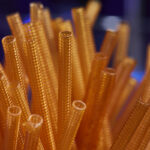

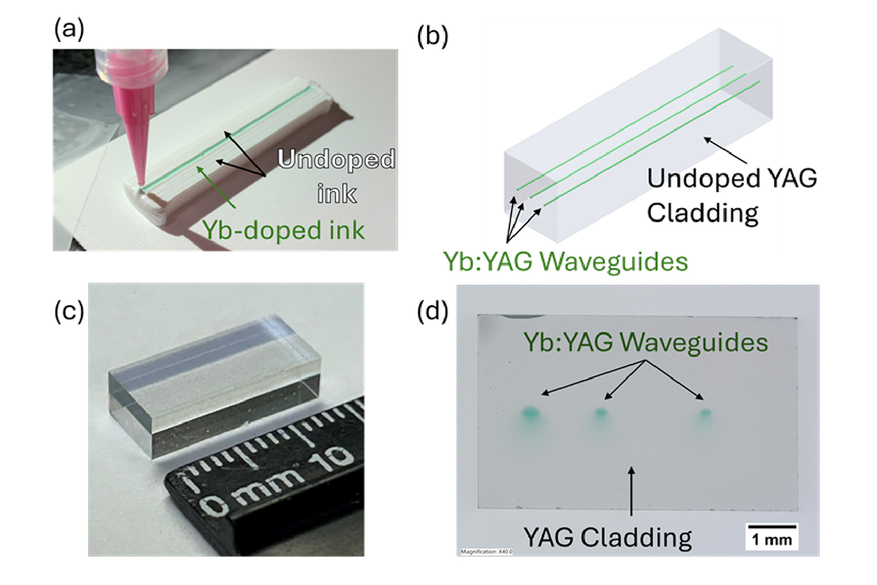
A Livermore team 3D-printed an all-ceramic waveguide by extruding ytterbium-doped yttrium aluminum garnet filaments within an undoped garnet matrix and then drying, sintering, and hot isostatically pressing it into a transparent ceramic.
Glass fiber lasers used in high-power defense systems typically rely on silica waveguides. A crystalline ceramic can tolerate higher power, dissipate heat more readily, and suppress instabilities, but earlier fabrication methods were cumbersome and often produced short or poor-quality guides.
LLNL scientist and author Ross Osborne described the power outlook for the printed architecture. “With further development, this crystalline architecture could enable more than a tenfold increase in output power over glass fibers while retaining a compact footprint,” Osborne said.
The team printed three waveguides in a single ceramic block and demonstrated high-efficiency laser performance. Forming core and cladding together as one structure improved fabrication yield and reduced defects at the interface. Channel waveguide lasers in the study were tested with the DEVCOM Army Research Laboratory in Maryland. The authors plan to scale output from hundreds of milliwatts to kilowatts.
The work was published in Optics Letters. Army funding supported the laser tests, and Laboratory Directed Research and Development supported the printing method.
Source: llnl.gov