
Cranfield University researchers have 3D printed natural rubber gloves by spraying latex onto a mould, a method meant to replace the long dipping lines glove factories use today.
Those lines dip the gloves into a series of baths and wait for each coat to dry. The work is slow, uses a lot of energy, and wastes material. Cranfield’s printer sprays natural rubber latex onto the mould and heats the glove from the inside and the outside at the same time, so the rubber vulcanises as it is made. The machine needs less floor space than a full production line and is easier to run for a small batch.
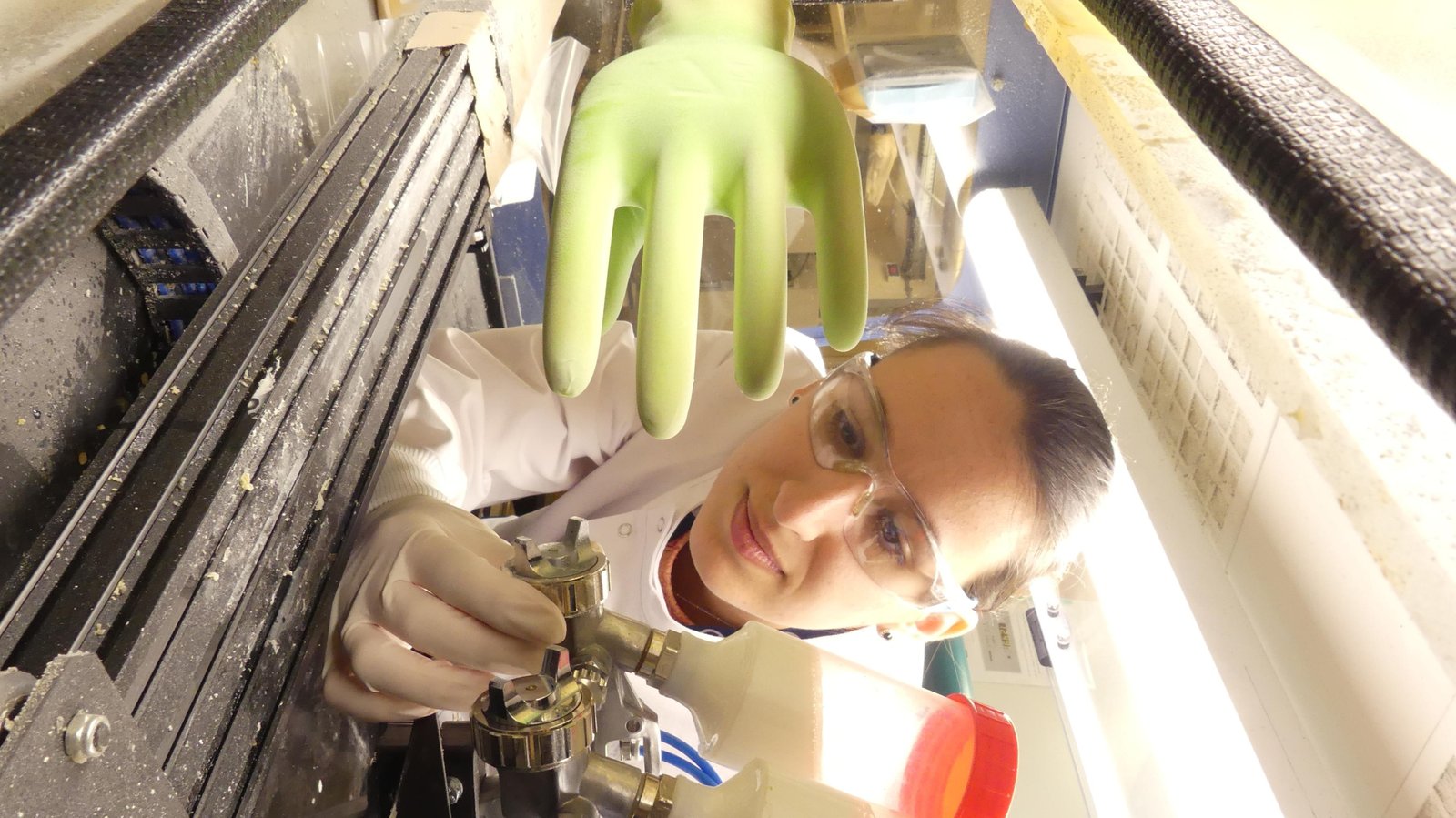
The printer is called 3D-PEP, short for 3D printer for elastomeric products. Cranfield developed the method with Meditech, a glove manufacturer. Spraying lets the team tailor the properties of a glove and choose the batch size, instead of committing to a long dipping run.
“This is a novel manufacturing technique we’ve been developing and refining for some time in conjunction with our partners Meditech,” said Eva Peláez-Álvarez, a research fellow in advanced materials at Cranfield University.
“Production is much more focused and customisable, and you can even scan people’s hands to make personalised gloves just for them,” she said. “On top of all that you can do it more sustainably with less material wastage.”
The material is natural rubber latex. Synthetic rubber gloves break down more than 100 times more slowly, and some need extra substances before they degrade at all. Natural rubber can break down in about a year. Billions of gloves are made worldwide each year, so that difference is a large volume of waste that does not have to sit in landfill.
Source: bedfordtoday.co.uk