
This Formnext 2026 recap starts with the headline: the show closed in Frankfurt on Friday 20 November with as many visitors as last year, fewer exhibitors and one hall less. On the floor the desktop brands made the most noise, with tool changers as the theme of the year and full-color printing arriving on the desk, while the industrial names sold throughput instead of novelty. Below are the numbers, what stood out, and what became of the launches in our preview.
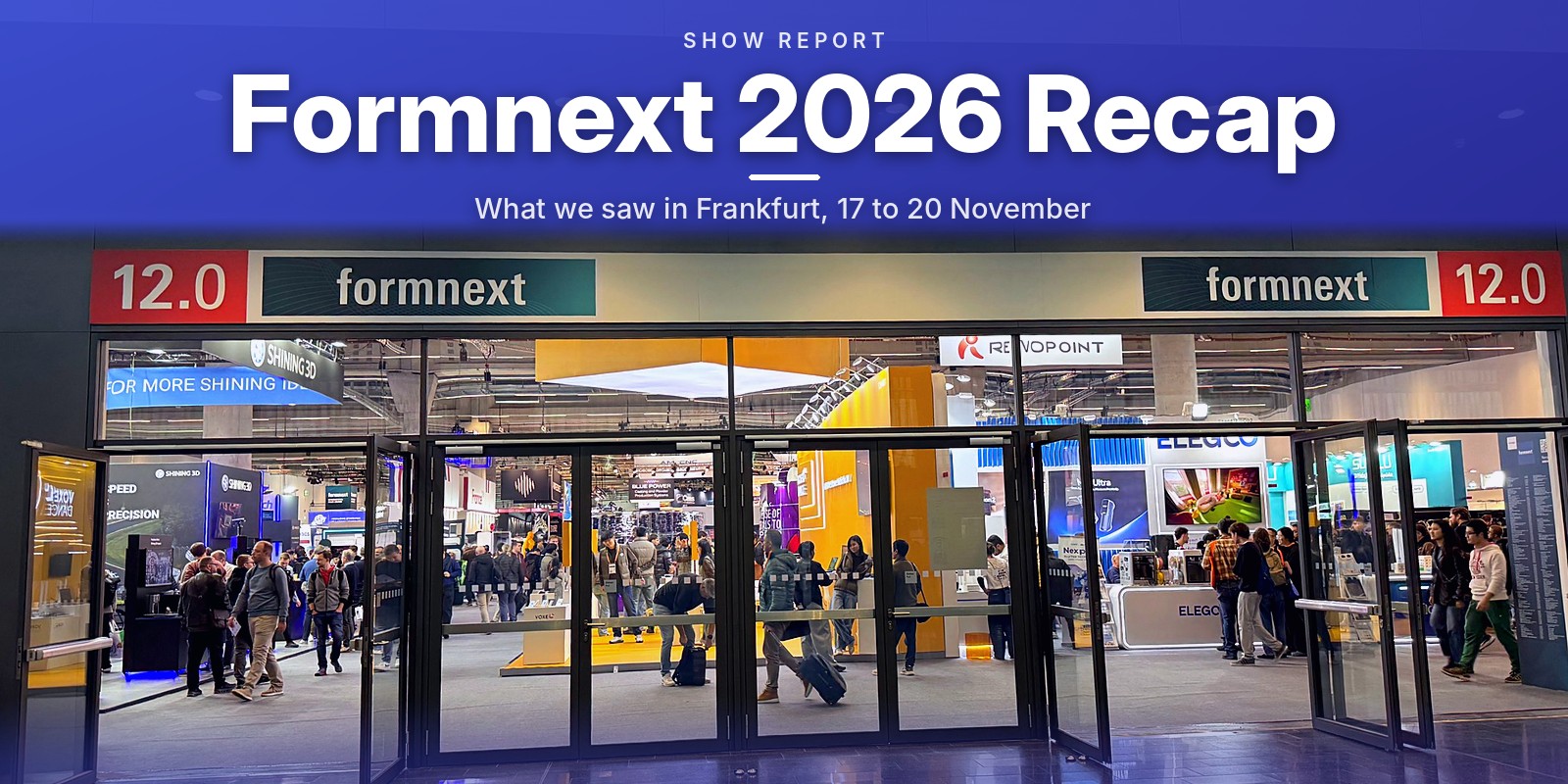
The entrance to Hall 12.0 at Formnext 2026. Photo: 3DPrinting.com
Formnext 2026 in numbers
Visitors: 38,477, of whom 47% came from outside Germany (2025: 38,282)
Exhibitors: 765, of whom 64% were international (2025: 804)
Floor space: about 47,000 square meters in three halls (2025: about 50,000)
Next edition: 26 to 29 October 2027, a one-time move to October
Source: final report by organizer Mesago.
A smaller show with the same crowd
The headline figures tell a story of consolidation. Visitor numbers were flat, up by 195 on last year, while the exhibitor list shrank by 39 companies and the show gave up a hall.
Mesago’s own reading is that the industry has moved from showing new technology to fitting it into existing production. Sascha F. Wenzler, Vice President Formnext, said in the final report that innovations are now judged on scalability, automation and measurable business value. That matched what we saw on the floor, where the largest orders announced during the week went to a few large suppliers. The hardware told the same story. Where earlier editions were a race for bigger build chambers and more lasers, this year’s machines were about cost per part and what happens between builds.
Three days on the floor
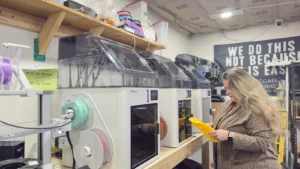
I spent three days in Frankfurt and spoke with around 40 companies. Formnext is still an industrial show first, but from the desktop and prosumer side four things stayed with me.
A good part of my time went to 3D scanning. I met scanner makers including Einstar, Revopoint, 3DMakerpro, Artec and Scanology, and even printer brands such as Elegoo are adding scanners now. I expect scan-to-print within one brand’s range to be a theme in 2027. AI modeling has arrived at a hardware show, and the tools are moving from generating a mesh to preparing something you can print.
The desktop brands did not come empty-handed either: Elegoo walked me through a full round of new products, and FibreSeek showed a continuous fiber printer. And everyone is looking across a border. European brands want a footing in the US, Asian trade shows want more European and American exhibitors, and Chinese companies are asking which Western outlets to work with.
What stood out on the desktop
Tool changers took over the desktop

The Bambu Lab H3C. Image: Bambu Lab
Swapping the tool instead of flushing the nozzle was the desktop theme of the year. Bambu Lab showed the nine-tool H3C (affiliate link), priced from $2,499, next to its first laser cutter, the R1 (affiliate link). They ranged from the eight-head Axiloop MC8 to machines with four to nine tools at Prusa, Snapmaker, Elegoo, Creality and Flashforge.
Two of them were new at the show. Elegoo’s surprise was the Centauri X Ultra, a tool changer with four print heads in the familiar 256 mm cube, due in the first quarter of 2027 and expected to cost under $1,000. Co Print, known for its multicolor upgrade kits, showed its first printer of its own, the four-head Quadro, from $649 on Kickstarter.
QIDI took a different route with the Q3D, a $599 dual-nozzle printer with a chamber heated to 70°C for engineering materials. Read our Q3D news and our H3C launch news.
Prusa went after print farms and secure sites
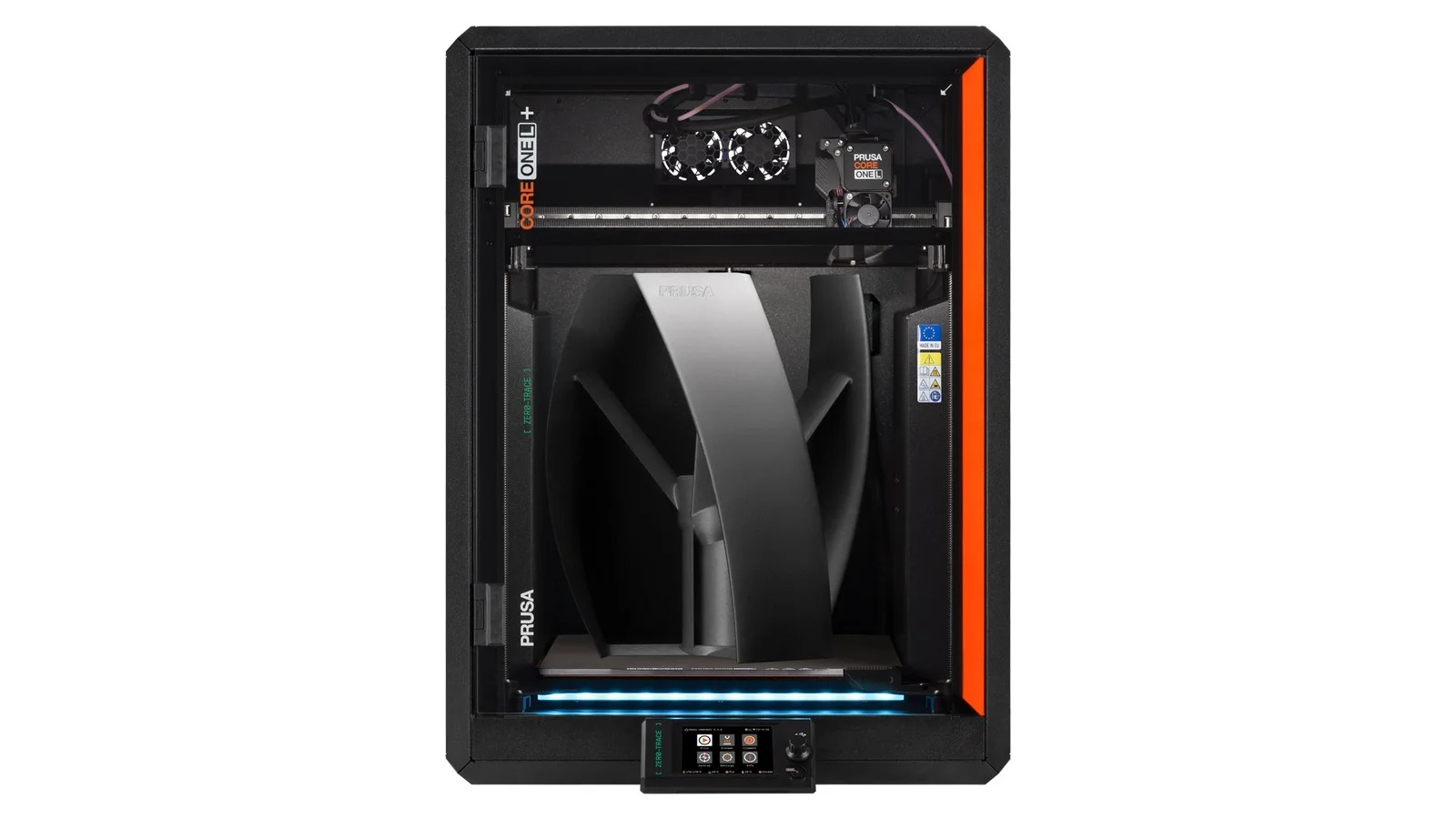
The Prusa CORE One L+ Zero-Trace. Image: Prusa Research
Prusa Research used the show for two professional announcements. The CORE One L+ Zero-Trace keeps no files once it is switched off, for defense and other sites where print data may not leave the room, with deliveries planned for January 2027. The second is a turnkey print farm that combines FDM and SLA printers with software, materials and training, built around the Prusa Pro AFS, a cell of nine printers served by a robotic arm. Read our news on the Zero-Trace and the print farm.
Full color reached the desk
Until this year full-color material jetting meant a machine the size of a wardrobe. At Formnext 2026 two desktop machines made the case that it now fits on a desk.
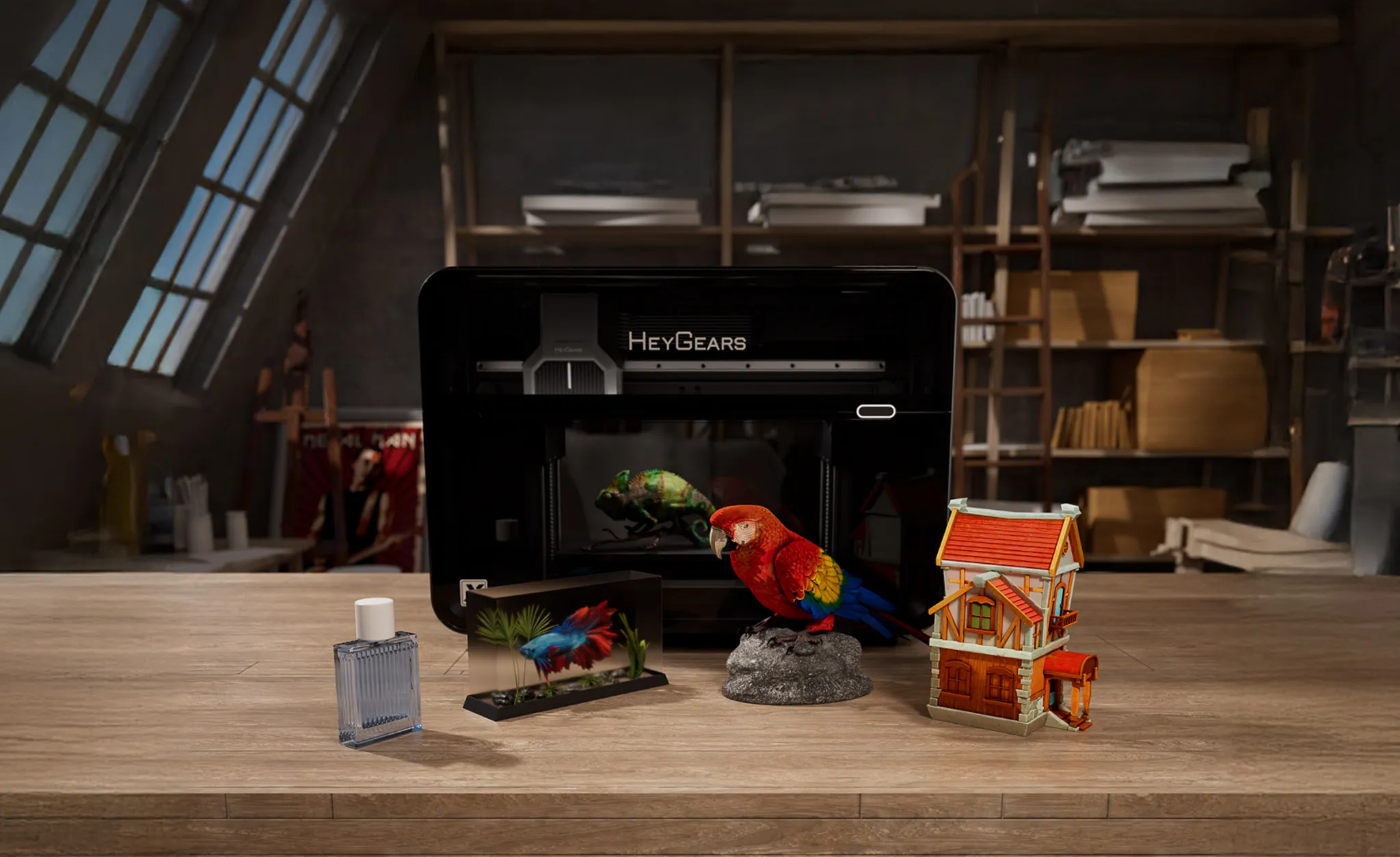
The HeyGears G1X. Image: HeyGears
HeyGears, better known for its Reflex resin printers, showed the G1X. It is a flatbed UV inkjet printer that builds full-color parts up to 150 mm tall with water-soluble supports, and it also prints raised textures and flat UV graphics. The Kickstarter closed in September at $17.7 million from nearly 4,000 backers, and the first deliveries are promised for December. The version that prints 3D parts, the Full-3D Pack, lists at $5,499.
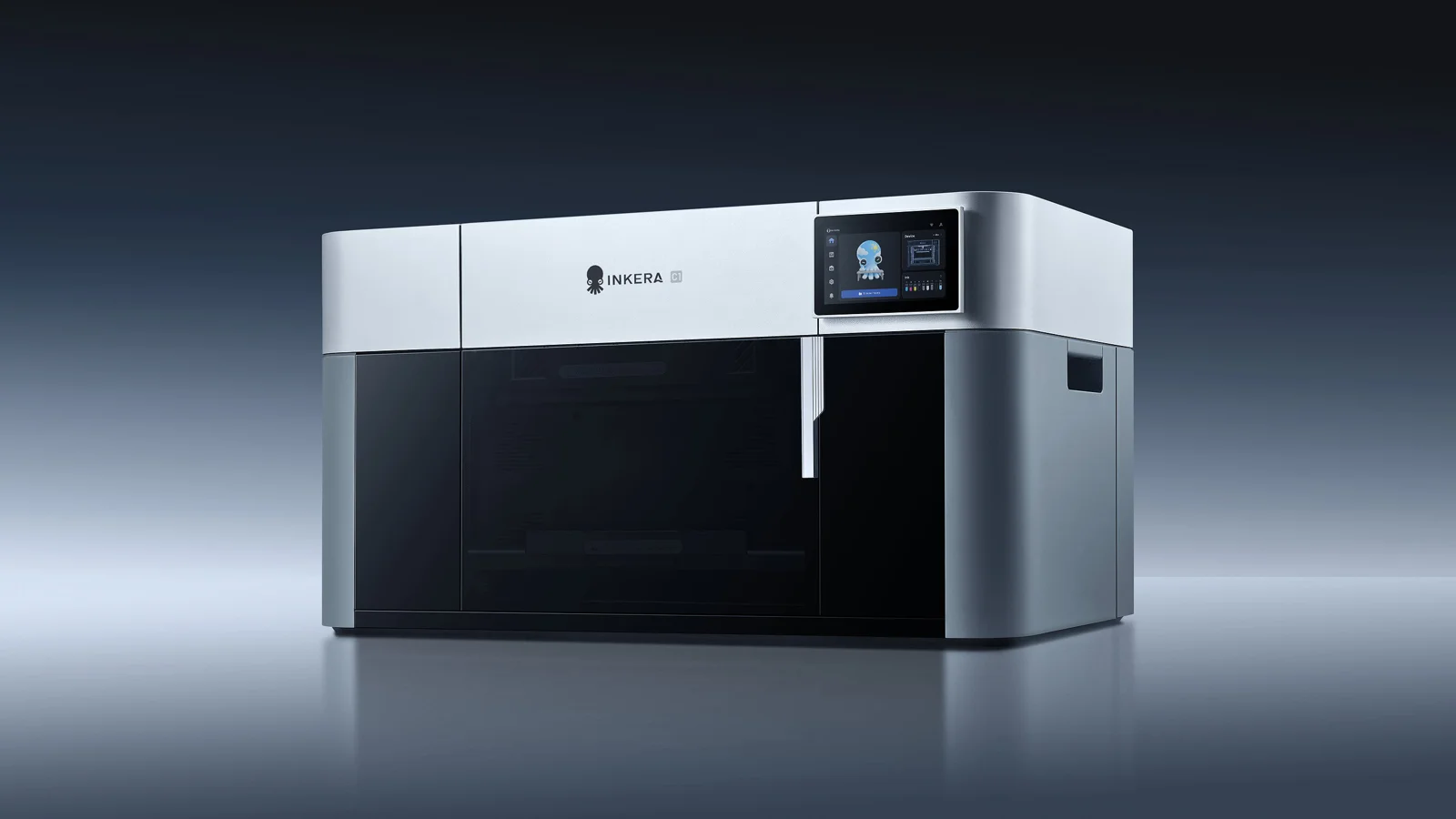
The Inkera C1. Image: Inkera
Newcomer Inkera showed its first printer, the C1, a desktop UV jetting machine with eight material channels, among them a spot-color channel for shades that are hard to mix, and a 200 x 150 x 120 mm build area. Supports dissolve in water. Sales are planned for the first quarter of 2027; a price has not been announced.
They were not alone. Flashforge showed the CJ270, its own desktop jetting machine with a launch price of $3,999, and newcomer Lynxel drew a crowd with the LynChrom LC1, a resin printer that adds inkjet color to the surface of a part as it prints, headed for Kickstarter in December. At the industrial end, Mimaki announced the 3DUJ-553MkII with a wider color gamut and a cheaper infill ink.
One caution: these printers use inkjet heads, and replacing one is not cheap. Read our news on the Inkera C1 and the Mimaki 3DUJ-553MkII, or our guide to full-color 3D printers.
AI modeling arrived, and not everyone was convinced
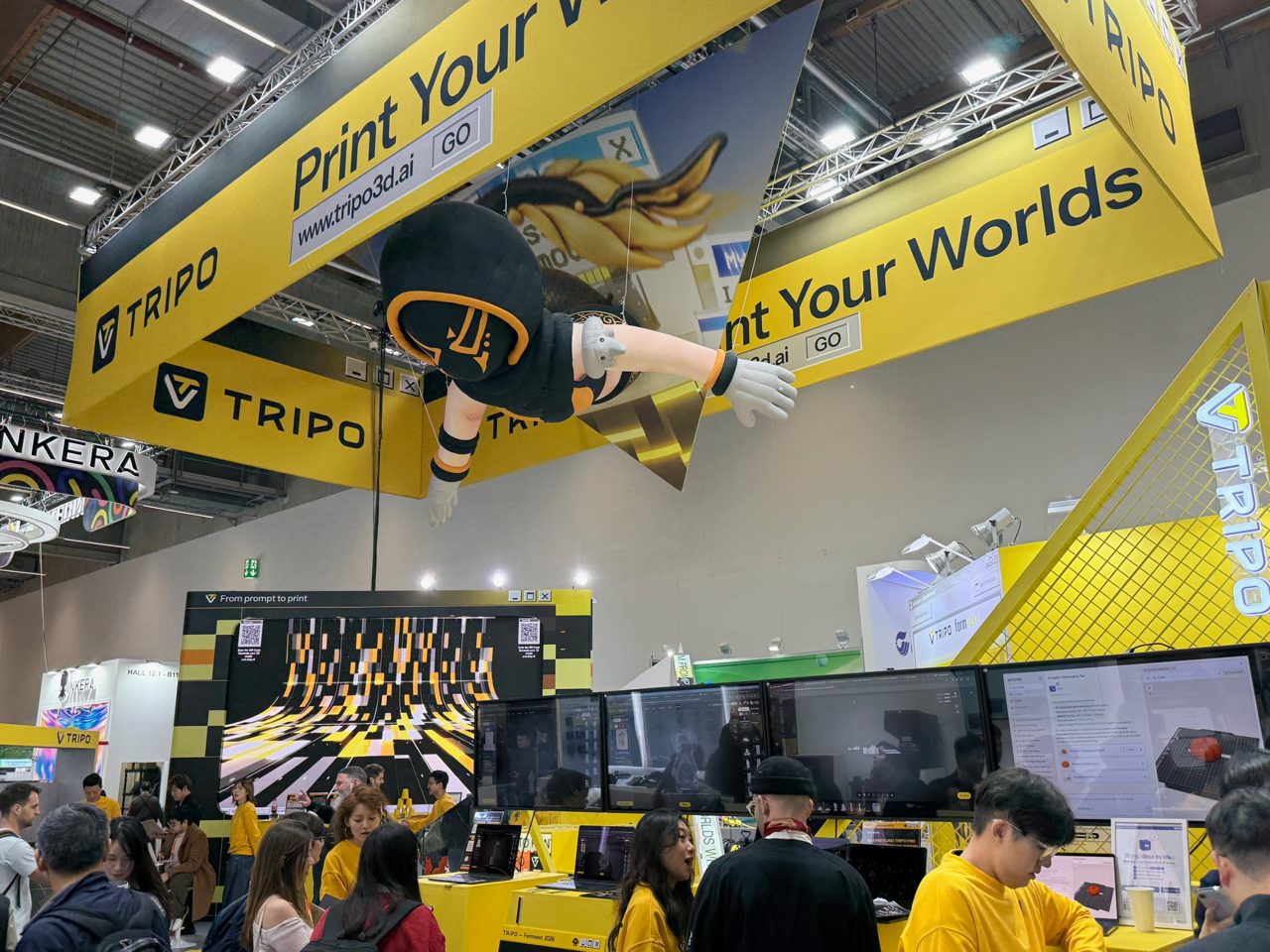
The Tripo AI booth in Hall 12.1. Photo: 3DPrinting.com
AI model generators had some of the more prominent booths in Hall 12.1. Tripo previewed H3.5, its next generation model, and Polipop, an agent that takes an idea from model to print job. Anycubic showed its AnyLab AI creation tool next to Thingiverse models, and Siemens demonstrated an agentic workflow that designs printed robot grippers from a prompt. BCN3D went furthest on the hardware side with the Aurora, an industrial printer with an AI interface that turns a spoken description of a part into an editable model.
The reception was mixed. Skeptics doubt that the many AI design start-ups will all survive, and see more use for AI in process settings, simulation, print monitoring and scan cleanup than in designing the model itself. Our own position is in our guide to AI 3D model generators. Read our news on Tripo H3.5 and Polipop and on Anycubic and Thingiverse. Our interview with Tripo, recorded at the stand, follows later this week.
Meshy: AI models that fit a real assembly

Trophy toppers created with Meshy, each designed to fit the same connection point on its base. Image: Meshy
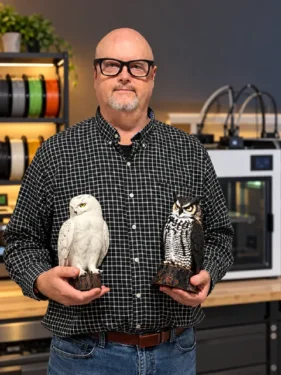
Meshy shared a stand with Co Print and used it to answer the usual objection to AI models, that they look good and fit nothing. Its 3D Agent and API generated the organic shapes, an AI assistant then drove Blender to add dimensions, mounting points and splits, and the results were printed in multicolor on Co Print’s four-toolhead Quadro: trophy toppers that share one connector, furniture knobs with standard mounting dimensions and grip concepts. Jessie Bergau of Meshy also sat on the panel “From Hype to Factory Floor: How AI is Transforming Additive Manufacturing” on Wednesday.
At the stand I also saw a live demo of Meshy Agent for Desktop, the desktop version of its 3D agent, which is currently in beta. We shared it on our social channels during the show.
Meshy’s library of free, print-tested 3D files is released under CC0. Try Meshy (affiliate link).
Scanners went wireless
Wireless operation and onboard processing, once reserved for professional scanners, reached the maker price range. Revopoint opened the Kickstarter for the standalone MIRACO 2 during the show, and 3DMakerpro showed the Owl, a tripod LiDAR scanner for rooms and buildings. At the professional end, Artec gave its Neo a European premiere. Read our news on the MIRACO 2, or our guide to 3D scanning with your phone.
Einstar EZ GO: the scanner that clips to a phone

The Einstar EZ GO. Image: Einstar
Formnext was the first European show for the Einstar EZ GO, launched on 11 November. The scanner is split into a compact scanning unit and a battery grip and runs wirelessly from a phone, a tablet or a PC, with eye-safe laser lines or infrared light and cloud processing for 3D Gaussian Splatting. It costs $999 or €999, with a launch price of $899 or €899 until 11 December.
At the Shining 3D stand the EZ GO drew a steady crowd during my visit on Wednesday afternoon, which we shared on our social channels the same day.
More on the Einstar EZ GO product page (affiliate link).
Pellets and a filament that bends
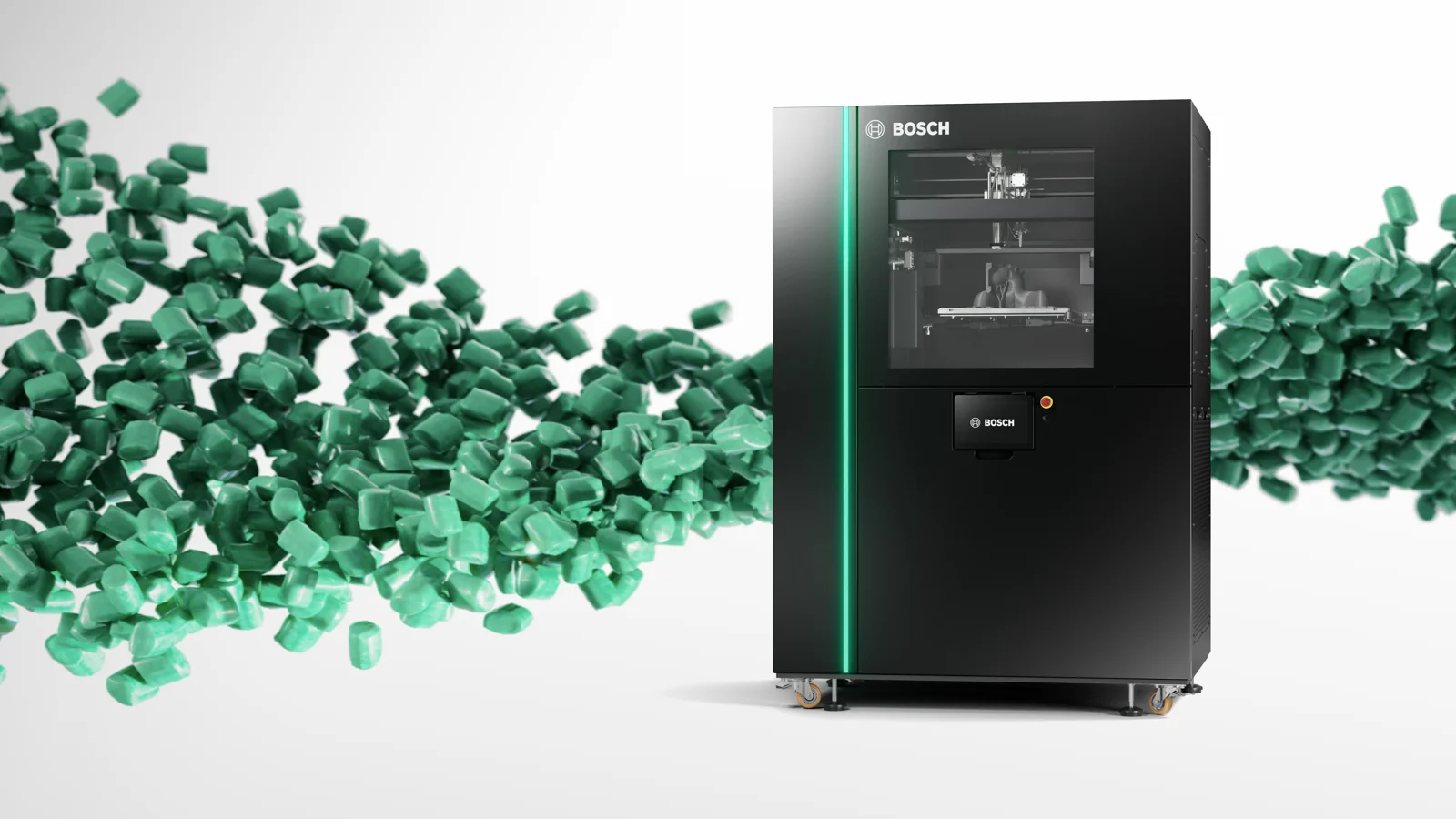
The second-generation Bosch Pellet Printer. Image: Bosch
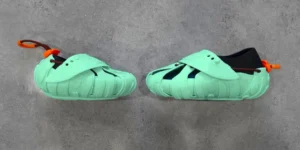
Pellet extrusion kept moving down in size and price. Bosch showed the second generation of its Pellet Printer, Peopoly brought the Giga 800 and BigRep the PELLEX 750, and Polymaker demonstrated CymphoniK, which mixes custom colors from six base pellets. The embargoed second Polymaker launch from our preview turned out to be G-Flex PETG, a blend of PETG and TPU at $21.99 per kilo that is meant to bend where ordinary PETG snaps. Read our news on the Bosch Pellet Printer and G-Flex PETG.
The industrial side: throughput over novelty
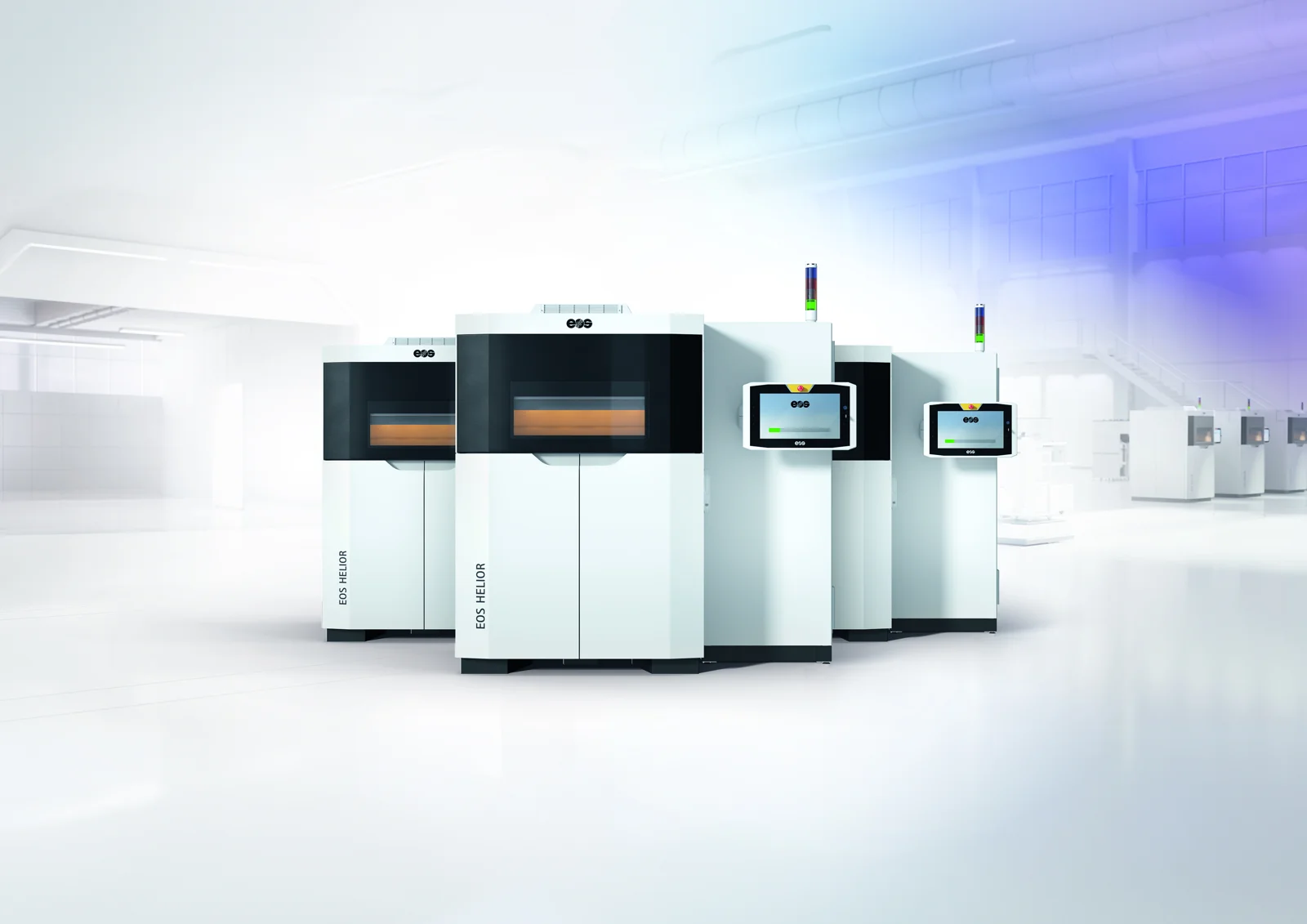
The EOS HELIOR. Image: EOS
The three reveals scheduled for the first day all turned out to be production machines.
- EOS HELIOR is a large-format SLS platform with three 70 W lasers and a 700 x 380 x 580 mm build volume, available from December. Read our HELIOR news.
- Stratasys H550 is a SAF powder bed machine with a 34.2-liter build volume, 80% more than the H350 in the same footprint, due in the second quarter of 2027. Read our H550 news.
- Nikon SLM Solutions MACHX is a family of three metal printers with up to 8 kW of laser power and a job change in as little as 25 minutes. Read our MACHX news.
None of the three came with a list price. The orders said more than the spec sheets: VulcanForms ordered 200 EOS M4 ONYX metal printers, the largest single order in EOS history, and Stark Future ordered several Farsoon FS4X systems for a series production line. Read our news on the VulcanForms order and the Stark Future order.
Two other threads ran through the industrial halls. Defense was hard to miss, from the first Formnext Defence Summit to Prusa’s air-gapped printers, although how long that spending will last is an open question. And Chinese manufacturers of metal powder bed machines were out in force, with Farsoon and Eplus3D launching large multi-laser systems of their own.
The opposite trend was just as visible: industrial processes at entry-level prices. Admatec’s desktop ceramic printer, the Admaflex Discovery, is priced at €75,000 and 3DCeram’s CLP50 starts at €80,000, both well under what a ceramic machine used to cost. SnowX drew crowds with the SnowPod, a benchtop metal powder bed printer with a launch price of about $5,300, though questions remain about handling metal powder safely in a small workshop.
What became of the launches in our preview
Our Formnext 2026 preview listed several reveals that were still under wraps. This is how they turned out.
Formnext Awards 2026
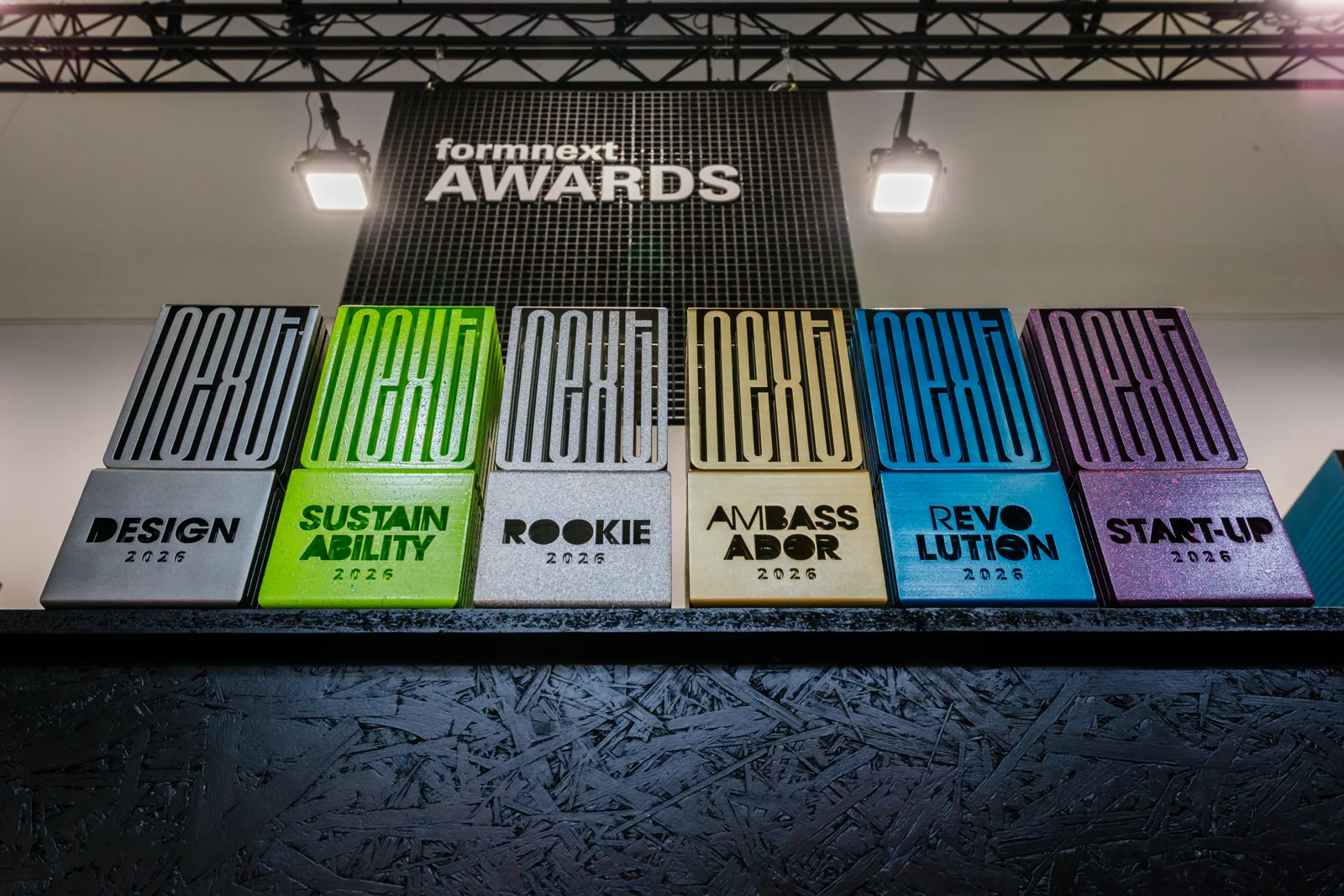
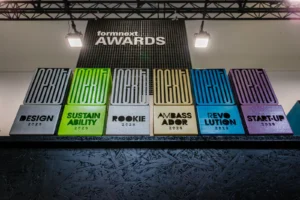
The Formnext Awards 2026 trophies. Image: Formnext
The awards went to work around the printer more than to printers. FlexCycle Solutions won the Sustainability award for copper powder recovered from electronic waste, Thought3D the (R)Evolution award for Drywise, which dries filament on its way to the nozzle, and sallea the Start-up award for wash-out tooling. Maya Kaplan took the Design award for a bra printed in one piece from TPU on a desktop printer, cAIclone the Rookie award and Michael Kraemer of TU Darmstadt the AMbassador award. Read our awards news.
All our Formnext 2026 coverage
- Formnext 2026 preview: what to see in Frankfurt
- EOS unveils HELIOR
- Stratasys unveils the H550
- Nikon SLM Solutions launches MACHX
- VulcanForms orders 200 EOS M4 ONYX printers
- Stark Future orders Farsoon FS4X printers
- 3D Systems unveils the MJP 300
- Eplus3D launches the EP-M550L
- Oqton launches MOS 2.0
- Prusa introduces the CORE One L+ Zero-Trace
- Prusa introduces a turnkey 3D printing farm
- QIDI launches the Q3D
- Anycubic shows Thingiverse models and AnyLab AI
- Inkera brings full-color jetting to the desktop
- Mimaki announces the 3DUJ-553MkII
- Tripo AI previews H3.5 and Polipop
- Siemens demonstrates an agentic AI workflow for printed grippers
- Fraunhofer IGD brings shape dithering to Formnext
- Bosch debuts its second-generation Pellet Printer
- Polymaker launches G-Flex PETG
- Raise3D raises the RMS220 build height
- Revopoint MIRACO 2 launches on Kickstarter
- Formnext Awards 2026 winners
Formnext 2027 moves to October
The next Formnext runs from 26 to 29 October 2027 in Frankfurt, eleven months after this one. Mesago calls the October date a one-time move. We will be there again.
Figures are from the organizer’s final report of 20 November 2026. Product details come from the manufacturers’ announcements, our own reporting and other reports from the show.
Disclosure: the Meshy and Einstar EZ GO entries are sponsored placements, paid for by the exhibitors. All other coverage was selected by our editors. This page contains affiliate links; if you buy through one, we may earn a commission at no extra cost to you.