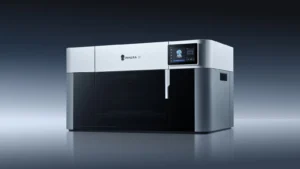

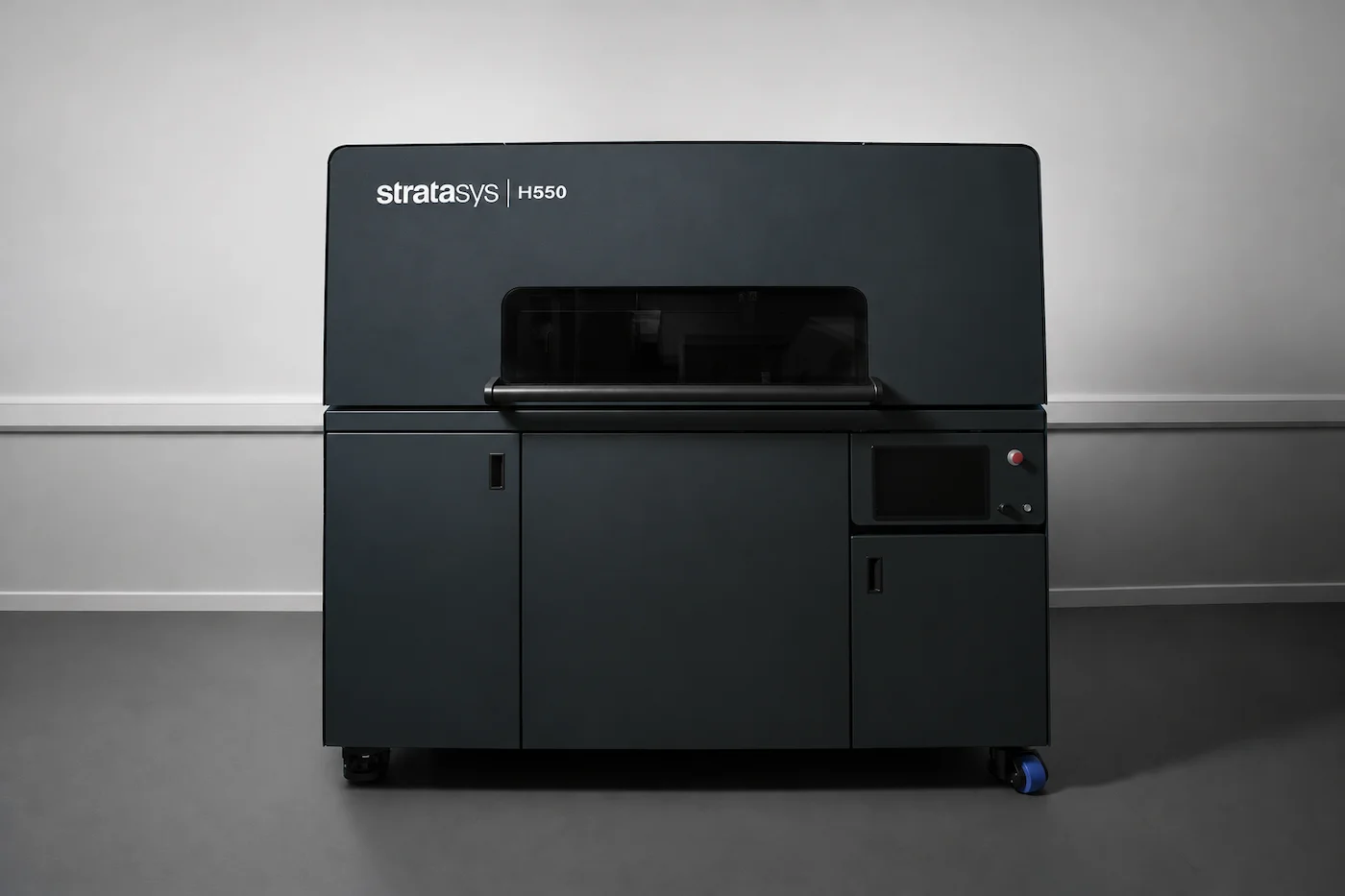
Stratasys has unveiled the H550 at Formnext 2026, a larger SAF powder bed fusion 3D printer aimed at producing final parts.
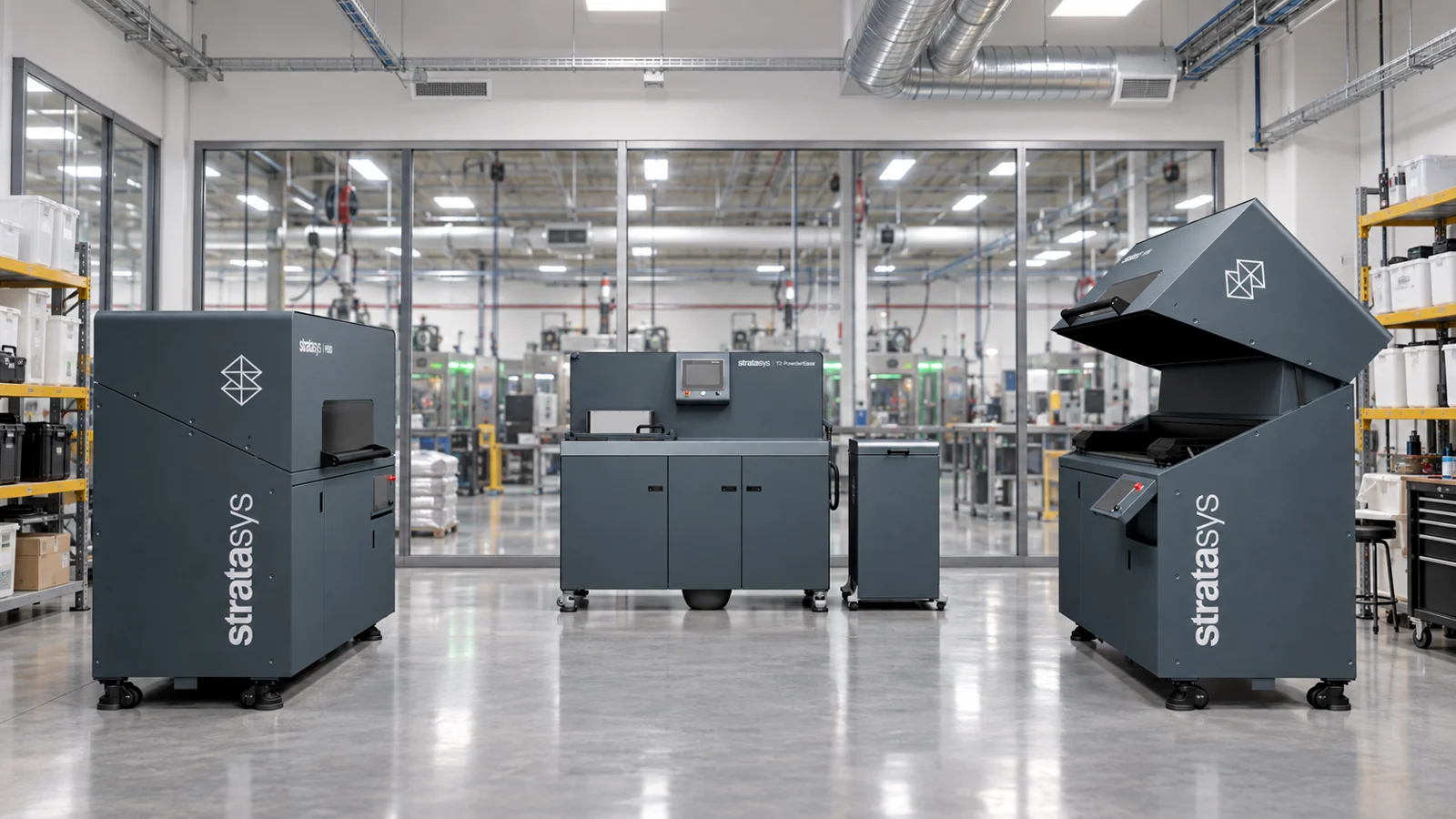
In SAF, Stratasys’ own form of powder bed fusion, industrial printheads apply a fusing fluid onto a bed of plastic powder. An infrared lamp then fuses the treated particles layer by layer, because the fluid makes them absorb more heat. The H550 joins the existing H350 and doubles its build capacity.
That extra room is the main change. The H550 has a 34.2-liter build volume with a 450mm long axis, 20% longer than the leading comparable print-and-fuse system. Such systems print a liquid onto powder and then fuse it with heat. As a result, the H550 can produce larger single parts such as UAV (drone) components, end-of-arm tooling for robots, medical devices, automotive components, manifolds and ducts.
Cost is the other half of the pitch. The H550 is designed to deliver up to 30% lower total cost of ownership than any comparable print-and-fuse system. It should also turn out finished parts faster than comparable SLS (selective laser sintering) systems, and it needs less infrastructure and a smaller production footprint.
“Manufacturers choosing a production system are making decisions that will shape their operations for years,” said Rich Garrity, Chief Business Unit Officer at Stratasys. “Before committing to their next powder bed fusion investment, they should see what the H550 can do. It brings greater capacity, larger parts and more attractive production economics designed to scale, so more applications can move onto the factory floor.”
Because powder handling still takes manual work, Stratasys is also unveiling PowderEase T2. The station automates breakout, which means digging the finished parts out of the powder, along with powder retrieval, sieving and dosing. One T2 can serve up to six H550 printers when they run the same material, and the workflow needs under 30 minutes of operator time per build.
Neil Hopkinson, who invented the technology behind SAF and is VP SAF at Stratasys, sums up the case. “Longer parts than other print-and-fuse systems, faster than SLS, and at a lower total cost of ownership,” he said. “With the H550, SAF is designed to give manufacturers a production system that provides the best available combination of part size, throughput and economics.”
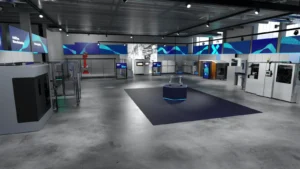
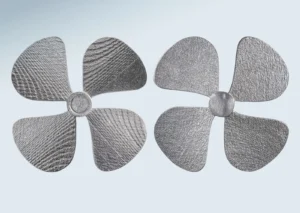
Pre-orders for the H550 open today, and commercial availability is planned for the second quarter of 2027. Until November 20, visitors can see both systems at Formnext in Frankfurt in Hall 12.1, booth D129, along with production parts that use the larger build space.
Source: Stratasys