
A Yorkshire horse hospital is set to become the first in the UK to fuse horses’ neck bones using a 3D printed titanium implant.
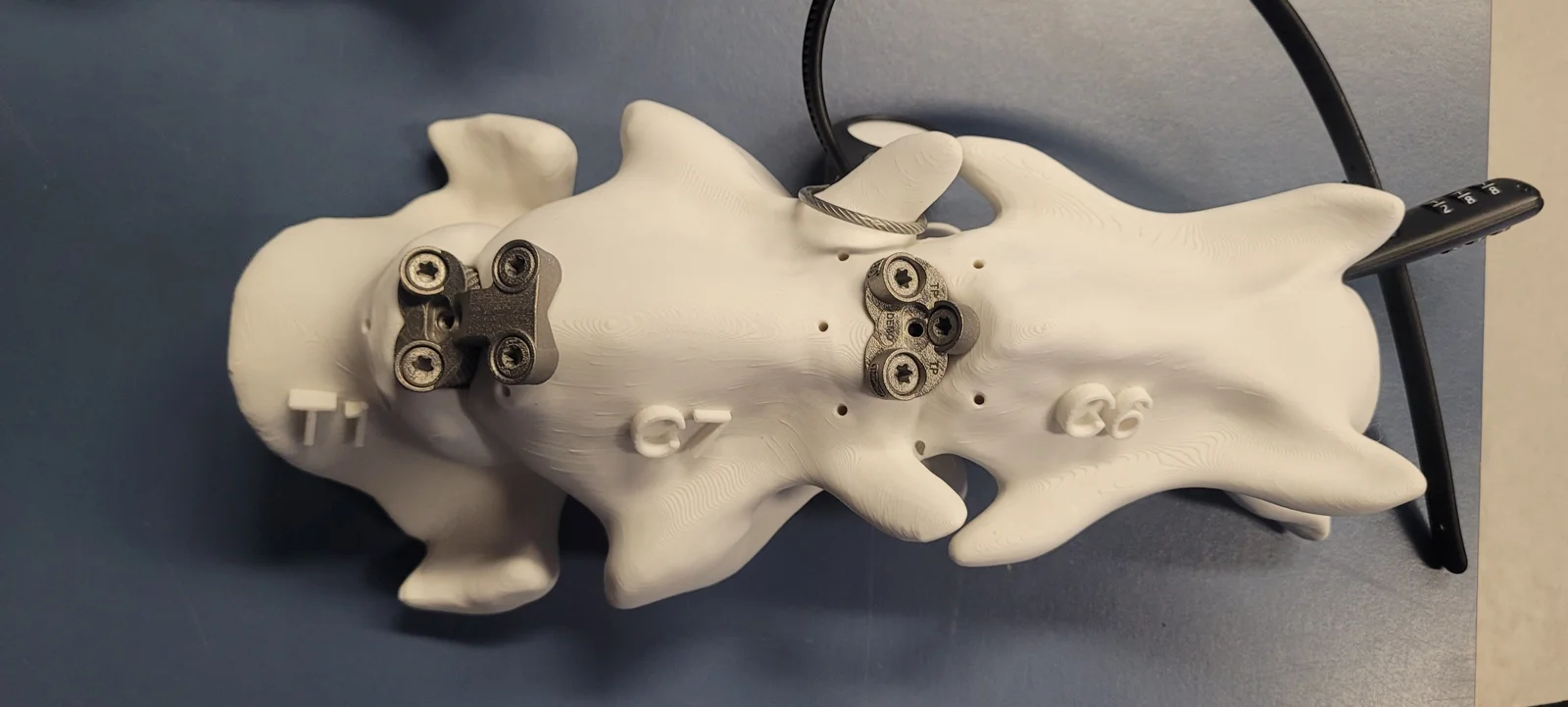
The new implant is meant for horses with wobbler syndrome, a condition in which the spinal cord in the neck is squeezed between two vertebrae. Because of that pressure, nerve signals cannot travel properly from the brain to the legs, so affected horses become uncoordinated and may trip, stumble or fall without warning. Many are put down because they could injure themselves or the people around them. Jonathan Anderson, an equine surgeon and clinical director at Rainbow Equine Hospital in Malton, compares it to a kink in a bike chain. The two links that form the kink have to be straightened so they no longer press on the nerves.
Rainbow, which is part of the vet-led group VetPartners, is one of just a handful of veterinary centers worldwide that perform this corrective surgery. Known as cervical arthrodesis, it fuses neighboring vertebrae so the spinal cord is no longer pinched when the horse bends or stretches its neck. Since 2010, the team has done this by drilling out the disc between two vertebrae and screwing in a perforated titanium cylinder. Bone grows through the holes in the cylinder, which over time turns the two bones into one. With this method, showjumpers, dressage horses, racehorses and leisure horses have been ridden again, and some have returned to competition.
The new technique keeps that principle but changes the hardware. Instead of a cylinder, a 3D printed titanium cage is placed into the disc space and then screwed into the vertebrae on either side with custom-made titanium locking screws. The cage does the same job as the cylinder, although it is thought to provide greater stability. VetPartners has paid for new surgical equipment as well as custom-made 3D printed guides and implants for the Rainbow team.
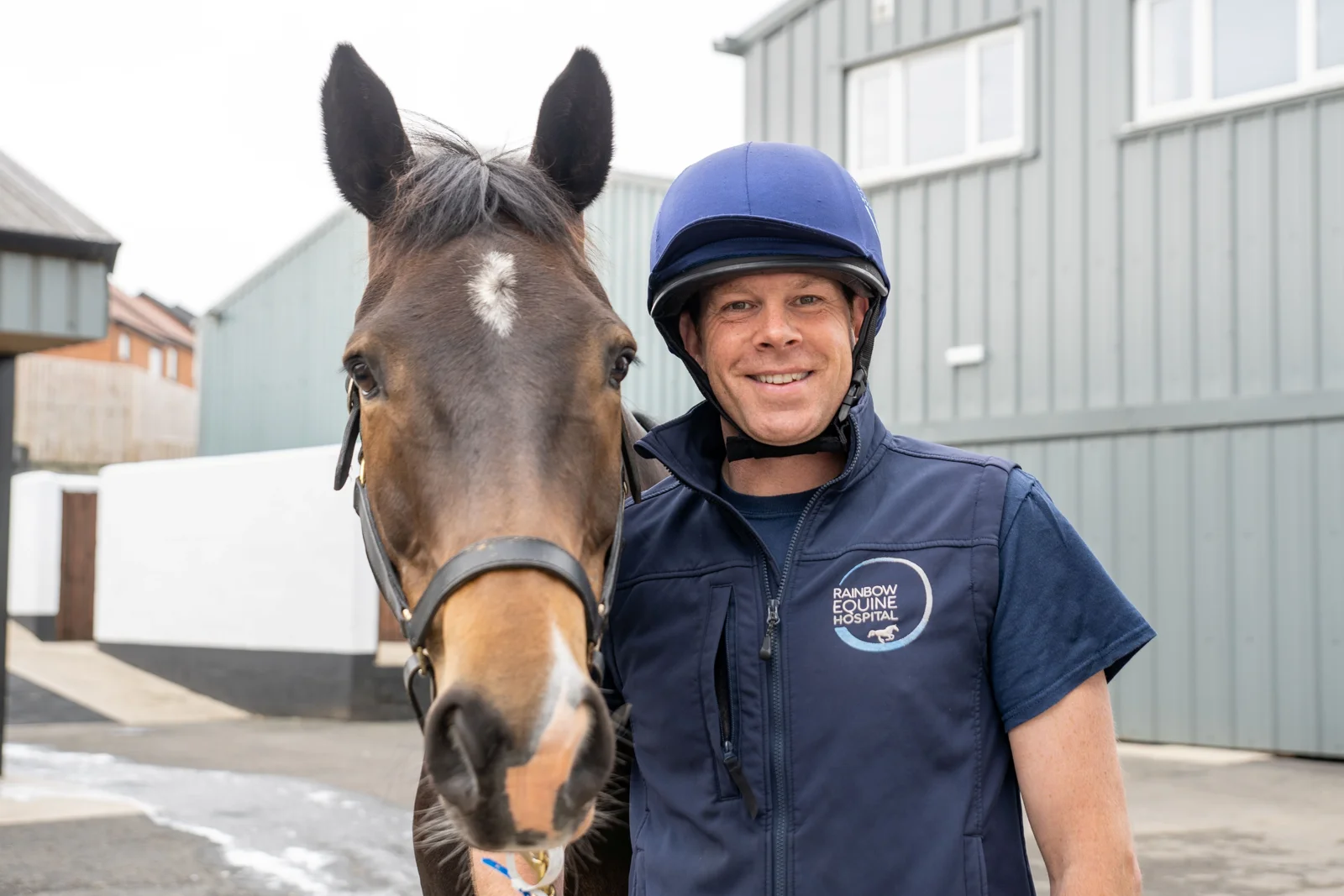
Anderson has performed wobbler surgery for over 15 years, and he spent 18 months training in the new technique, which included shadowing surgeons in the US. Surgeries there and in France have had positive outcomes, so he expects the cage “will create a stronger, more stable repair that will lower the risk of complications.” At the moment, horses need six to nine months of recovery and rehabilitation before they return to ridden work. “The new implant has the potential to reduce this by several months,” he said.
For Anderson, the bigger goal is giving more horses an alternative to euthanasia. “Many owners and even many vets may not be aware of what can currently be done to help wobblers,” he said. Rainbow already receives neck cases from across the UK and Ireland. Together with foraminotomy, a recently added operation that relieves pressure on spinal nerves, the new technique strengthens the hospital’s work on neck problems in horses.
Source: VetPartners