
Maritime standards group ABS and Virginia company Radian Forge will test whether data recorded during metal 3D printing can help approve printed parts.
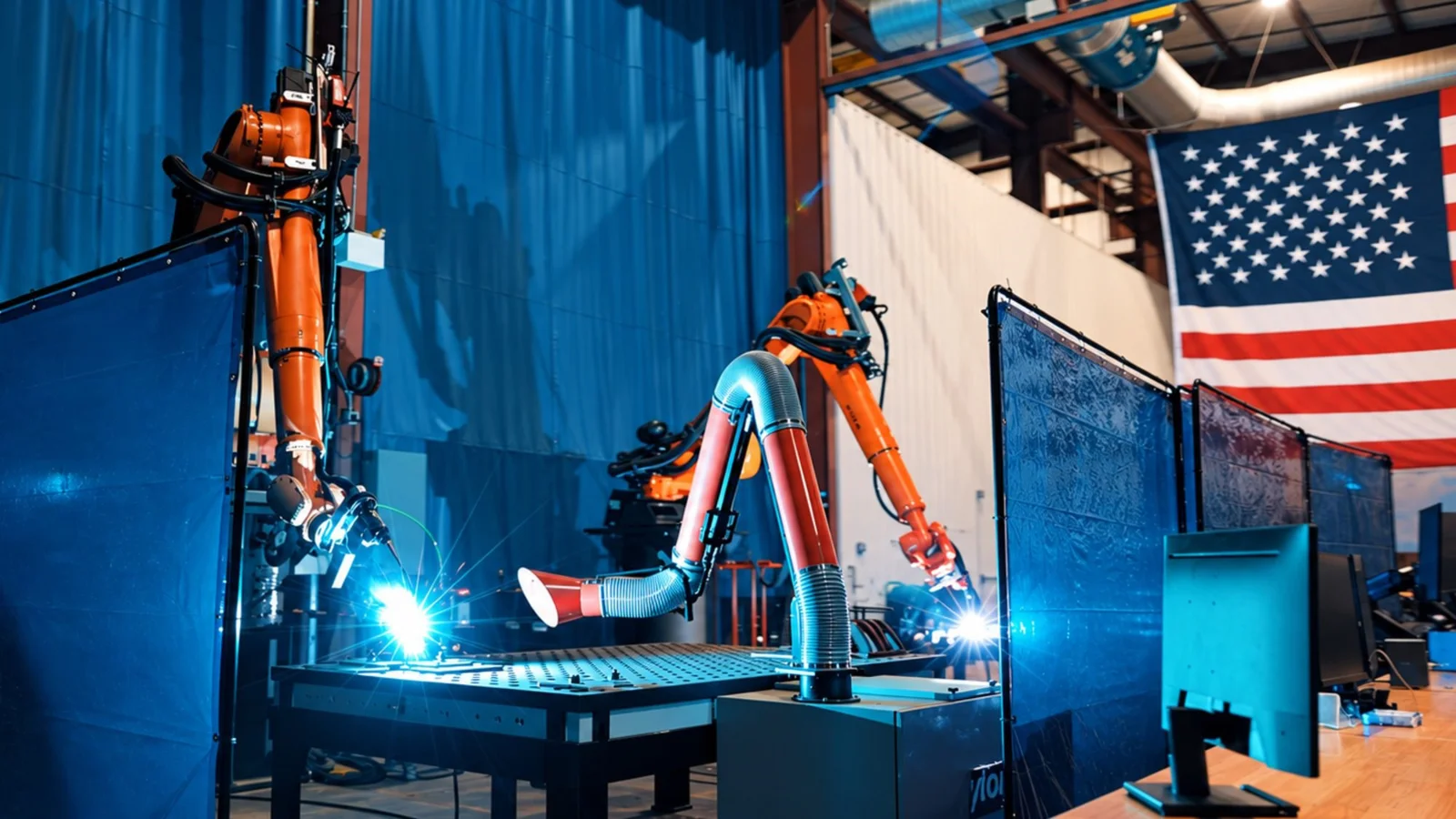
The two have signed a joint development project focused on wire arc additive manufacturing (WAAM). In this process, a robot melts metal welding wire with an electric arc and builds a part up bead by bead. Radian Forge, which is based in Portsmouth, Virginia, runs its shop inside an active shipyard and uses WAAM to make critical metal parts for America’s maritime and defense industrial base.
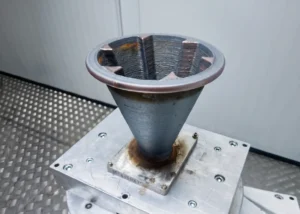
The maritime industry is looking at 3D printing because some parts are hard to get and slow to produce. As Radian Forge sees it, traditional casting and forging capacity is stretched, so critical parts face long lead times and obsolete ones are getting harder to replace. Radian Forge prints valve bodies, flanges and seawater fittings in copper nickel and pump impellers in nickel aluminum bronze. It also works in steel, stainless steel and nickel alloys such as 625. Its parts are printed close to final shape and then machined to the drawing.
A part only goes on a ship once it has been qualified, though, which means proving it will perform as required. That is where ABS comes in. As a classification society, it sets technical rules for ships and offshore structures and checks that they meet them, which it has done for over 160 years. The project will examine whether process settings, real-time sensor data, inspection records and material test results together give a reliable basis for checking WAAM parts.
Under the agreement, Radian Forge will make test components, collect manufacturing and sensor data, and run the relevant tests. ABS will then review the work independently, evaluate the results and assess whether the proposed method could be applied more widely.
“Digital qualification has an important role to play in the adoption of additive manufacturing across the marine and offshore sectors,” said Michael Kei, ABS Vice President, Technology. He added that the aim is to improve “how qualification evidence is generated, evaluated and traced.”
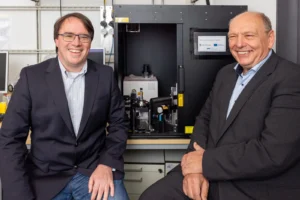
Radian Forge already records each build layer by layer, including arc data, temperatures, camera footage and non-destructive test results tied to the part. For CEO Jeff Yeager, the project is about building confidence in that kind of process. “Traditional manufacturing timelines can create significant challenges when critical components are needed,” he said. “Partnering with ABS gives us an opportunity to rigorously evaluate how process data and material performance can support that objective.”
ABS already publishes its own Requirements for Additive Manufacturing, which set out how the technology can be used in the maritime industry.
Source: ABS