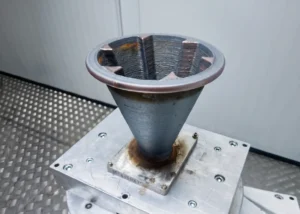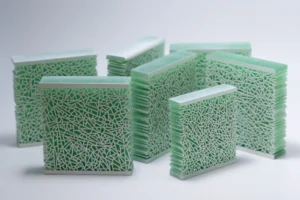

Two researchers at the University of Freiburg have won €10 million in EU funding to 3D print commercially available plastics with light.
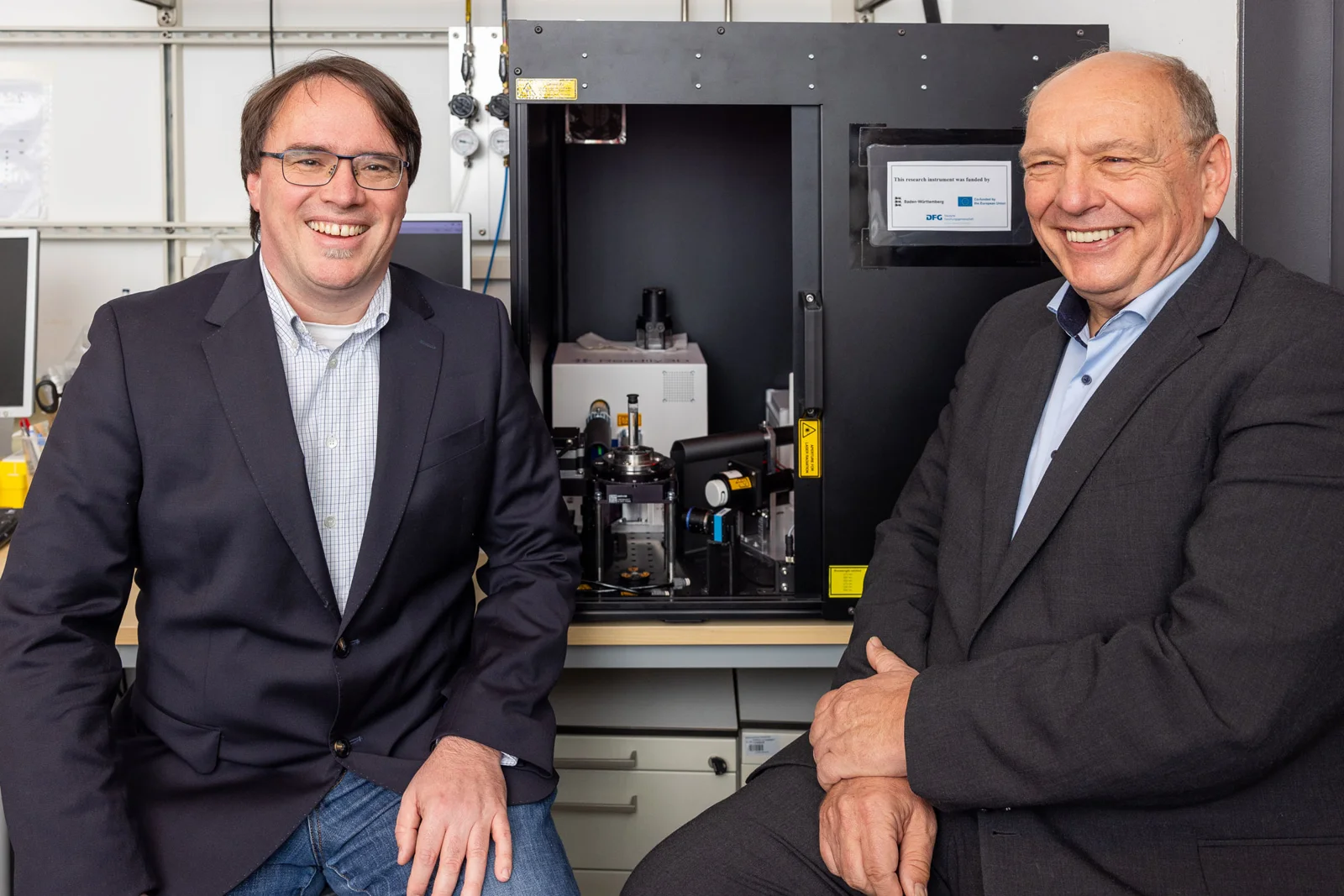
The money comes as a Synergy Grant from the European Research Council (ERC) for CHiC2PRINT. That is a joint project by Bastian Rapp, professor for process technology, and Jürgen Rühe, professor for the chemistry and physics of interfaces. The funding runs for six years. The ERC gives these grants to interdisciplinary teams whose work is expected to produce highly innovative results. Competition is tough, since only 48 of more than 950 proposals were selected this year.
The project starts from a familiar trade-off. Injection molding, where molten plastic is pressed into a mold, turns out robust plastic products cheaply, but it struggles with complex shapes. 3D printing allows virtually limitless geometries, yet it often needs special materials or expensive processes. Rapp, Rühe and their international team want to get past both limits.
“We’re in the process of writing a new chapter of 3D printing technology,” said Rapp. “Soon it will be possible to produce objects in established plastic systems much faster than is currently possible with injection moulding.”
Their route is volumetric printing. Unlike most 3D printing, it does not build an object up layer by layer. Instead, light creates complex structures directly inside an existing plastic object. To make that work with commercial plastics, the team adds a trick from photochemistry that makes them sensitive to light. In the long term, this could lead to parts whose shape and properties can be tuned precisely, for example with different degrees of strength within a single workpiece.
Recycling is the other half of the plan. Most 3D printed objects cannot be recycled today, so they end up burned or in landfills. In CHiC2PRINT, objects are meant to come apart into their individual components at the end of their life, a step the team calls debonding. That way, the original plastics can be recovered and processed again.
In Rühe’s words, the printing technology “sounds almost like science fiction.” Paired with new ways to make many materials printable and more sustainable, it “could revolutionize the entire field of plastics processing.”
Both researchers work at the university’s Department of Microsystems Engineering (IMTEK). Rapp is managing director of the Freiburg Materials Research Center and co-founded the spin-off Glassomer, which offers 3D printing for glass. He received an ERC Consolidator Grant in 2019. Rühe heads the Freiburg Center for Interactive Materials and Bioinspired Technologies and is spokesperson of the livMatS Cluster of Excellence, which studies adaptive materials systems.
Source: University of Freiburg