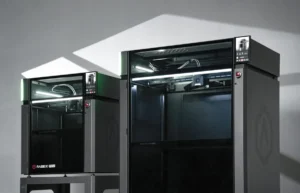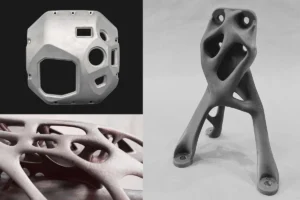

SINTX Technologies has completed the buildout of its 3D printing facility and received EXT-220 MED medical-grade printers for its silicon nitride and PEEK implant platform.
The idea is to give PEEK implants some of the biology of a ceramic. PEEK became an established orthopedic implant material thanks to its design flexibility, radiolucency and structural properties. Silicon nitride, by contrast, is a bioactive ceramic that has shown antibacterial and osteogenic properties in laboratory studies. SINTX’s SiN/PEEK composite is meant to combine the two, so a patient-specific printed implant could gain those biological traits without giving up PEEK’s strengths.
Headquartered in Salt Lake City, SINTX develops and manufactures silicon nitride biomaterials and devices, and its portfolio already includes the FDA-cleared SiNAPTIC Foot & Ankle Osteotomy Wedge System. In March the company said it was moving from traditional subtractive ceramic manufacturing toward AI-assisted 3D printing, a shift the completed facility now supports.
The material will come from Evonik. Under a supply agreement signed in December 2025, Evonik is to produce the patented SiN/PEEK compound to SINTX’s specifications. SINTX expects the compounded filament to arrive before the end of 2026. Both companies have also said they envision offering the compound to other qualified manufacturers.
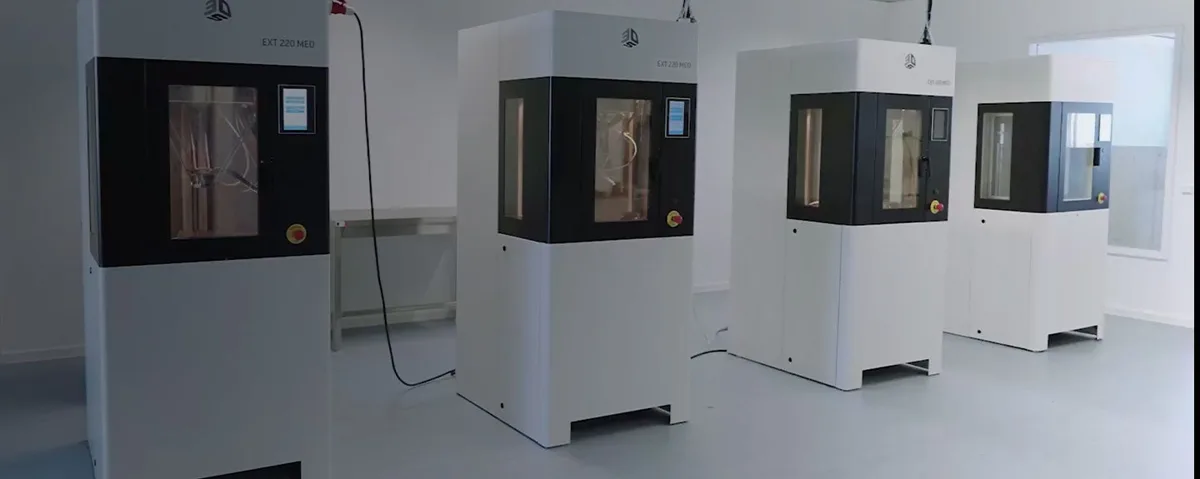
The printers are 3D Systems’ EXT 220 MED, formerly the Kumovis R1, a filament extrusion system designed for printing medical implants in polymers such as PEEK. SINTX calls its additive manufacturing platform SiNERGY. Its strategy is an integrated platform that combines its biomaterials with AI-assisted surgical planning, patient-specific implant design and advanced manufacturing. It is also in talks with an engineering services firm on AI-assisted image segmentation and anatomical modeling, so patient scans and surgical planning could feed straight into implant design.
The evidence so far comes from the lab. In a published investigation of 3D-printed SiN/PEEK spinal cage designs, researchers reported a 93.9% reduction in bacterial adhesion compared with conventional PEEK, along with enhanced cell proliferation. Both results apply to the laboratory conditions tested. SINTX describes these findings as encouraging, while stressing that their clinical significance for individual implants will require product-specific evaluation and validation.
To run the manufacturing side, SINTX has appointed James A. Smith as Director of 3D Additive-Manufacturing. Smith earned his PhD in additive manufacturing and mechanical engineering at Loughborough University and has published on additively manufactured PEEK cranial implants and silicon nitride biomaterials. He will now lead process development, material optimization and manufacturing validation.
Chairman and CEO Eric K. Olson presented SiN/PEEK as a potentially significant commercial growth opportunity for the company. “Our objective is to deliver patient-specific solutions that combine the design flexibility of 3D printing with the unique biological and mechanical properties of silicon nitride,” he said.
The commercial steps are still plans. SINTX is pursuing FDA 510(k) clearance for a defined design envelope of patient-specific extremity implants and is evaluating limited opportunities for qualifying custom devices in the first quarter of 2027. Later in 2027 it anticipates expanding into craniomaxillofacial and spinal applications, subject to regulatory review, although broader commercial distribution will require regulatory clearances and manufacturing validation.
Source: SINTX Technologies