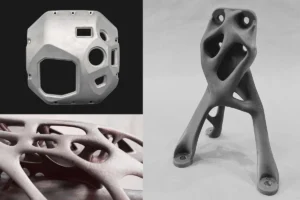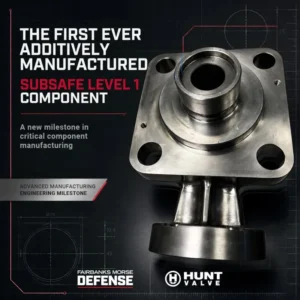

The Army Research Laboratory will put up to $27 million into University of Tennessee 3D printing research so troops could print parts in the field.
Today they can wait up to 18 months for traditionally manufactured components. Like many American industries, the forces have long relied on casting and forging, and getting those parts can be a long process, especially in the field. That delay can keep service members from doing their jobs and even affect their safety, which is why UT wants them to be able to print critical replacement parts themselves.
So far, UT researchers and engineers at the DEVCOM Army Research Laboratory have studied additive manufacturing technologies and materials that can be deployed closer to the end user. Under the new scope, they will turn those lab results into solutions ready for deployment, working with Leidos through UT’s Defense Development and Applied Research Center, or DARC. The Army’s ground vehicle program is a particular focus, where the work will inform how to replace parts that cause vehicles or vehicle armor to fail.
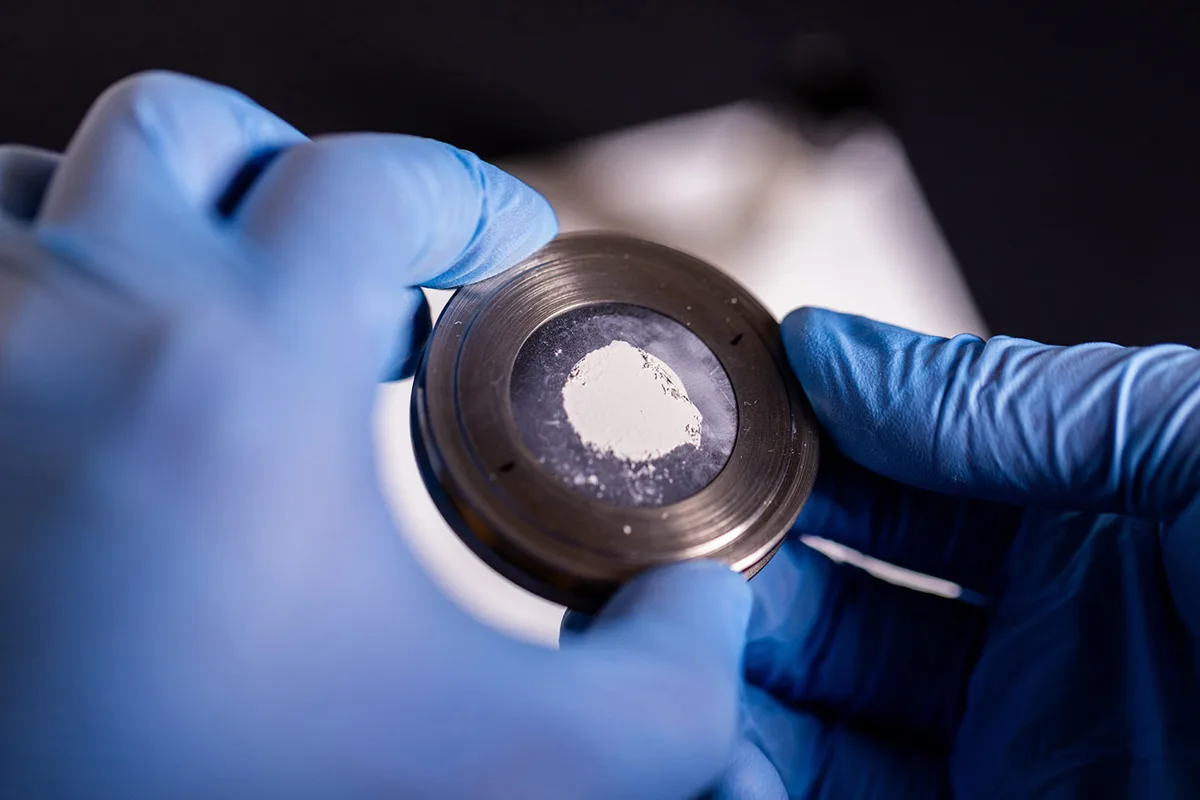
Materials science is the hard part, because humans spent thousands of years refining recipes for casting and forging. Katharine Page, a materials science professor and the collaboration’s primary investigator, explained why those recipes don’t carry over. “Additive manufacturing requires new recipes,” she said. “The materials experience very different thermal and mechanical processing conditions, and we need to understand how those differences affect their structure and performance.”
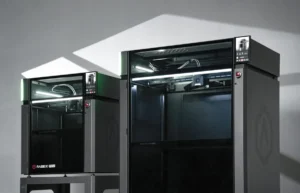
Small-scale trials suggest the idea works outside the lab. An additive system installed at the Tennessee National Guard’s Knoxville Armory produced replacement parts that would otherwise take months to procure from a manufacturer. Innovations from the collaboration were later demonstrated aboard a U.S. Navy ship during the world’s largest international maritime military exercise.
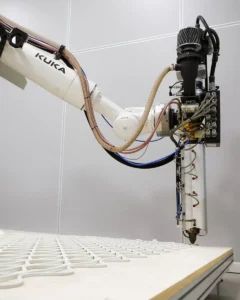
Bigger machines come next, so the team can run more types of studies. The Tennessee Manufacturing and Design Enterprise is moving from systems that make microcomponents to ones that produce parts the size of a large office desk.
The extension also covers so-called super materials built for extreme temperatures, pressures, mechanical loading and aggressive chemicals. Leidos is particularly interested in composites, whose complexity poses unique challenges under extreme conditions, so the team will study how manufacturing processes shape their interfaces, defects and degradation. UT Chattanooga’s Murat Barisik will lead multiscale modeling at the UTC Center for Nanoengineering to predict how these materials change and degrade, before a few focused experiments test the theory.
Students will be part of it too, and many of them have friends and family serving in the military. They will work directly with Army end users, while ARL encourages them to turn unexpected problems into thesis topics. Page sees that direct contact with sponsors as the real advantage. “This direct engagement enables us to create a scientific and research foundation to accelerate technology development and enable end users to deploy new solutions with confidence, much sooner,” she said.