
Fabri 3D prints the patterns for investment casting, so a part can go from design to finished metal in as little as a week.
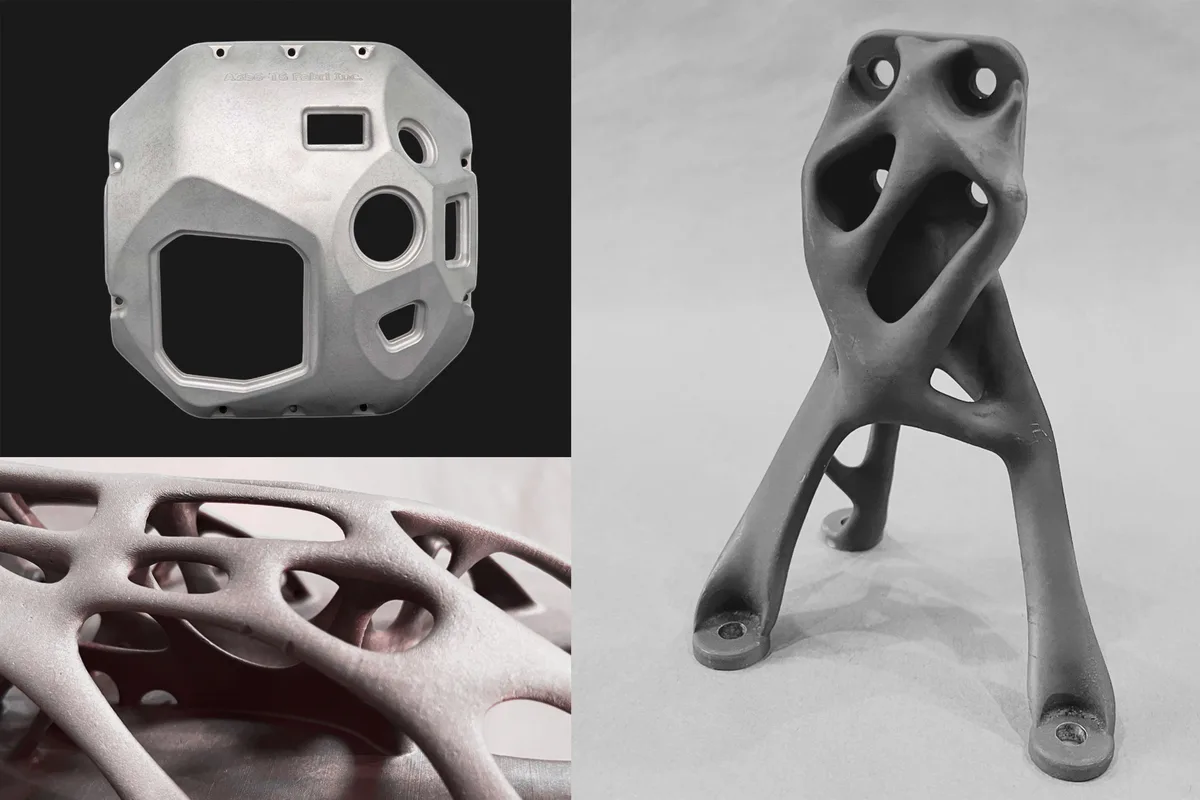
That speed matters because American metal casting has been shrinking for decades. More than 70 percent of the country’s casting facilities have closed since the industry peaked in the 1950s. China and India now dominate global production, even though cast parts go into jet engines, gas and nuclear turbines and medical devices.
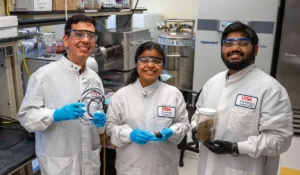
Founded by MIT alumni Steven Davis and Thomas Cole, along with Pieter Coulier, Fabri is trying to bring that work back. It opened its first foundry in Ashland, Massachusetts, in 2025. By spring 2026 it had moved production to a 16,000-square-foot plant in Billerica, where it now serves a growing list of customers.
The traditional route is slow because every part takes so many steps. It starts with a steel tool for injection molding wax patterns. Those wax parts are glued into a tree, then dipped in ceramic slurry and coated with sand, seven or eight times over. For complex designs, the tooling alone can cost upward of $1 million and take many months.
Instead, the company starts from the CAD file. Its FoundryOS software designs a pattern for each part, which the company prints in resin using DLP and stereolithography. The printed pattern then goes into the ceramic slurry to build the shell. FoundryOS also collects data from every step and uses machine learning to improve the process with each casting.
Davis put it plainly to MIT News. “By printing that mold right off the bat, we remove the need for all those early steps,” he said. Printing also lets Fabri iterate on a part in days. A traditional foundry that spots a flaw after its first casting is stuck with a tool it may have waited six to nine months for.
Software is also Fabri’s answer to a labor crunch. Citing the American Foundry Society, Davis puts the retirement rate of foundry workers at 3-to-1. Some customers have told Fabri they can no longer make certain parts after an engineer retired. “We want everything we learn to be encoded into our software forever,” he said.
Serious customers are already on board. Fabri casts aluminum, copper alloys and stainless steel, mostly for munitions, aviation and naval applications. It works with Raytheon, Lockheed Martin and Sikorsky Aircraft, among others, and is moving through qualification for the most critical aerospace and defense parts. Davis called qualifying with a company like Raytheon “a really big deal.”
The idea started small. Davis built the first prototype printer in the basement of his MIT fraternity, with money from the MIT Sandbox Innovation Fund. Cole had founded an automated CNC machining company for dental implants, later acquired by AstraZeneca. Coulier developed the simulation and metal 3D printing algorithms at Velo3D that made SpaceX’s Raptor engines printable.
Next on the list are nickel superalloys, the metals in turbine blades that can currently have four-year wait times. Fabri plans to begin casting them in early 2027. A far larger facility, built for bigger parts at higher volume, is planned for the same year.
Source: MIT News