Robo Nine is 3D printing its first batch of fifty SO-ARM102 leader arms in China.
Factory update from China: 3D printing the first 50 SO-ARM102 leader arms.
Parts are printed in smaller batches, with wider support bases for tall components. Part orientation, wall count, and infill follow the 3MF files in our repo.
Repo: https://t.co/NSSo8B7PW1 pic.twitter.com/qpkYxBJZW6
— Robonine (@robo_nine) November 6, 2026
Robo Nine sells open-source robotic arm kits for classrooms and laboratories. Its current product is the SO-ARM102, a leader-follower pair that ships unassembled from a warehouse in China for $389. Robonine Lab is a free browser app that helps users assemble, calibrate, and control the arm for teleoperation, pick-and-place, and computer-vision exercises.
You move the leader by hand, and the follower copies that motion for teleoperation and imitation-learning demos. The leader has a handle and trigger, while the follower carries a parallel gripper. The frames use PET-CF, a carbon-fiber-filled polyester. Robo Nine puts the share of printed parts at about 90 percent.
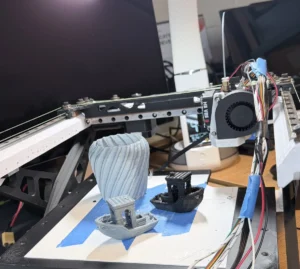
The November 6 update shows parts printed in small batches. Tall components sit on wider support bases. Orientation, wall count, and infill follow the 3MF print files published with the kit. The batch covers leader arms rather than complete leader-follower kits. The clip shows black printed brackets, baseplates, and angular parts coming off enclosed printers, including a Creality-branded machine.
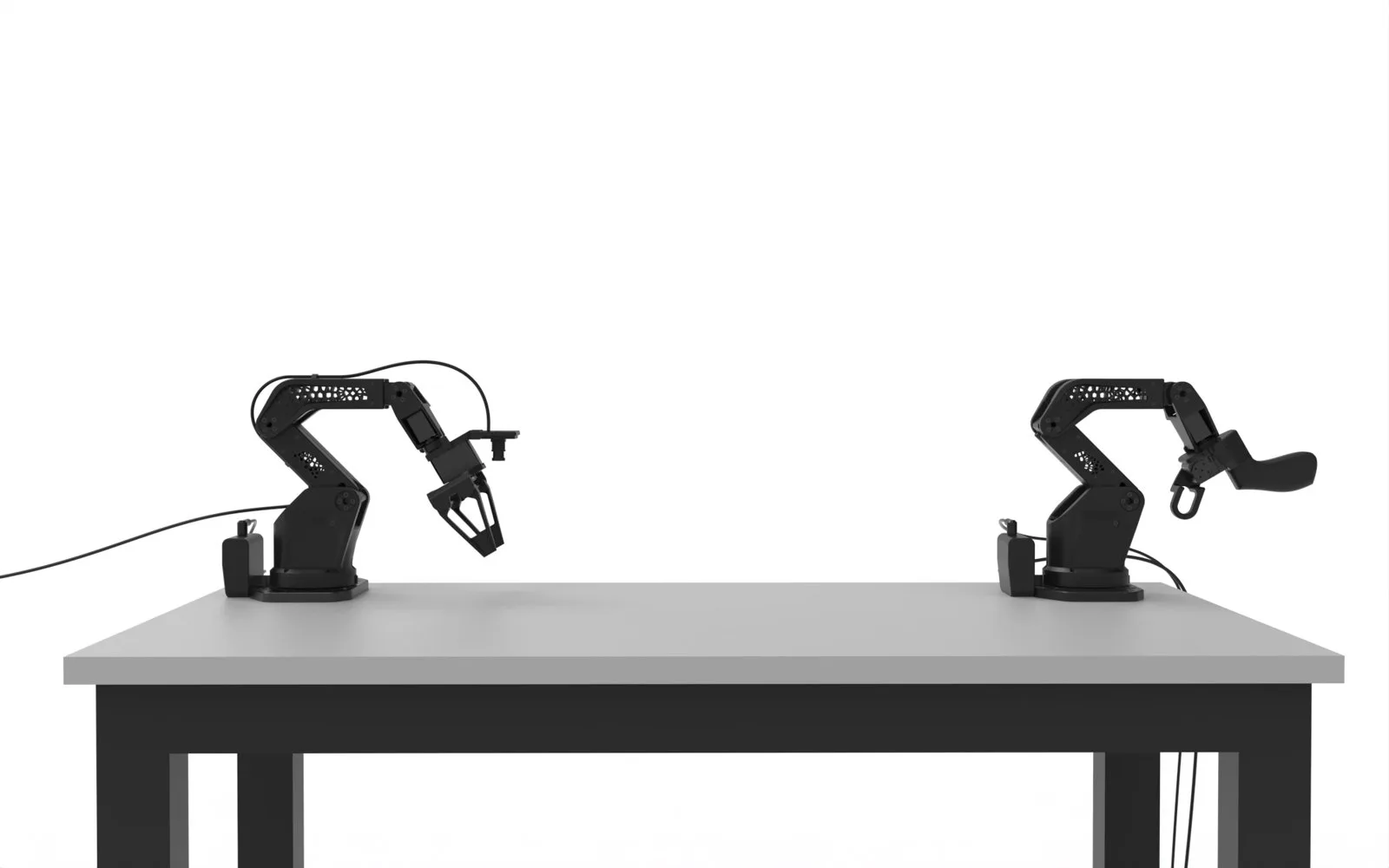
CAD models, printable parts, and a bill of materials live in the SO-ARM102 GitHub repository. Builders who prefer a DIY route can download the print files, make the frames, and buy the remaining components themselves, instead of ordering the boxed kit.
The project README credits TheRobotStudio’s SO-ARM100 as the predecessor design that SO-ARM102 builds on. Hardware is released under the CERN Open Hardware Licence (Permissive), version 2.0, and the software under Apache License 2.0.
Source: Robo Nine on X