
A custom seat tray for a 1984 Honda CB400, a hard-to-find grille for a VW Golf Mk1 Convertible, and a black throttle body that needed a custom thermal spacer kit. Revopoint supplied three reverse engineering projects built around its MetroY Ultra scanner, and none of them started with a drawing.
Starting from the part itself
Reverse engineering usually begins with a part on the bench and no drawings for it. Calipers will get you the basic dimensions, but they struggle once a shape has curves, mounting points and clearances that all need to be captured in relation to each other.
Revopoint aims the MetroY Ultra at exactly this job. The company positions it as a metrology-grade handheld scanner, built to record the shape of a physical part and hand it to design software as usable reference data. Revopoint supplied the three projects below, and each one put the scanner up against a different obstacle.
Project 1: A custom seat tray for a 1984 Honda CB400
For a one-off 1984 Honda CB400 build, the builder needed a seat tray and seat pan that would tie the rear fender into a subframe he had already modified. The reworked back half no longer matched any factory drawing, so the dimensions had to come off the bike itself.
Work like this is usually done in welded sheet metal or fiberglass. Both produce strong parts, but either way you are in for a lot of cutting, sanding and test fitting, since the shape underneath is only partly known.
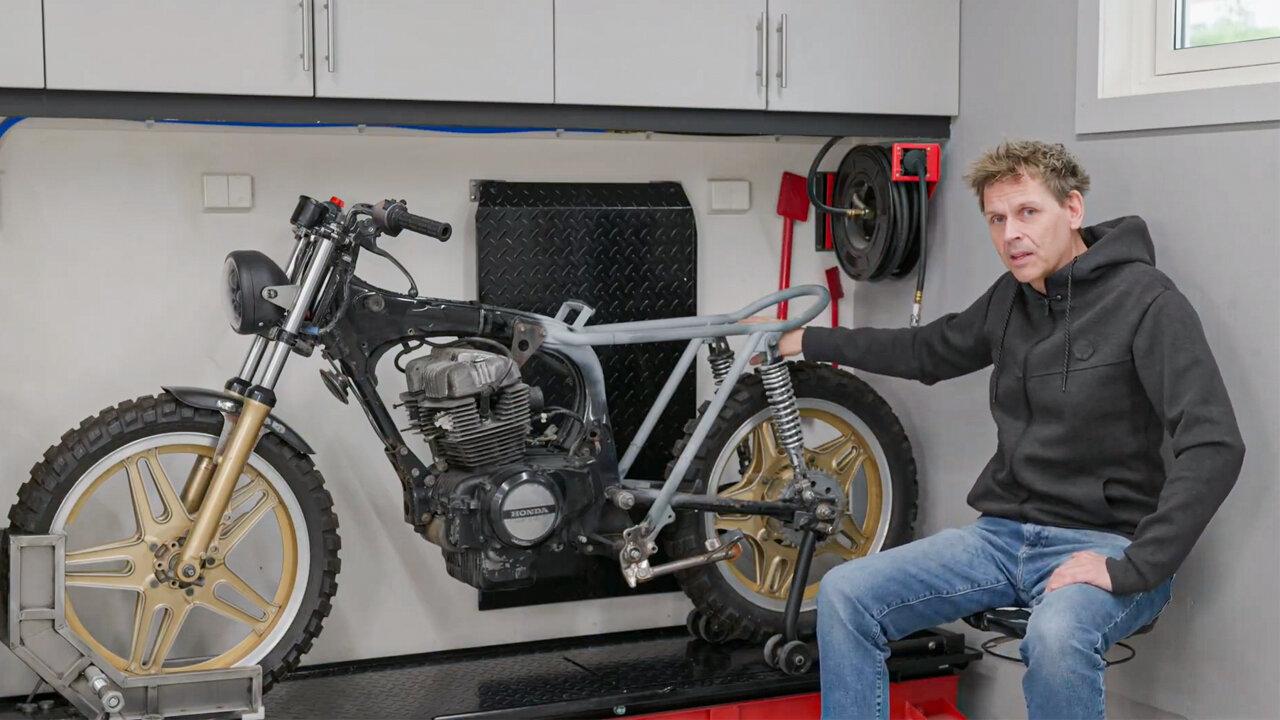
The CB400’s modified rear subframe, the structure the new seat tray had to fit. Image: Revopoint.
This builder went digital instead. The bike as a whole had been 3D scanned earlier in the project, and the MetroY Ultra was brought in for the rear fender, top surface and underside both, since the mounting features and the way the part meets the frame all had to end up in the file. Markers placed on and around the fender kept tracking stable, with enough overlap between passes to merge everything into one model.
The scan went into Revo Metro for processing, where cleanup brought one catch: some of the holes the markers left in the scan were about the same size as the fender’s mounting holes, so the artifacts had to be deleted without taking real bolt holes with them.
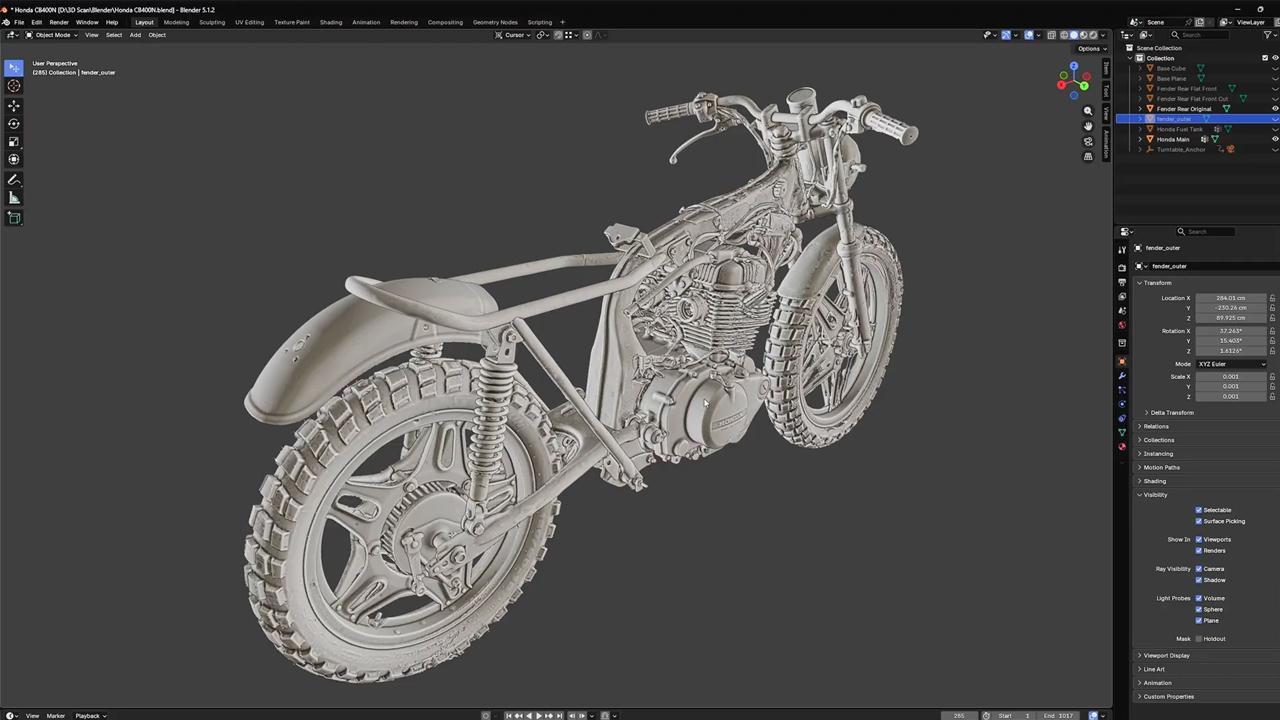
The cleaned fender scan combined with the earlier scan of the whole bike, here in Blender. Image: Revopoint.
With everything merged in Blender, the builder could see how the fender, the frame hoop and the seat area sit relative to each other, and design against that instead of against a page of measurements. The finished design was a 3D printable seat tray with cutouts for the frame tubes, plus cable routing holes and mounting points for brass inserts. Test fitting happened on screen, before any metal was cut.
Project 2: Digitizing a classic car part that is no longer easy to find
A radiator grille has to line up with the headlights, the hood edge and the bodywork around it, and a Golf Mk1 Convertible grille in good condition is not an easy find. Jan Proschenski of studio Proschi 3D used the MetroY Ultra to record one.
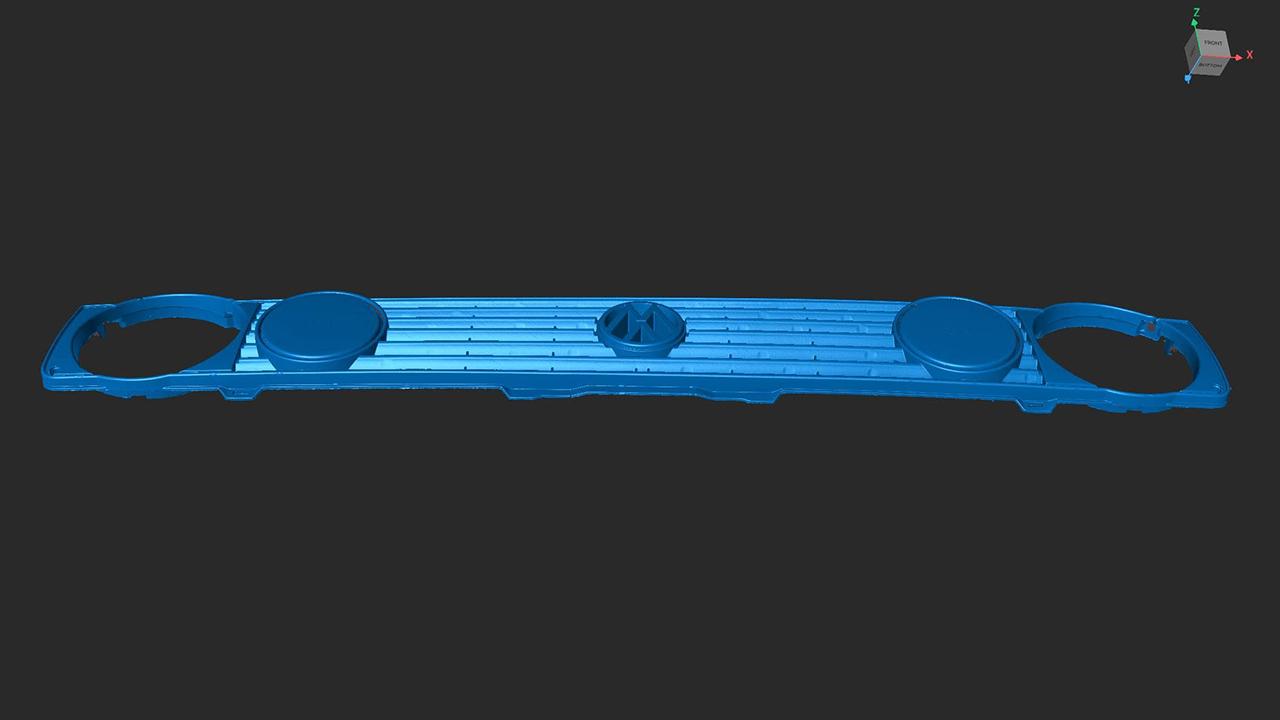
The Mk1 grille as scan data. Edge profiles, mounting points and openings captured in one model. Image: Revopoint.
Original CAD data for cars of this age is long gone, and secondhand replacements vary in shape and condition. What the scan preserves goes well past overall dimensions, down to edge profiles, mounting points and the transitions into the surrounding panels. Revopoint pitches the resulting model as a basis for repairs or reproduction, or just as a record, since good originals are getting scarce.
Project credit: Jan Proschenski, Proschi 3D.
Project 3: Scanning a black part for a custom spacer kit
The third project came from a modified S197 Mustang running a 132 mm Whipple throttle body that needed a custom thermal spacer kit. A part like this has to fit one specific setup rather than a factory configuration, and the dimensions the job depends on (mounting faces, bolt holes, clearances) are awkward to take by hand.
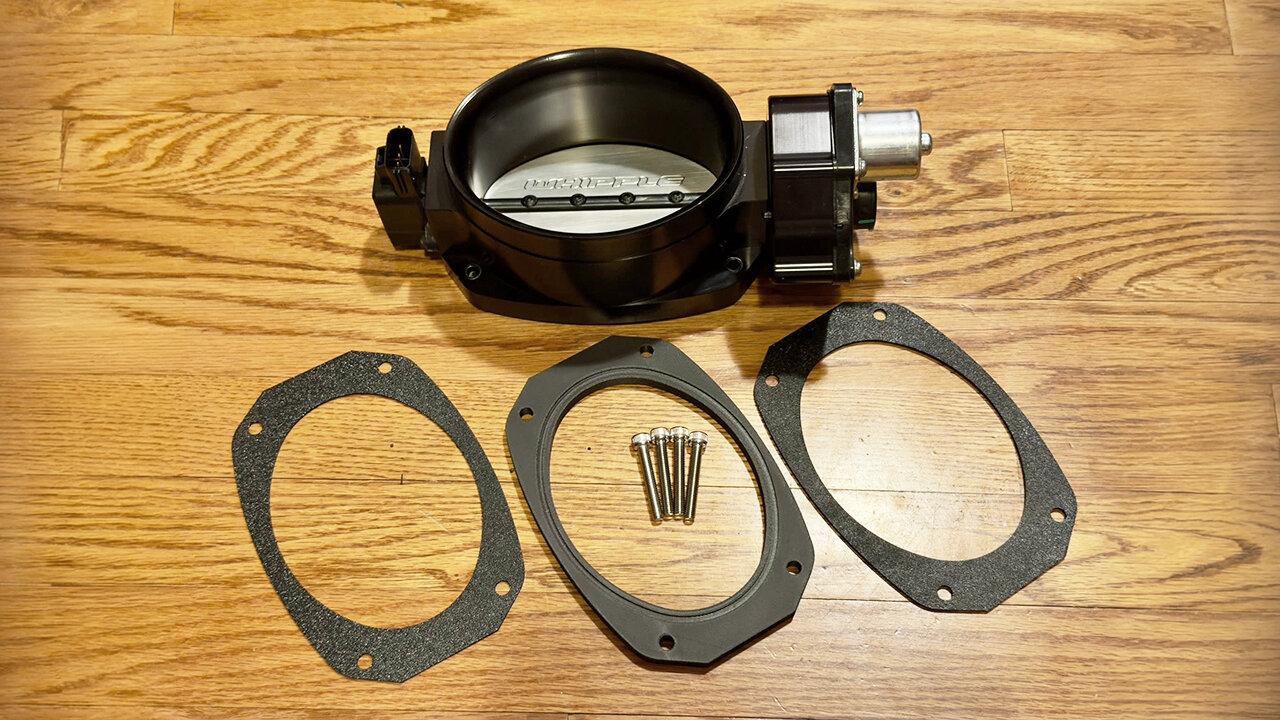
The throttle body with its gaskets and hardware. The black, curved surfaces here are difficult for most scanners. Image: Revopoint.
Black parts absorb most of the light a scanner projects at them, and this one was dark across the curved intake mouth and the recessed motor housing, the areas the spacer design depended on. According to Revopoint, the MetroY Ultra still captured usable data there without any scanning spray or other surface treatment.
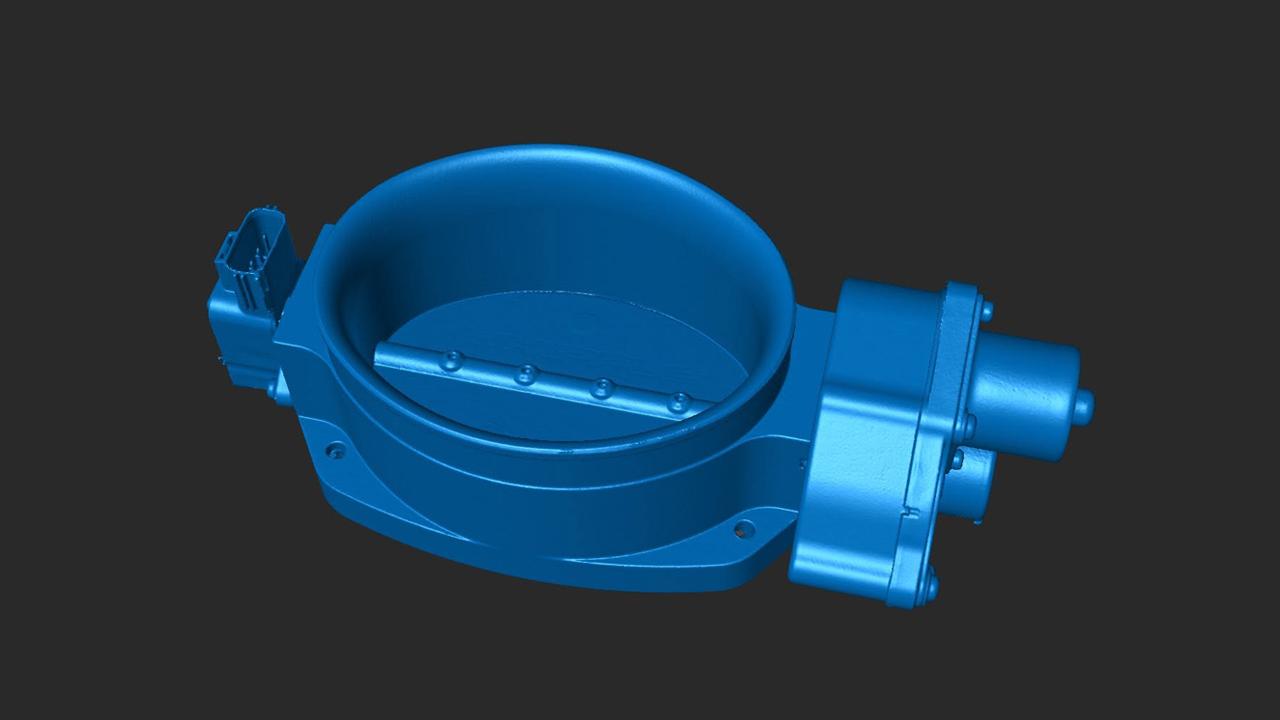
The throttle body scan as supplied by Revopoint, bolt holes and edge profiles visible in the data. Image: Revopoint.
The scan then served as the reference for designing the spacer kit and checking its alignment, with clearances and mounting interfaces measured off the part.
Project credit: Sammie Lilly, SkreetKar 3D.
A more reliable starting point for reverse engineering
None of the three jobs was easy on the scanner. The bike had been heavily modified, the grille has been out of production for decades, and the throttle body wears the kind of black finish many scanners cannot read. In each project, Revo Metro handled scan review and first-pass cleanup before the model moved on to Blender or a CAD package.
For anyone working on one-off or legacy parts, the pitch is that you measure the part once and then design from the file. Where the MetroY Ultra sits among comparable systems is a separate question, and our guide to the best professional 3D scanners puts it in context.
Certified metrology
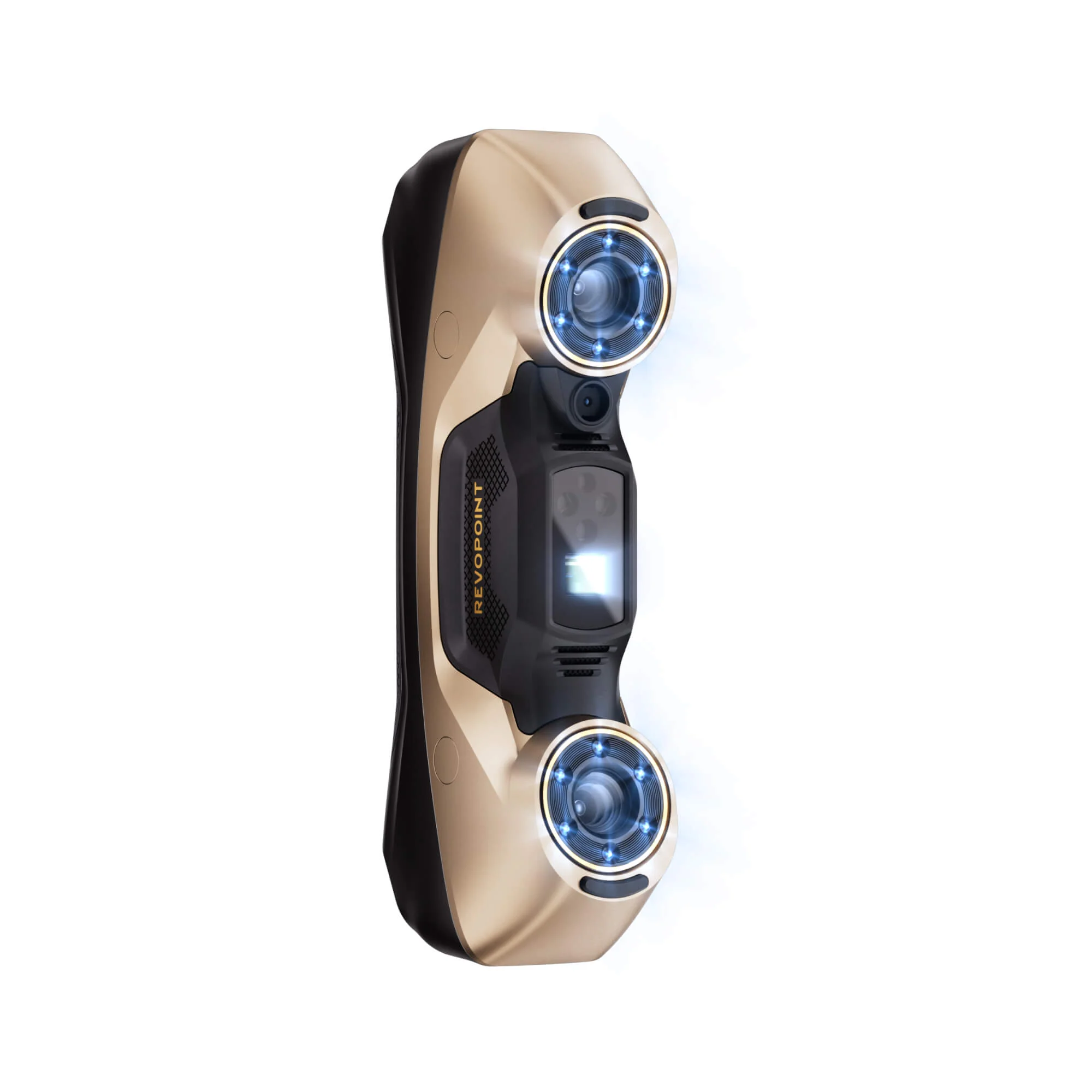
Revopoint MetroY Ultra
Best for: certified inspection, GD&T, reverse engineering, and design validation at a price the metrology tier has rarely seen. The Ultra is the top of the MetroY line, with the highest accuracy in the range and five blue-light modes (34 crossed, 15 parallel, and single laser lines, plus auto turntable and structured light) at up to 7M points per second and 90fps. Wi-Fi 6 keeps it fully wireless, and it works outdoors up to 100,000 lux. The CMM Edition is the standout: real-time on-site accuracy verification using a certified carbon-fiber ball plate, plus Revo Measure, a PTB-certified GD&T analysis platform, bringing traceable metrology for a fraction of the usual cost.
Price: ~$1,899 (approximate; varies by bundle, sale period and region, click through for current pricing)
- Volumetric accuracy 0.015mm + 0.04mm/m (best in the MetroY line)
- 5 blue-light scan modes; up to 7M pts/s; 90fps; outdoor to 100,000 lux
- Wi-Fi 6 wireless; HD color
- CMM Edition: certified ball plate + Revo Measure (PTB-certified GD&T)
- From ~$1,899 (Standard); ~$2,499 (CMM Edition)
- Reader discount: code
REVOYCS3DPat checkout (valid worldwide, no expiry)
Affiliate link: we may earn a commission at no extra cost to you.
Revopoint paid for this article to appear on 3DPrinting.com. Editorial direction was led by 3DPrinting.com. The projects, images and figures in this case study were supplied by Revopoint, and 3DPrinting.com has not independently tested the MetroY Ultra or verified the scan results shown. Prices are as published on the Revopoint store on August 27, 2026 and can change. Store links are affiliate links, which means we may earn a commission if you buy through them, at no extra cost to you. Last reviewed: September 3, 2026.