
Researchers in Dresden have 3D printed a soft brain implant that records brain activity and cools a small patch of tissue to suppress seizures.
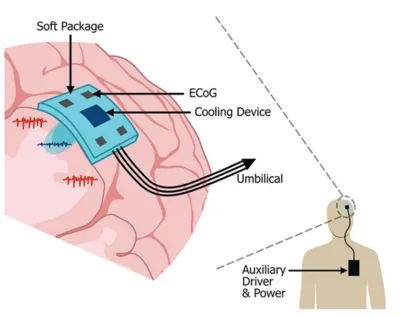
The prototype comes from the Leibniz Institute of Polymer Research Dresden (IPF) and the Else Kröner Fresenius Center (EKFZ) for Digital Health at TU Dresden. Researchers from the University of Sheffield in the UK joined the study. The team sees the device as a possible route to new treatments for drug-resistant focal epilepsy.
Focal epilepsy starts in one area of the brain. Cooling that area can calm the abnormal activity. Building that into an implant is the hard part. A device that cools tissue and records brain signals at once needs thermal, fluidic and electrical parts. All of them have to fit in a package small enough to rest on the brain.
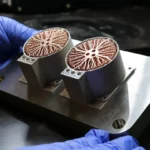
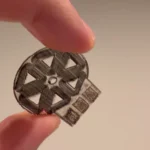
The study answers that with a design framework for making multimodal implants with 3D printing. The team used it to build a miniaturized cooling implant. Soft printed silicone structures carry the fluidic channels and the electronic components in one compact device.
Composite electrodes are 3D printed into the implant as well. They pick up electrocorticography (ECoG) signals, a recording of electrical activity taken from the surface of the brain.
An auxiliary driver unit completes the system. It monitors and controls the recording and cooling functions on its own. Compared with earlier proposed systems, the printed approach could cut implant complexity, fabrication time and device size.
Testing started in software and on the bench. Finite element simulations and agar-based tissue models showed rapid, stable and localized cooling. In other words, the cold stays where the implant sits.
The team then moved to a rodent model of epilepsy. The printed electrodes produced ECoG recordings of comparable quality to those from a commercial system. Focal cooling with the implant also suppressed seizure-like activity that the researchers had induced in the animals.
The work is a proof of concept in animals, not a human therapy. The researchers say it shows how 3D printing can produce compact, multifunctional medical implants. It also gives them a base for further development toward clinical use.
The framework matters beyond cooling. Because thermal, fluidic and electrical parts come together in one printed build, the same route could shorten the path from idea to test device for other neural implants. That is the kind of speed a lab needs when each design must be tried in tissue models and animals before it can move on.
Spencer Ryan Moore is the first author of the paper, which was published in Advanced Science. The European Research Council funded the work through the ERC Starting Grant IntegraBrain.