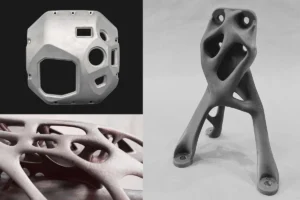

Researchers at MIT and Northeastern University have 3D printed samples with web-like internal beams that withstood impacts better than standard lattice and honeycomb designs.
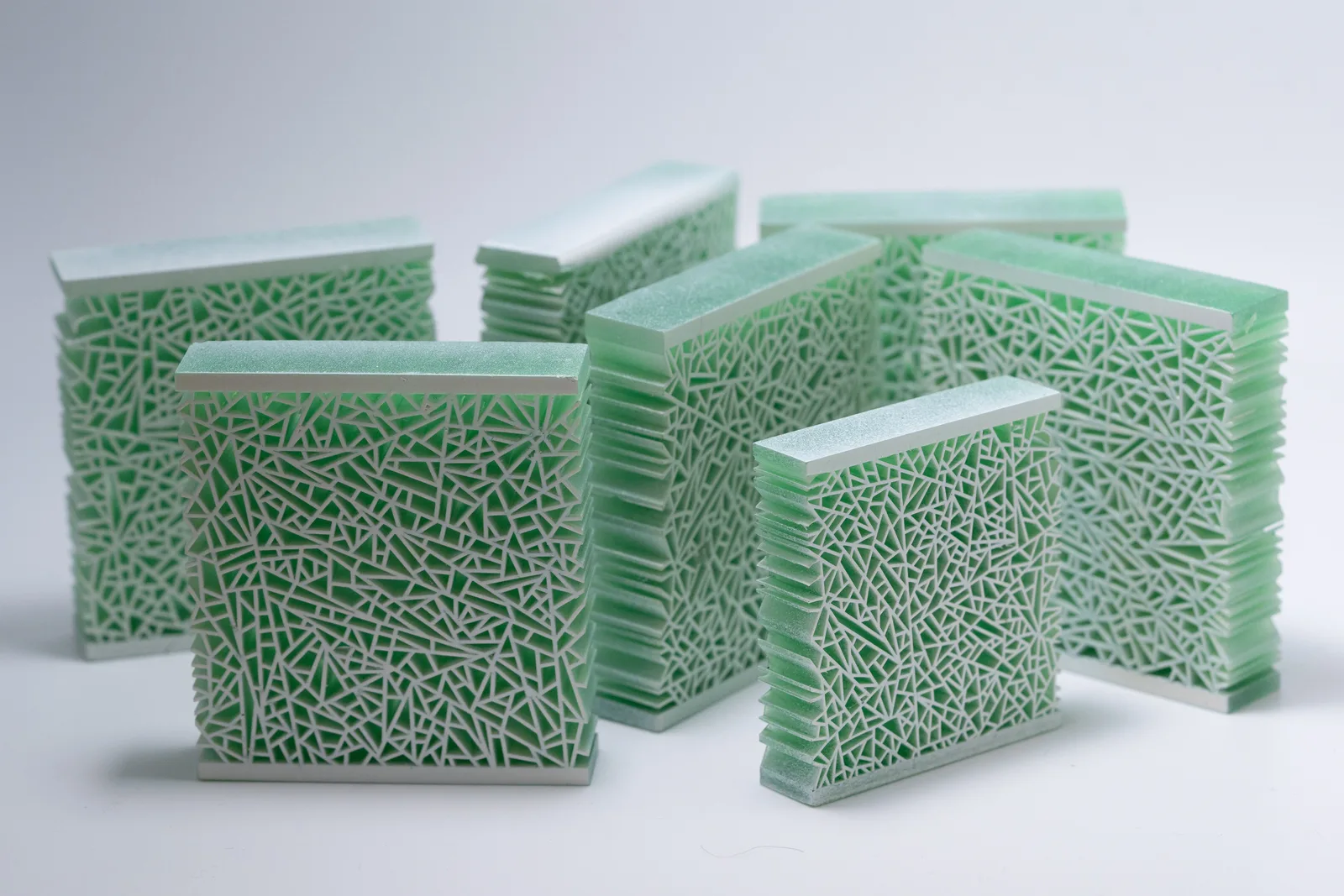
Metamaterials get their unusual properties from their internal structure, usually one small building block repeated many times over, as in a square grid or a honeycomb. Such ordered patterns do make a material stronger and more resilient. Once part of it is punctured or cracked, though, the identical cells around the damage give way in the same manner and the rest quickly buckles.
The new designs drop that repetition. They borrow from network science, the study of how webs of connections behave, from food chains to the internet. Northeastern physicist Albert-László Barabási, a leading network scientist, wondered whether such networks could be turned into a physical material. He teamed up with MIT mechanical engineer Carlos Portela, whose group specializes in metamaterials. In their paper in Nature, the team calls the results scale-rich metamaterials, because their structures come in many sizes, much like the veins in a leaf or a dragonfly’s wing.
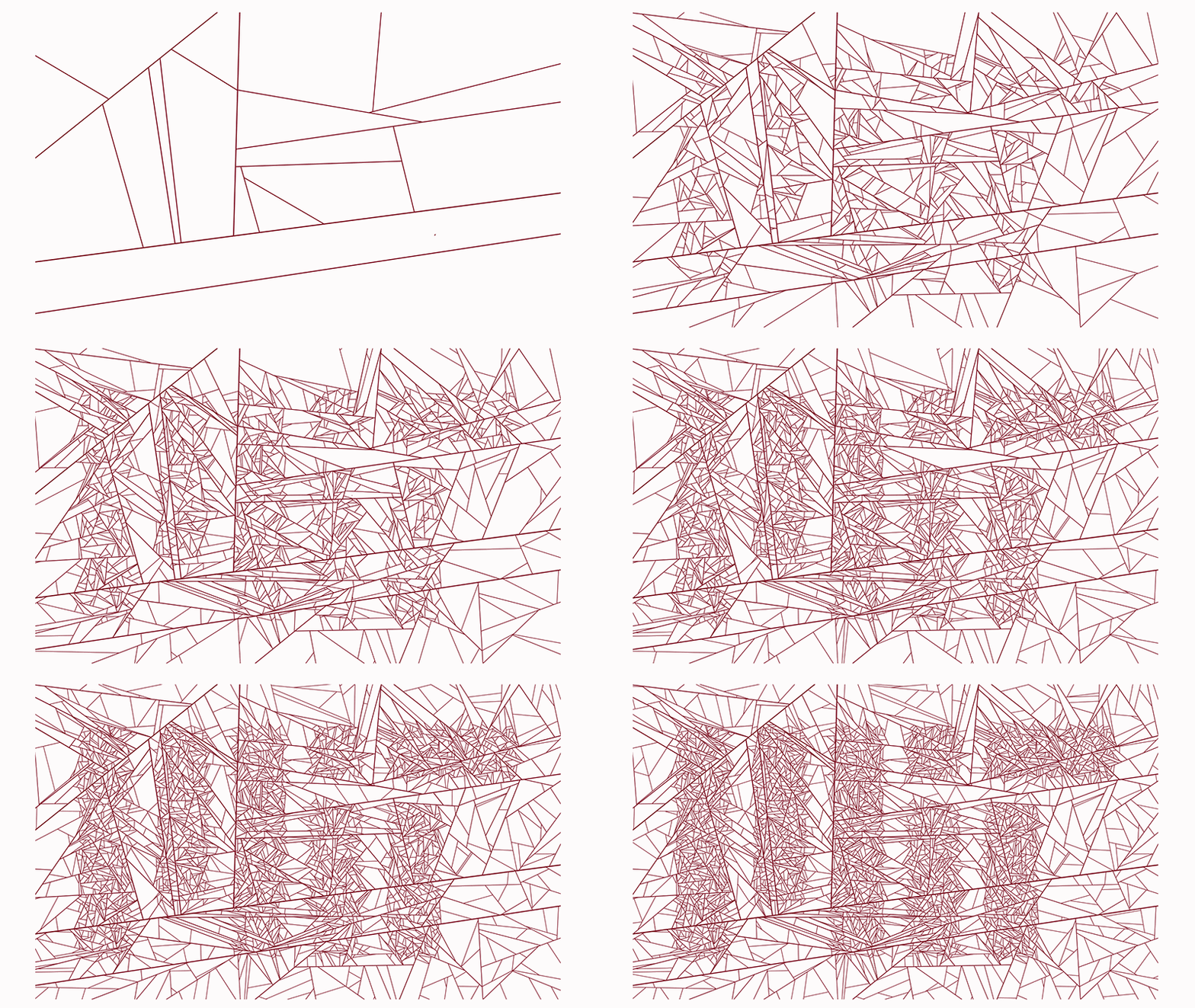
The team’s algorithm draws one line at a random angle across the whole design, then adds more lines from random points. Each stops when it hits an edge or an earlier line, and each is a little shorter and thinner than the one before. Just two settings, how thick the first line is and how quickly the lines thin out, change the pattern and, simulations showed, how stiff the material is.
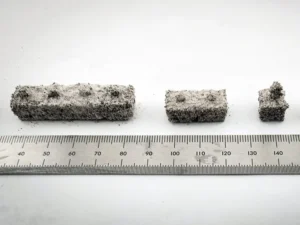
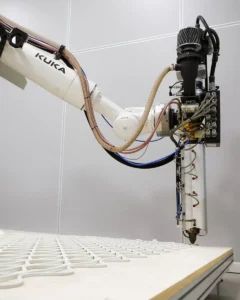
To test the idea, the team 3D printed polymer samples about the size of a credit card, with beams ranging in scale from microns to centimeters. They then dropped a large weight on them and squeezed them with increasing force, alongside standard lattice and honeycomb samples. The web-like samples proved more resilient to compression and impacts.
Portela traces that to the mix of beam sizes. When one part of the network fails, he told MIT News, “there is a strong web of structures around it that keeps the entire material from failing catastrophically.” In his words, “It’s more efficient at distributing damage and absorbing energy.”
A second test borrowed from the thick rind of a pomelo, which is not equally dense throughout. The researchers designed a material with a denser web of beams at its edges and showed that it could cushion a fragile object embedded at its center.
Because the algorithm can produce a pattern for a desired property, the team sees uses in helmets, packaging and armor that need to absorb impacts. It could also shape acoustic lenses, structures that focus sound or vibrations. Imperial College London’s Tian Chen, who was not involved in the study, sees it reaching further. “That may lead to a next generation of materials with unprecedented physical behavior, for any structure that must carry load, absorb energy or control vibration,” he said.
Source: MIT News