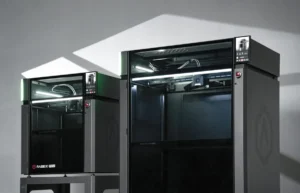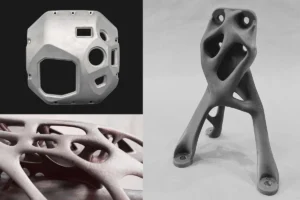

Xact Metal’s XM200G metal 3D printers can now trace curves as true arcs, rather than chains of short straight lines, using software from Dyndrite.
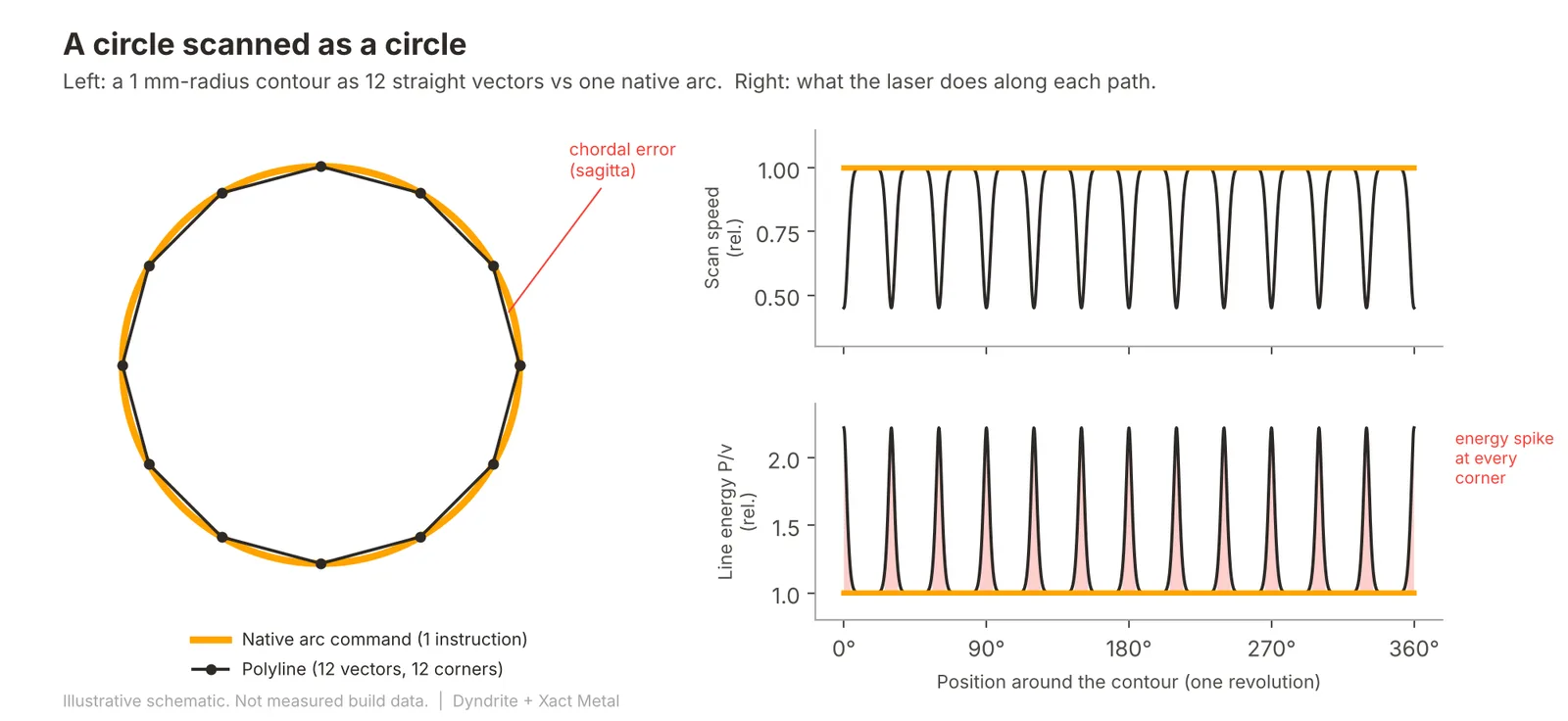
The printers use laser powder bed fusion LPBF) and its path, or toolpath, usually approximates each curve with short straight chords. Every chord adds a small error in shape, and at every corner the laser’s steering mirrors have to slow down, so energy and heat spike at that spot. Holding 1 µm accuracy on a circle with a 10 mm radius takes about 222 straight segments, while one arc does it.
The fix needed Xact Metal to open up its machines. Founded in 2017 in State College, Pennsylvania, the company makes affordable LPBF printers for smaller manufacturers, research institutions and educators. It has now opened full access to the scanning system in those printers, including the scan card, the controller that tells the laser where to go. That lets Seattle-based Dyndrite send arcs and other commands to it directly from its LPBF Pro software. The two companies call the result a commercial first for LPBF.
Arcs are only part of it. Users can also program smooth Bezier curves and a wobbling laser path, fine-tune timing delays line by line, and pulse the laser or adjust its set point on the fly. The promised benefits include smaller files, shorter print times and less wear on the laser optics. Smoother shallow-angled surfaces and fewer pores should follow, along with parts once considered impossible to weld with LPBF.
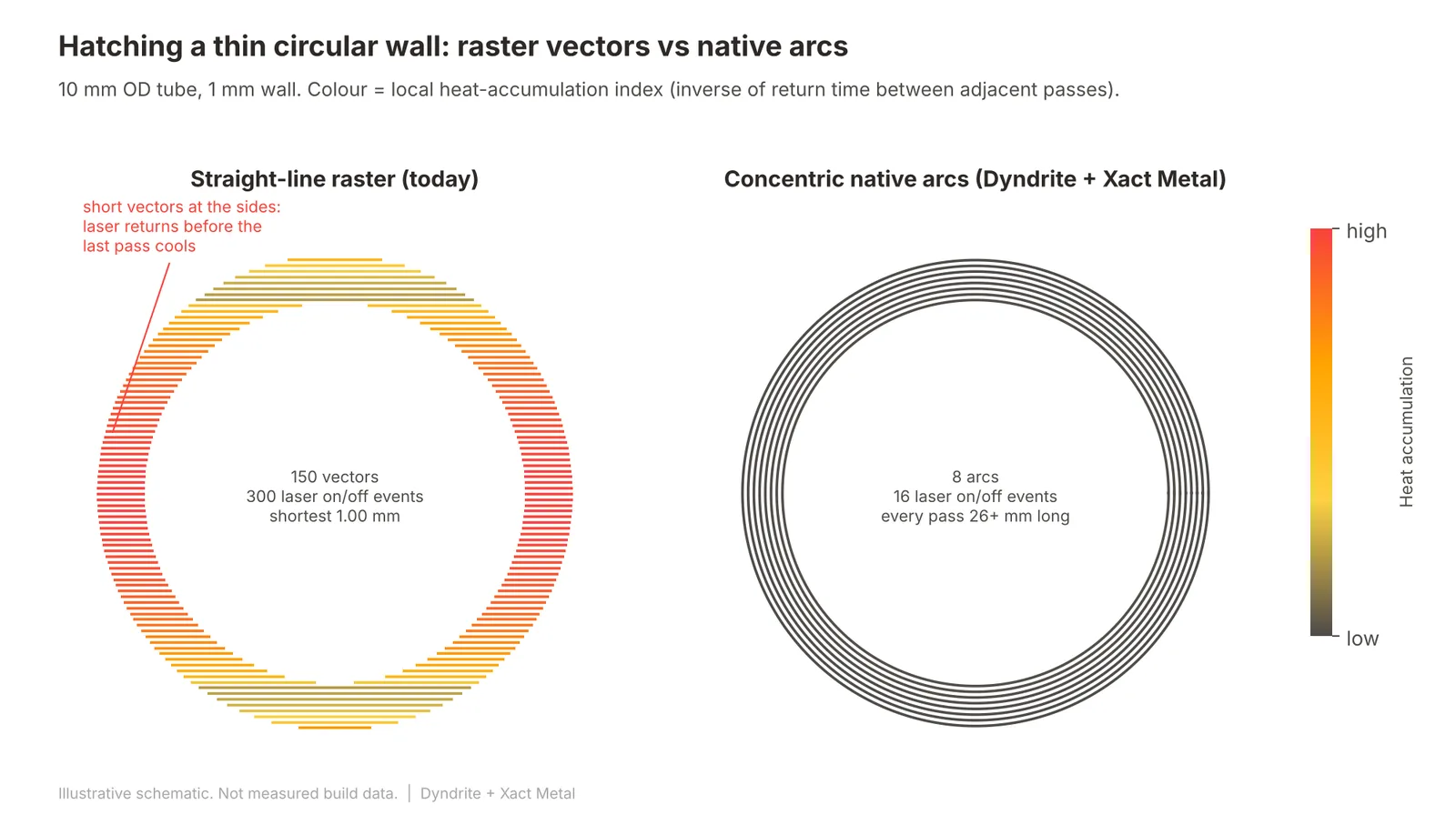
Heat is where the extra control shows most. To fill each layer, the laser normally sweeps back and forth in straight lines. In a ring with a 1 mm wall, those lines are very short at the sides. The laser is back on the next one before the metal has cooled, so the sides overheat. Filling the ring with arcs that follow the wall turns every pass into a full lap and spreads the heat evenly. In Dyndrite’s example, 150 short lines become 8 continuous arcs. Turbine blades get similar treatment at their thin trailing edge, where the software follows the curve and turns the power down. Both are illustrations rather than recommendations, since any fill pattern still has to be validated for the part.
Dyndrite founder and CEO Harshil Goel called the move “a hugely important step for LPBF.” In his view the industry has put up with poor toolpath definitions for too long. That is surprising, he added, because “scan cards have been far more capable than OEMs have made available for years.”
Xact Metal CEO Juan Mario Gomez sees it as a matter of customer freedom. “We’re opening our platform because we believe customers should have the freedom to get everything possible out of their machines,” he said.
The arc and full scan-control features are available now in Dyndrite LPBF Pro for the XM200G and XM200G µHD, with the XM300G to follow. Xact Metal will show them at Formnext in Frankfurt from November 17 to 20.
Source: Dyndrite