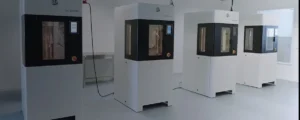

Brazil’s State University of Londrina has installed two 3D printers for construction, the larger one big enough to print the walls of a small house.
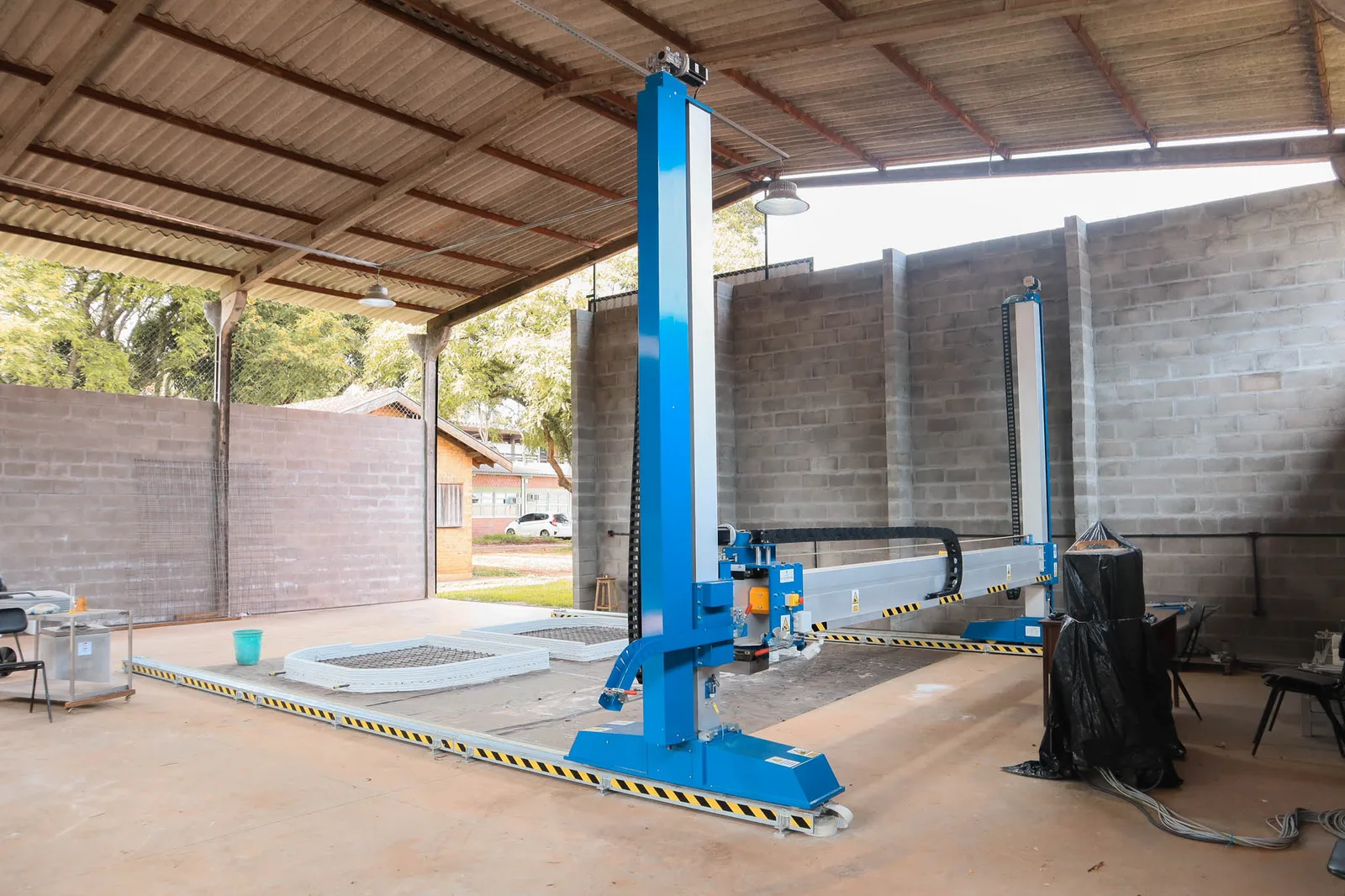
The machines give the university, known as UEL, room to research 3D printing with cement-based materials. The goal is to apply that work to everything from urban furniture to modular housing for vulnerable people and emergency situations. With them, UEL has also become the only higher education institution in the state to run equipment of this size for research.
Both printers were developed by Spanish manufacturer Be More 3D, whose technicians oversaw their installation and assembly in September. They sit in Ékonus, a 3D technology laboratory at UEL’s Center for Technology and Urbanism. Paraná’s science, technology and higher education secretariat paid for the machines through the state’s Fundo Paraná, while construction company Pacaembu refurbished the space under a public-private partnership. UEL has researched 3D printing since 2018, and around ten faculty, students and graduate researchers now work on it.
The smaller printer has a 1 by 1 meter work area and is used mainly for experiments, testing cement mixes and making prototypes. The main machine has a modular frame that runs on rails and can print across an area of up to 5 by 9 meters. That is enough for the walls of a home of about 45 square meters, although for now the lab’s space limits it to 5 by 7 meters.
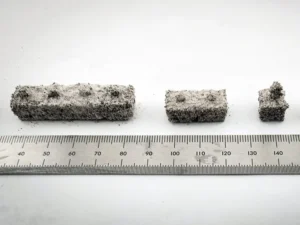
Getting the material right is one of the main scientific challenges. Unlike concrete in conventional construction, a printable mix has to flow well enough to be pumped and extruded. It must then keep its shape once deposited and carry the weight of the following layers without deforming too much. Professor Berenice Martins Toralles of the Department of Civil Construction leads the team developing those mixes. “Now we are printing the material we are developing ourselves on the smaller printer,” she said.
Chief among the projects under way is a pair of public bathroom modules adapted for people with disabilities. Each will stand 2.30 meters tall and, once printed and cured, will be lifted and moved to its final site. Meanwhile, Professor Camila Atem’s research group is developing a green roof proposal for them. “Why the bathroom and not the house? Because the house would be built in modules, while the bathroom will be printed continuously and has the complexity of a house, with plumbing, electrical installations and openings,” Toralles explained.
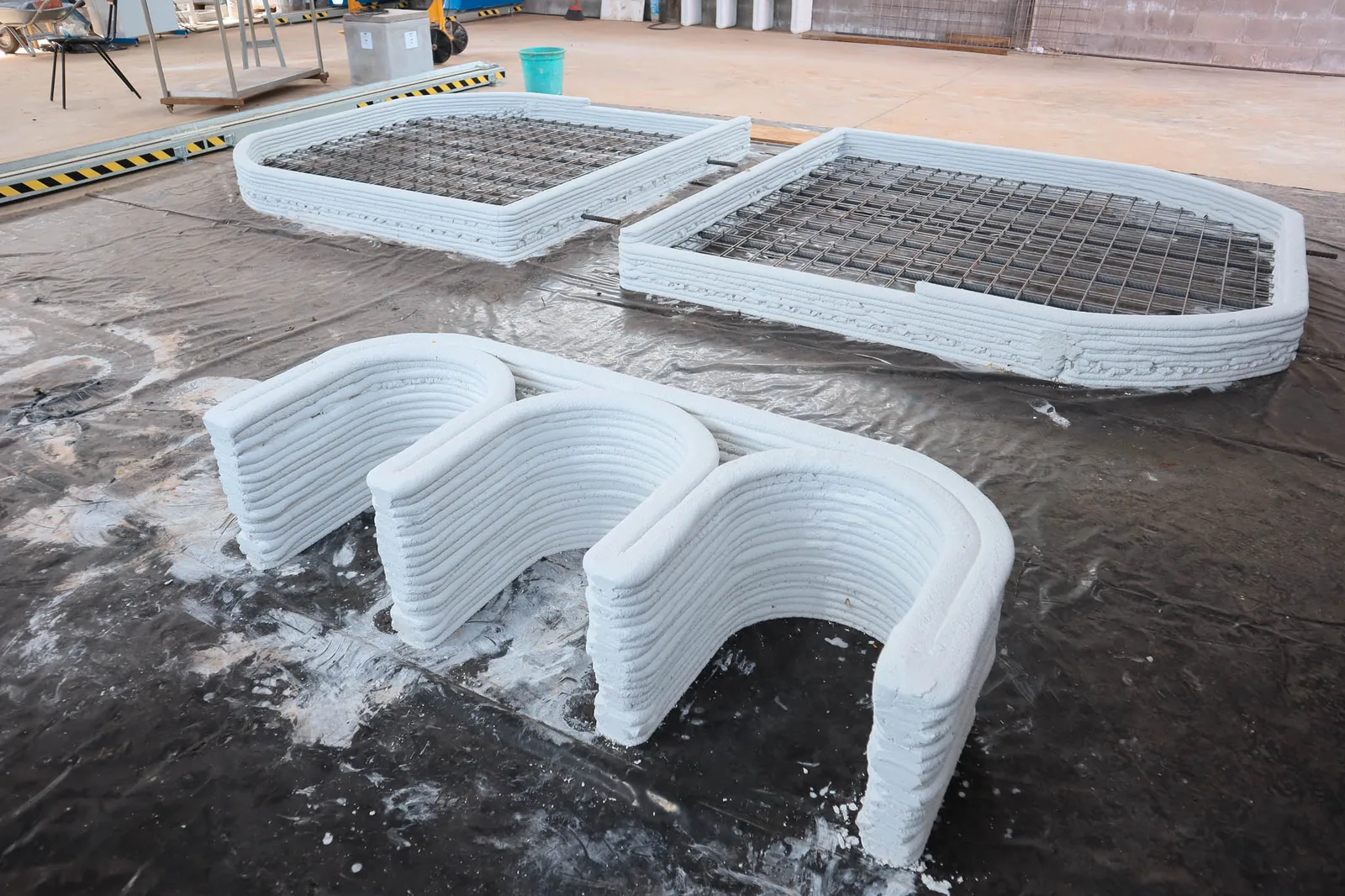
Alongside that work, the team has already produced working prototypes of arched urban benches and is developing a line of tables, planters and bins for the campus and community spaces.
One of the group’s main goals is housing for vulnerable people, especially after natural disasters and extreme weather. A doctoral project is studying modular systems printed off-site in cement-based materials, then transported and assembled on location, so that temporary homes can reach affected regions faster. Looking further ahead, the lab hopes to offer specialized technical services and to work with companies and municipal governments on construction and urban solutions.
Source: UEL (Portuguese)