
A metal cone once welded together from several pieces is now 3D printed as one stainless steel part for a Dutch machine builder.
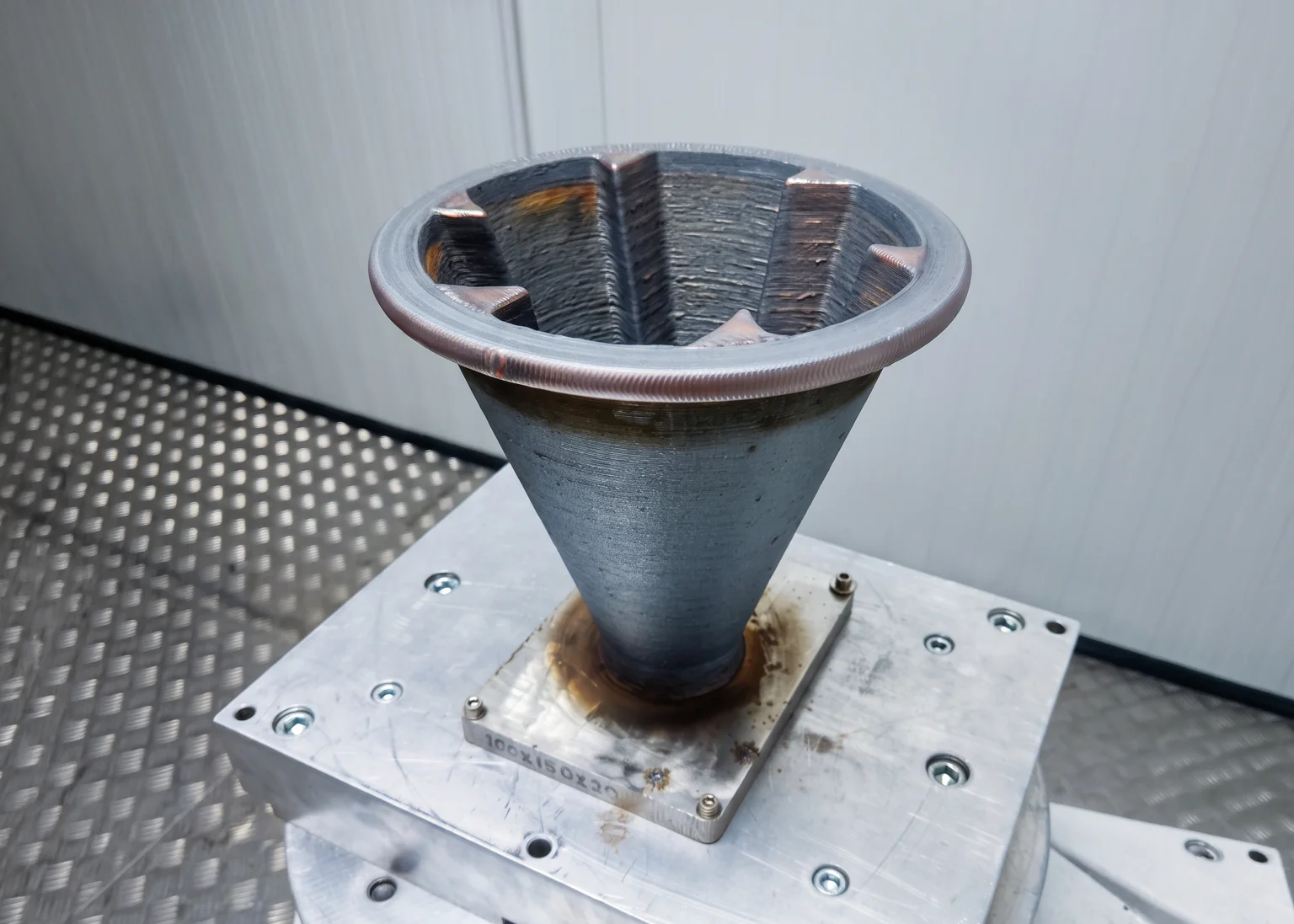
The cone sits inside a separator built by Machine Fabriek Geurtsen in Deventer, in the east of the Netherlands. Spinning at high speed, the machine pulls sludge, sand and other sediment out of wastewater, so the water can move on to the next stage of cleaning. Most of what Geurtsen builds is custom equipment made in small numbers for sectors such as defense, packaging and construction.
Inside the separator, the cone serves as a wear bush, taking the beating from abrasive water every hour the unit runs. It has a flange and six teeth, and for years it was made by hand. A fabricator bent sheet metal into a cone, welded on the flange and teeth, then fitted the piece onto a larger cone. Every step needed its own setup, stock material and operator time, which adds up fast for a part made in small numbers. The welds inside the cone were also the hardest to reach and the ones that mattered most.
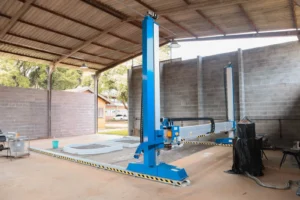
So Geurtsen asked K3D, a production service built around metal 3D printing and a Meltio partner, for a simpler part at a competitive price. K3D printed it with wire-laser metal deposition, in which several lasers melt welding wire into a small pool of metal that builds the part layer by layer. The print head, a Meltio Engine, was mounted on an industrial robot. K3D chose it because welding wire is easy to buy, and because the robot’s reach, not a closed chamber, sets how big a print can be.
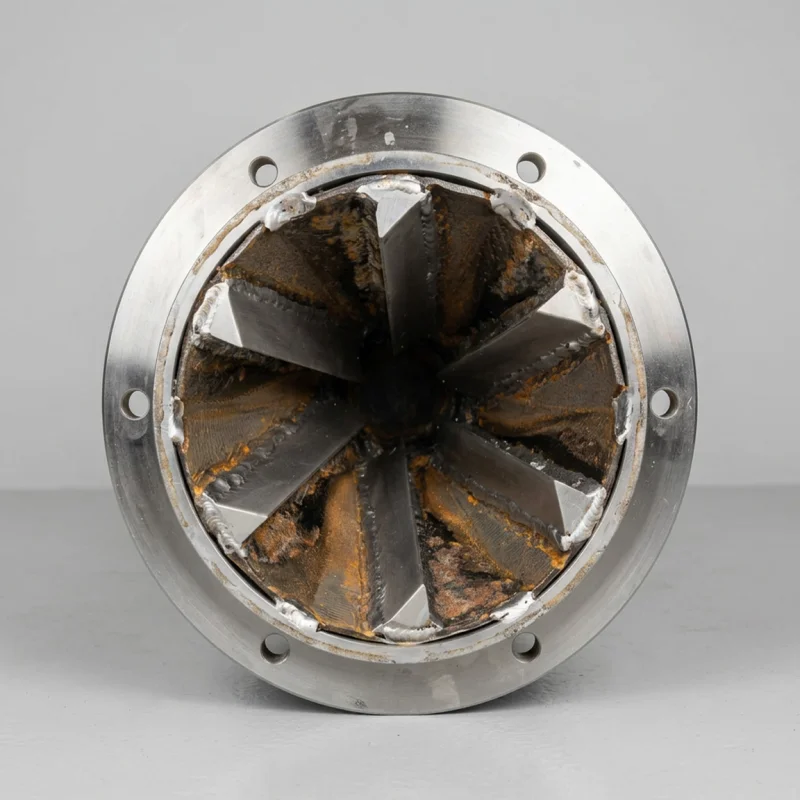
First, the two companies spent two weeks shaping the design to meet the end customer’s needs while staying printable. Because the top and bottom faces needed a tight fit, they added extra material there to machine away later. The print then switched between three toolpaths, the routes the print head follows. Flat layers built the shaft, layers that follow the slope built most of the cone, and a radial path built the flange, which sticks out to the side. Meltio calls these Planar Horizontal, Conical and Radial 360.
Printing took 30 hours in SS316LSi, a stainless steel welding wire, with process settings K3D developed in-house. Geurtsen then machined the top and bottom faces in its own shop.
The verdict from Geurtsen is better results without higher costs. The printed part needs fewer welding and machining hours, it carries less risk of a faulty weld, especially inside the cone, and one wire replaces several stock materials. It also looks cleaner, which was one of the goals from the start. K3D, for its part, believes the method suits long series as well as one-offs.
Source: Meltio