
A UC Berkeley lab used owls and cicadas as models for a 3D-printed drone propeller that is quieter and more efficient than a standard one.
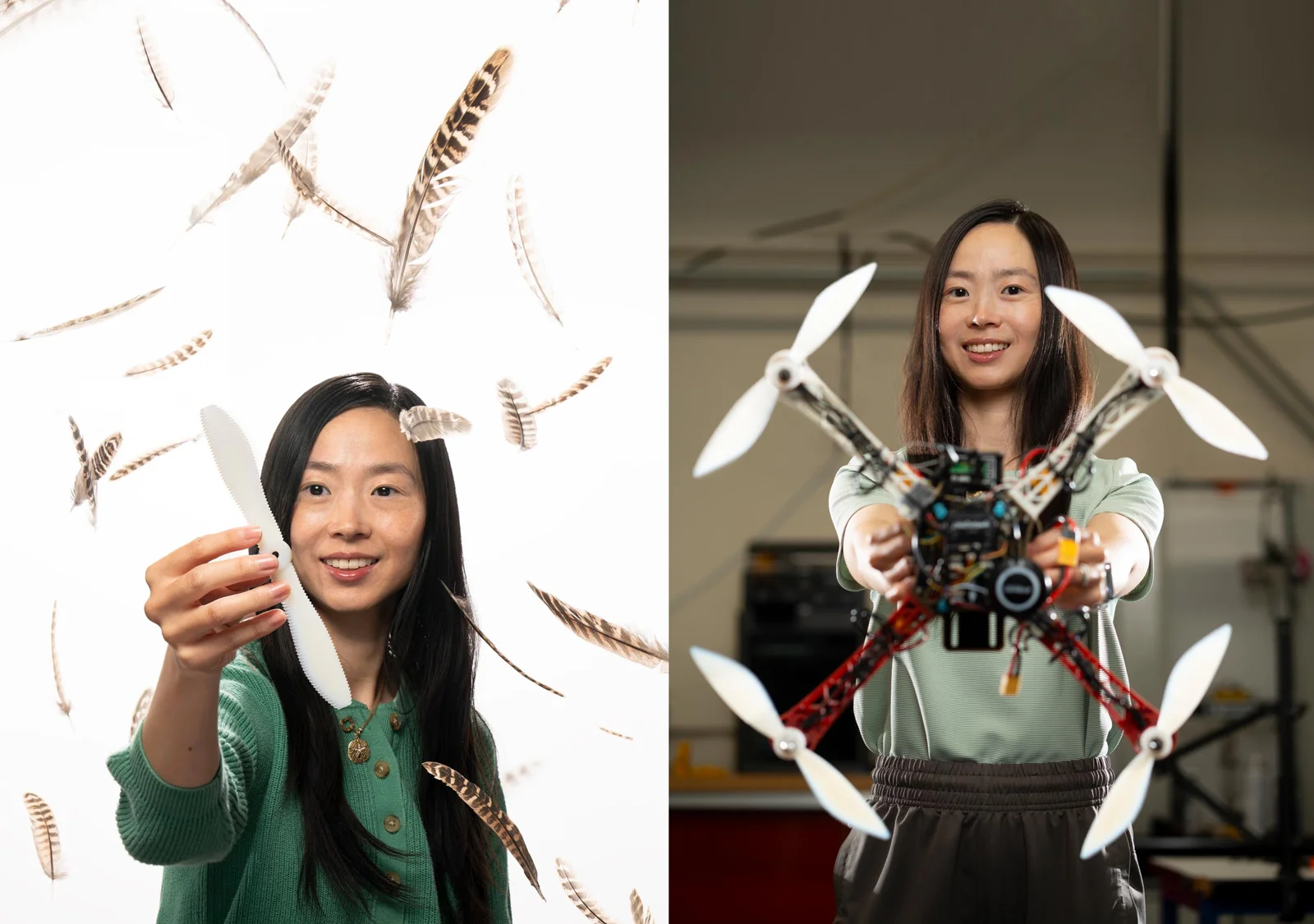
Drones are useful, but they are not efficient flyers and can be very loud. Many commercial drones fly for around 30 minutes, and some approach 90 decibels. “Noise is one of the biggest reasons we don’t have delivery drones yet,” said Grace Gu, associate professor of mechanical engineering. “Imagine operating something that loud near hospitals, neighborhoods and schools.”
Gu designs materials and devices based on examples from nature, so her team looked at two animals with opposite strengths. Owls fly almost silently thanks to serrated features on their feathers, but they are not very efficient flyers. Cicadas are very noisy but extremely efficient. Earlier owl-inspired propellers cut noise by only a few decibels and drained batteries faster.
The new design therefore takes its surface features from owl feathers and its shape from the inside edge of a cicada wing. Compared with an industry-standard propeller, it reduced noise by up to 5.5 decibels while increasing efficiency by more than 20%, and the team has filed a patent. To get there, the group 3D printed and tested dozens of propeller designs. Computer simulation then showed how changes in shape affected airflow, noise and efficiency.
The work is now being tailored for industry. Drover Labs, a robotics company based in the same city, makes hybrid air-and-ground robots that inspect places dangerous for people, such as water pipelines and fuel tanks. Since there is nowhere to land and swap a battery in those spaces, more efficient propellers let a robot inspect more of a structure in one flight. Gu’s team made prototypes for Drover’s robots, whose propellers sit in carbon fiber ducts, and then digitally modeled thousands of variations to meet the company’s thrust, efficiency and size needs. “Working with Gu’s lab allowed us to experiment with a large number of different propeller geometries in a very short period of time,” said Drover CEO Gary Holmgren.
3D printing is what makes that pace possible. Traditional manufacturing would need a new mold for every version of a propeller, while a printer lets the team change a design without starting over.
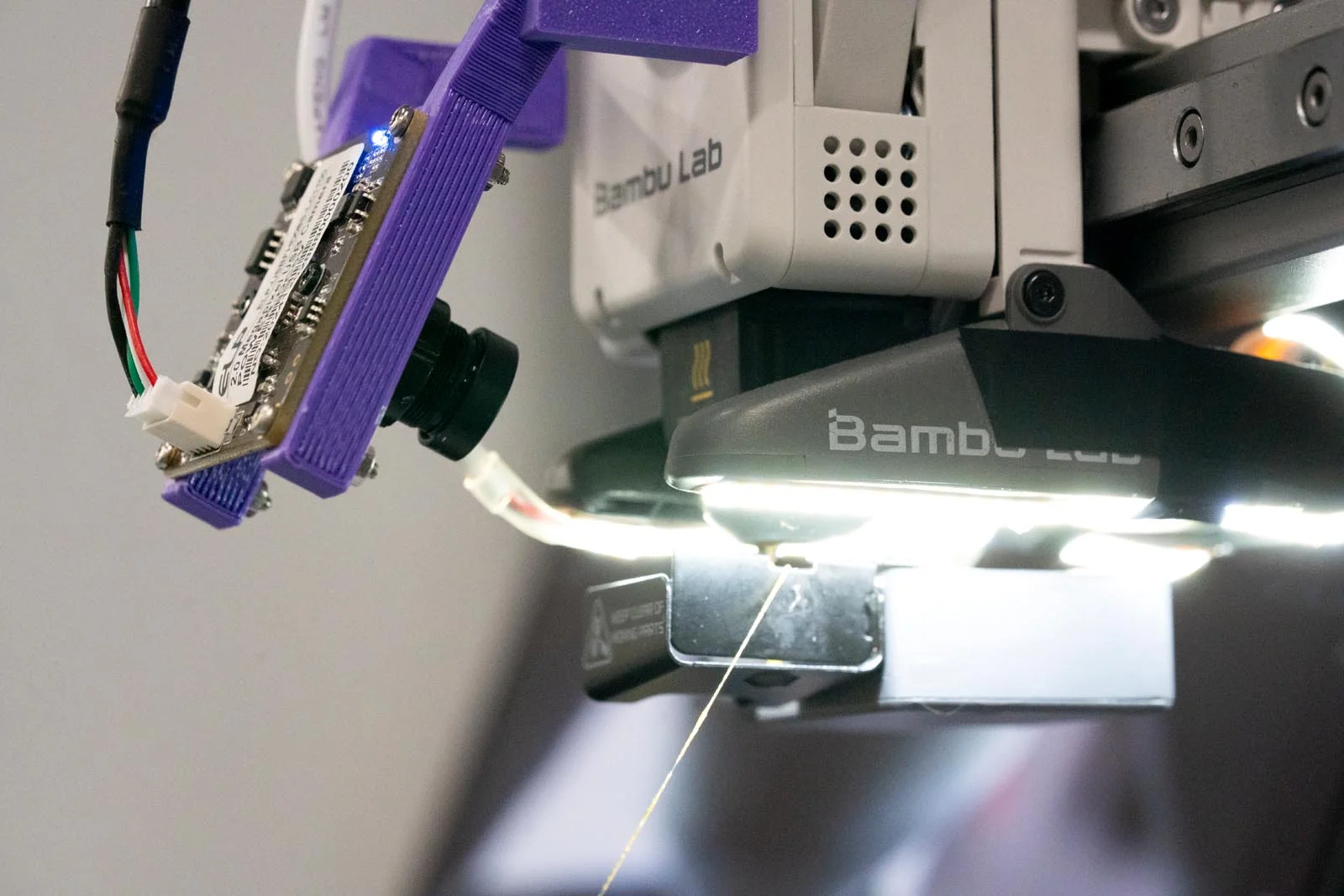
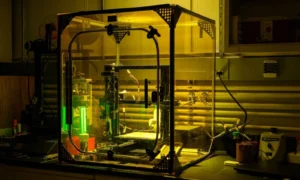
A design only helps if it can be printed reliably, though. Small changes in temperature and humidity can cause stringing, a common defect that leaves thin strands of material behind when the print head moves. To catch it, Gu’s team fitted the lab’s printers with sensors that photograph each print as it forms. An image-recognition AI called a vision transformer, trained on pictures of defects, flags the conditions behind poor prints, and a control program then adjusts the printer settings automatically.
Her long-term goal is printers that look after themselves. “In the future, people could 3D-print underwater or even in space, and there won’t necessarily be an operator there to monitor the system at all times,” Gu said. She also sees such printers turning local sand and rocks into building parts at disaster sites.
Source: UC Berkeley Engineering