
University of Rochester researchers turned a regular plastic 3D printer into a $450 bioprinter that can print living materials more than 100 layers tall.
Living materials are printed structures that contain cells, much like living tissue, except that researchers choose exactly which cells go in and what final shape they take. Depending on the bacteria inside, such a material can clean contaminated water or break down waste such as plastic. Yet the 3D bioprinters that make them can cost upwards of $100,000, and the soft shapes they produce can collapse before they set.
Bringing that cost down is the aim of biology professor Anne S. Meyer. Her lab has been making its own low-cost bioprinters for more than a decade, which it uses to print living structures that test new antibacterial and wastewater treatments. “We aim to create DIY bioprinters using inexpensive, easily obtainable parts, so that they are affordable and easy for other scientists to make in their own labs as well,” said Meyer.
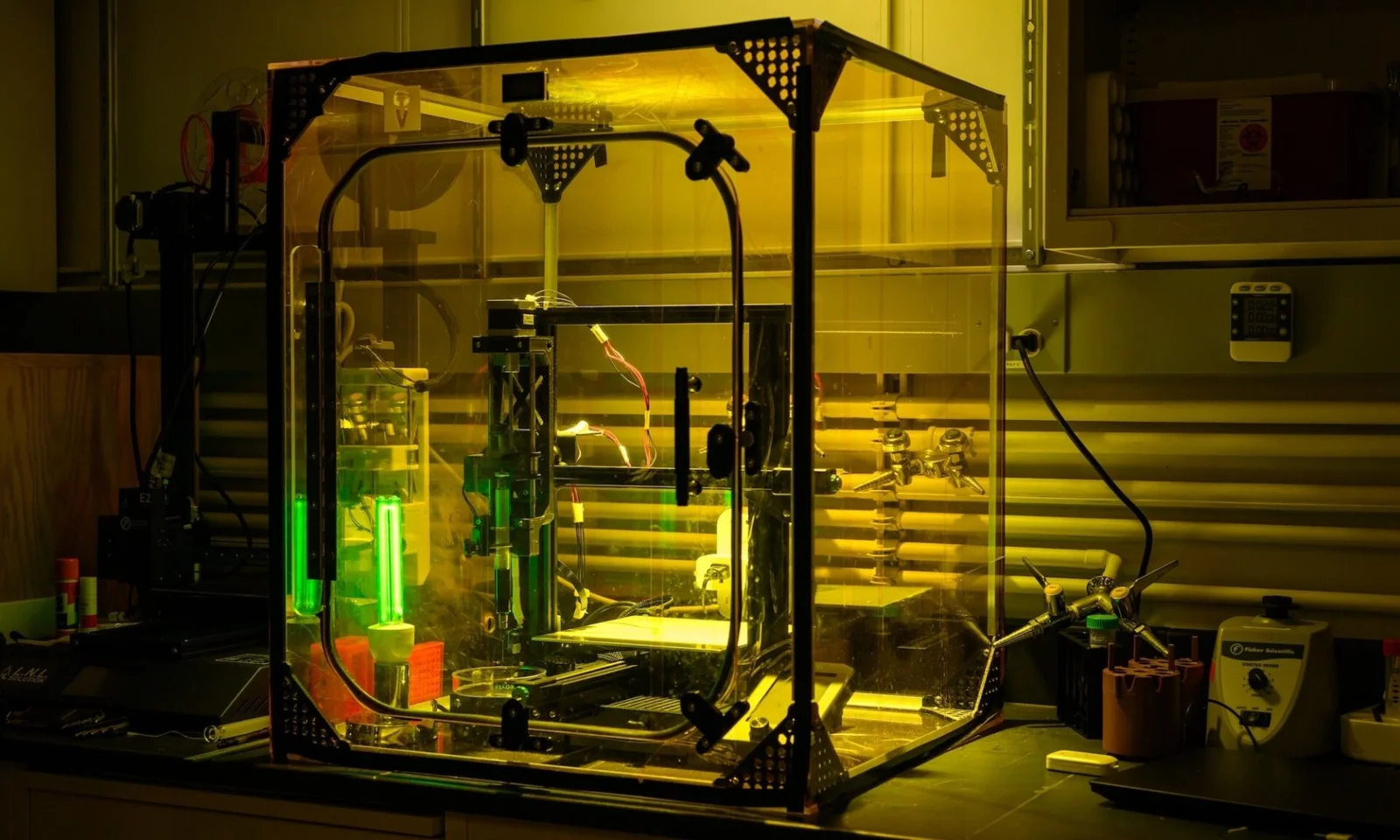
In a recent study in ACS Applied Polymer Materials, Meyer and colleagues from Rochester and Cornell University took a regular plastic 3D printer and removed its filament extruder. They replaced it with a syringe pump that squeezes out bio-ink, a mix of living cells and a polymer solution that hardens into a gel once printed. Because the syringe can push ink out and also pull it back, the edges of prints stay crisp instead of oozing. The whole printer cost $450 to build from easily available parts, and the instructions are on GitHub so other labs can make their own.
The upgrade also lets the printer build much taller. Earlier DIY bioprinters were limited to structures of fewer than 20 layers, while this one prints living materials with more than 100 layers and can even leave hollow cavities inside. “This opens up possibilities to make structures that have a high surface-to-volume ratio,” said Meyer. That way the bacteria inside can take in signals and nutrients more efficiently and release useful products into their surroundings much faster.
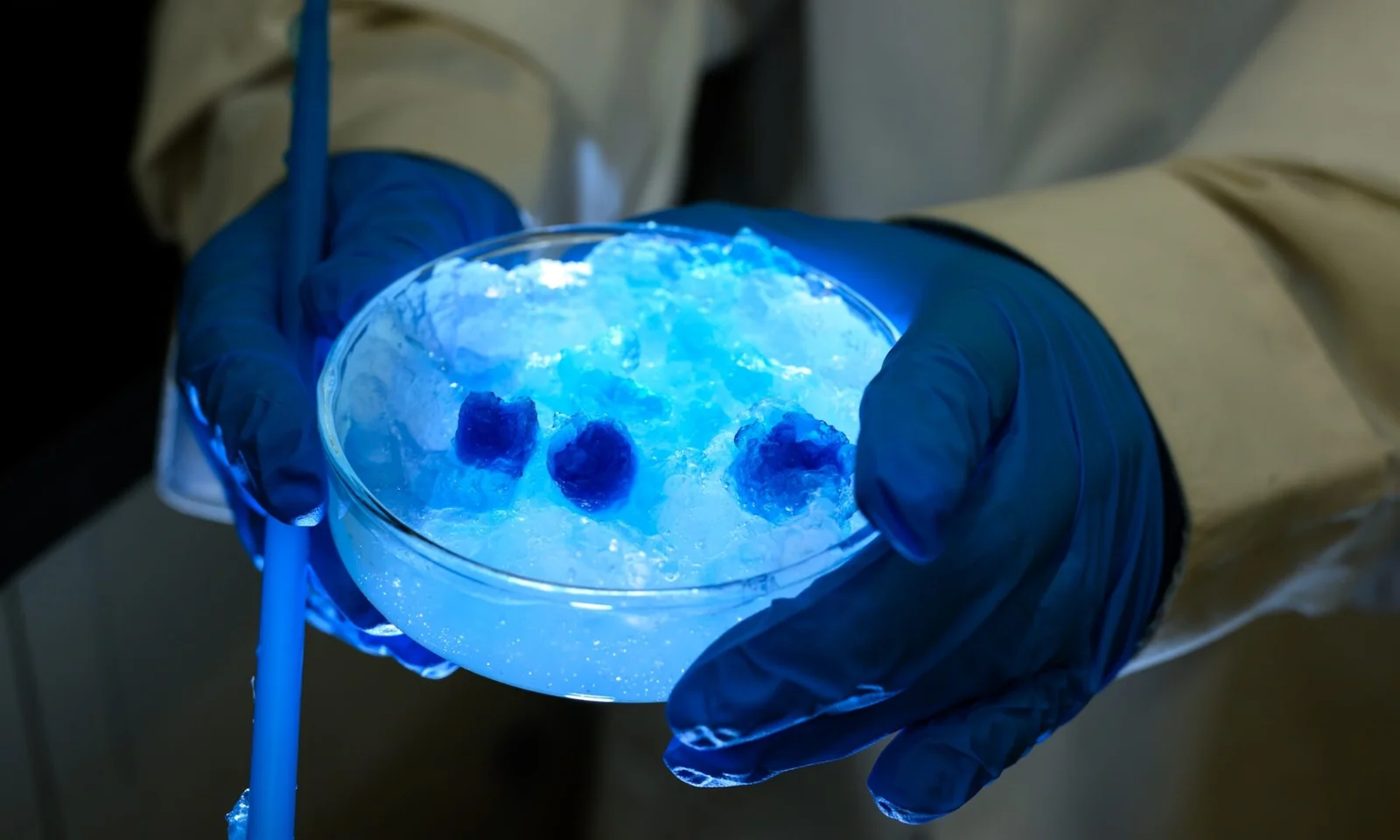
Those taller prints depend on a support gel the team developed, called a slurry. The printer deposits bio-ink straight into it, and the slurry holds the ink up and helps it solidify quickly at any height. The researchers made two versions. One makes it easy to remove the finished print, while the other is meant for incubation and keeps the microbes alive for four weeks or more. In earlier methods, the printed bacteria started to die after about nine days.
That longer life could make a big difference for research on biofilms, which are communities of bacteria and other microbes that stick to surfaces. They can be both harmful and helpful to people. With the two slurries, Meyer sees two paths. Engineered biofilms could have “more biofilm characteristics” for testing medically relevant biofilm, or be mechanically stronger so they can be put to use.
Source: University of Rochester