
Prusa now offers complete 3D printing farms, installing racks of its printers at a customer’s site and supplying software, materials, training and service.
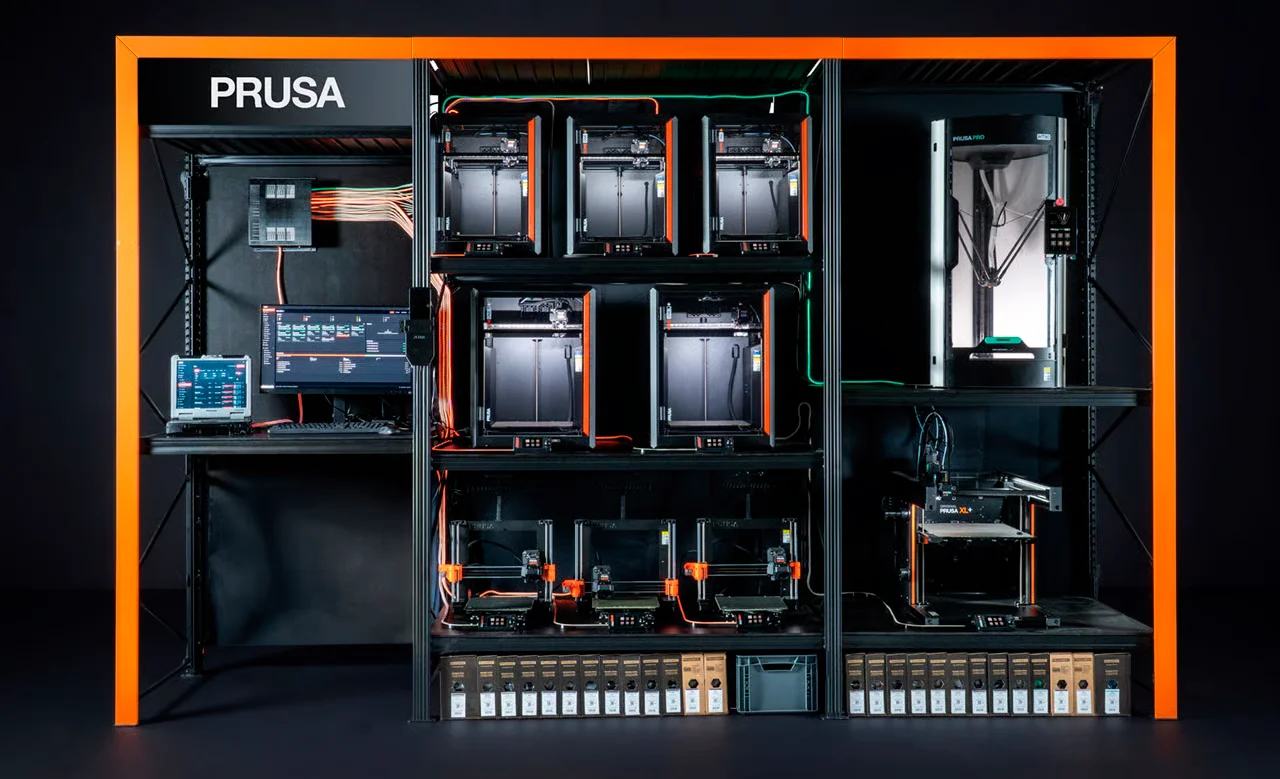
A 3D printing farm works like a small production line for plastic and composite parts, without expensive injection molds and tooling. It can combine FDM printers, which build parts layer by layer from melted plastic filament, with SLA printers, which cure liquid resin with UV light. Instead of ordering parts or tools from a supplier and waiting, a company prints them in-house when it needs them. “We always thought setting up a 3D printing farm should be easier,” Prusa wrote when it presented the Turnkey 3D Printing Farm at Formnext 2026.
That is why the customer only prepares the space, based on Prusa’s documentation for floor area, power, network and ventilation. Prusa then delivers, installs and commissions the farm, trains operators on site and supplies Prusament filament, resin and consumables. The custom racks can hold any mix of its printers. Options run from the MK4S and CORE One to the large-format CORE One L and XL, plus the HT90 for advanced materials and the SLX for resin.
Day to day, the farm runs on Prusa Connect Farm software. An operator enters which part and how many pieces are needed, and the software sends the job to printers with the matching material loaded. Once a print is done, the operator removes the part and confirms it, and the next job starts. Zebra scanners also help match part labels and send rejects back for a reprint.
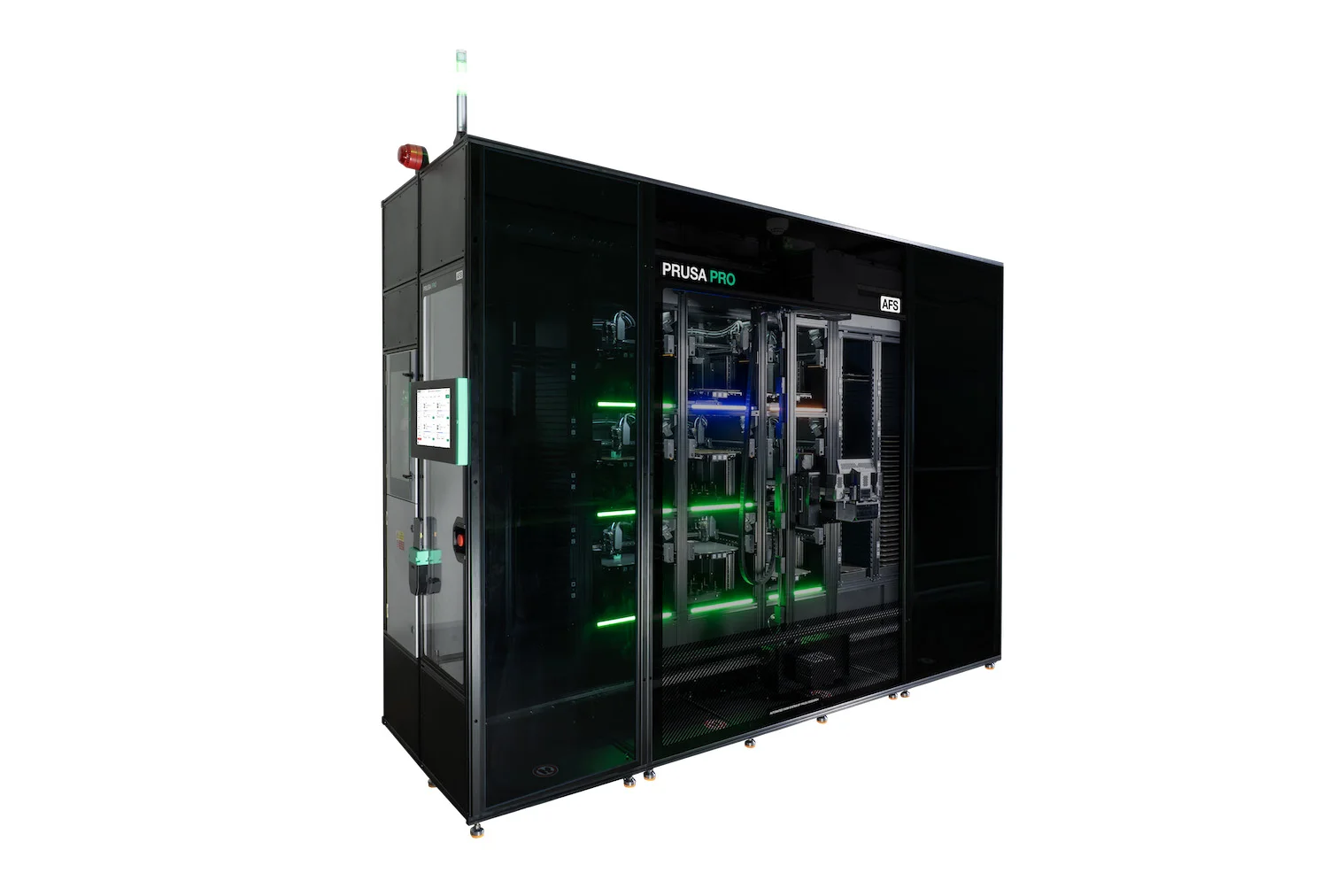
Customers who want less manual work can add the Prusa Pro AFS (Automated Farm System). It is a self-contained block of nine CoreXY printers, a design in which two motors work together to move the print head. Inside, a robotic arm moves finished prints into storage and loads fresh sheets without an operator.
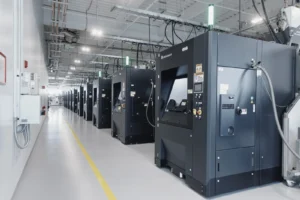
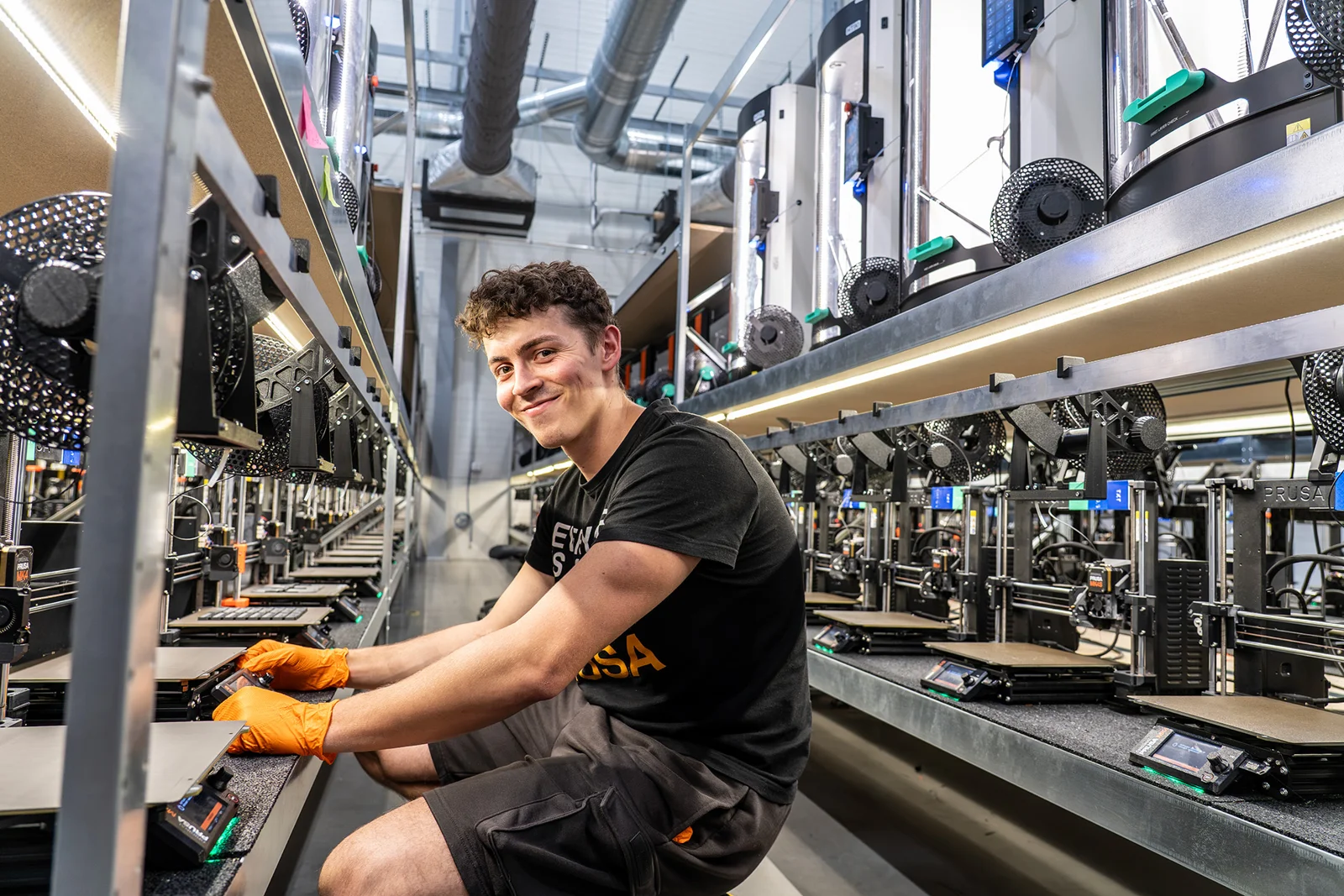
Prusa bases the offer on its own production. Its in-house farm of more than 700 printers runs around the clock and prints over a million production parts every month. It uses the same printers, materials, software and print profiles that Prusa delivers to customers, so its know-how comes from running the farm every day. A new farm can start with around ten printers and grow with extra printers or AFS blocks.

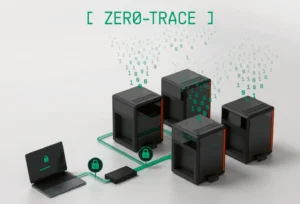
Control over data is a big part of the pitch. Prusa Connect Farm runs in Prusa’s cloud, but Prusa Connect Farm On-Prem runs at the customer’s site and works completely without an internet connection. This matches Prusa’s other Formnext news, including the local version of Prusa Connect and the CORE One L+ Zero-Trace, a printer that keeps no print files after power-off.
Typical jobs include prototypes, jigs, fixtures, gauges, assembly aids, spare parts for older machines and low-volume production parts. During a consultation, Prusa tells customers which of their parts are worth printing. Pricing is handled through a sales inquiry and price quote on Prusa’s website.
Source: Prusa Turnkey 3D Printing Farm