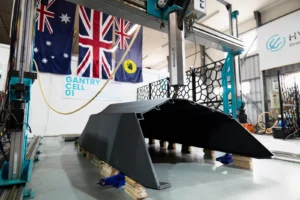

Oqton released MOS 2.0, software that runs 3D printing production from order to delivery, and its 3DXpert is now a standard option on Eplus3D printers.
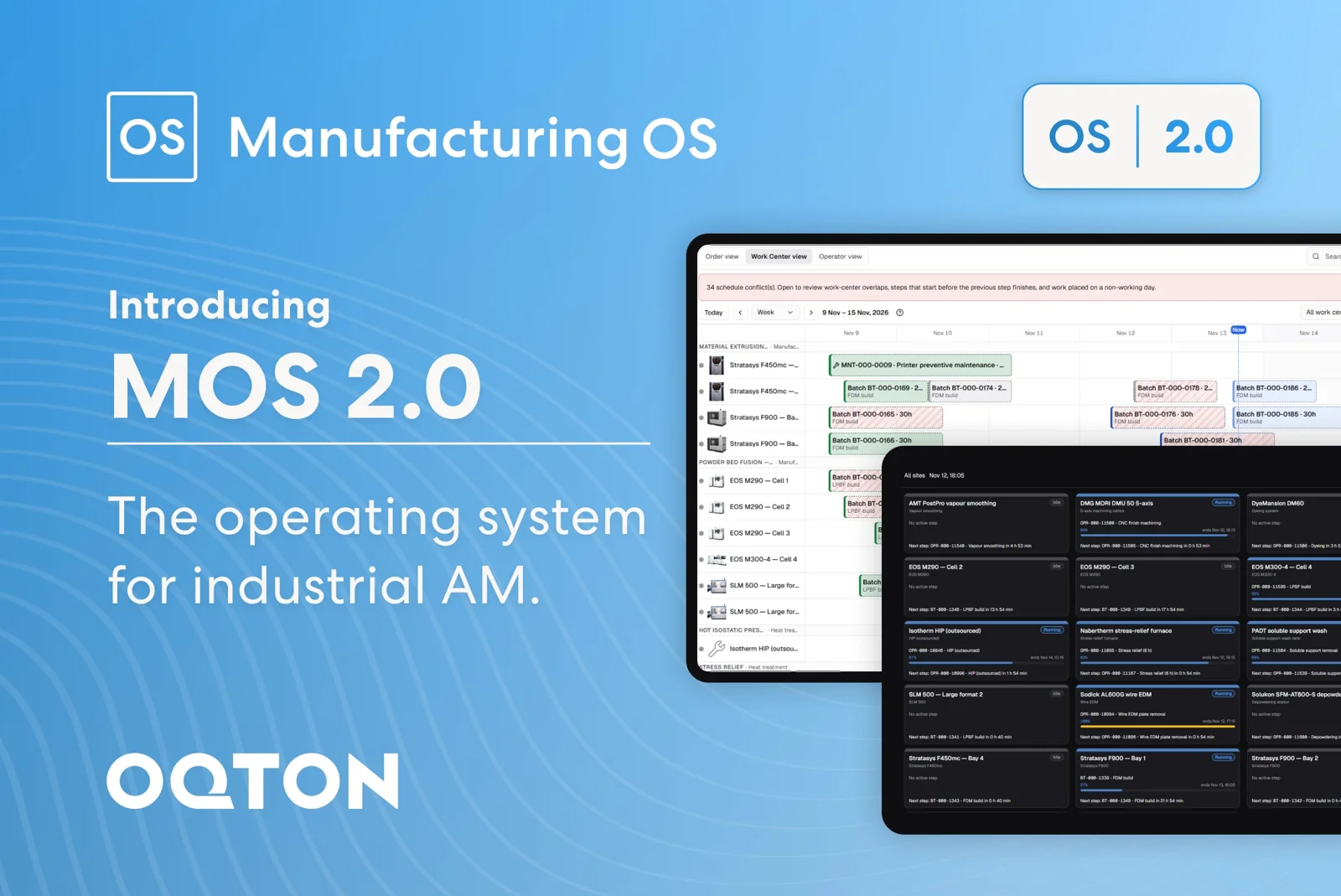
Additive manufacturing now runs as serial production in aerospace, medical and energy, and that changes what factories need from their software. Machines have to stay busy, operators need instructions at the machine, and every part needs a full record. Oqton’s latest news covers both ends of that chain, from running the factory to preparing each build.
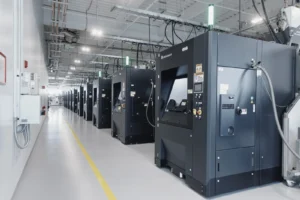
In the factory, MOS, short for Manufacturing Operating System, is a manufacturing execution system (MES), the software layer that schedules, guides and documents production on the shop floor. Version 2.0 warns planners early about machine clashes and orders at risk of running late. Operators follow instructions and checklists on a tablet, while supervisors see every machine’s status on a shared floor board.
Traceability gets a similar upgrade. Operators can put a suspect part or a whole batch on hold in one click, after which MOS routes it to review. The software also tracks powder lots through every build and generates a digital passport carrying each part’s production, material and quality record.
Until now, MOS ran only in the Oqton cloud, but version 2.0 also runs on premises. That matters for defense and aerospace manufacturers that must keep production data inside their own network. Baker Hughes is already implementing it to connect its workflow “from order management through manufacturing execution,” said Juan Carlos Flores, Vice President of Manufacturing at Baker Hughes.
The new version links with 3DXpert, Oqton’s build preparation software, which turns a part design into the job a printer runs. That tool is at the center of a collaboration with metal 3D printer maker Eplus3D.
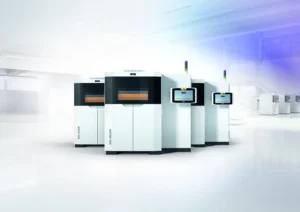
Eplus3D builds laser powder bed fusion (LPBF) systems, which use a laser to melt thin layers of metal powder. On such machines, shallow overhanging surfaces usually need support structures to hold the part and manage heat. Those supports add material and post-processing work. Oqton’s MeltControl, part of 3DXpert, adapts the laser’s scan path locally, using simulation to adjust energy input where the part needs it.
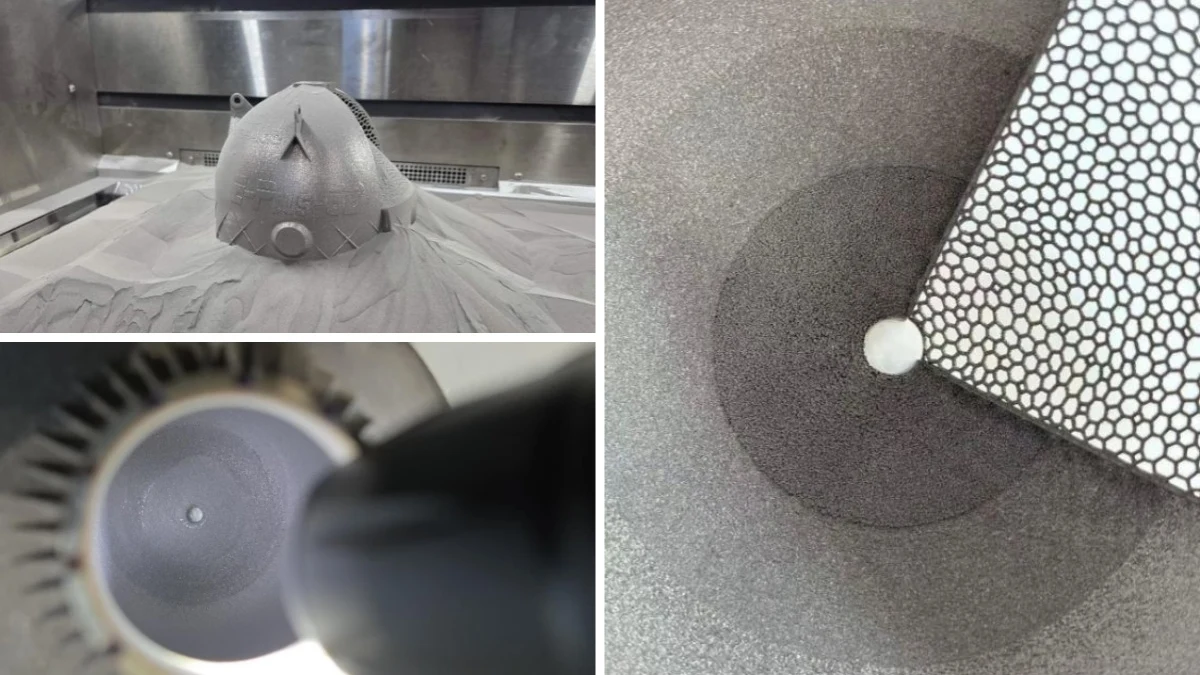
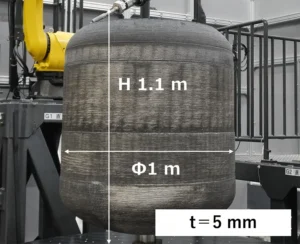
To prove the idea on Eplus3D hardware, the two companies printed a fuel tank in Inconel 718, a nickel alloy, on an Eplus3D EP-M300. Because of its curved profile and low overhangs, the part was a relevant test. How much support MeltControl saves depends on the part and the process.
“The Inconel 718 fuel tank printed on our EP-M300 shows how Oqton’s MeltControl can be applied in a real build,” said Raymond Zhang, Sales Director APAC at Eplus3D. “As part of this partnership, 3DXpert is now offered as one of the standard software options for Eplus3D systems.”
Much of the deeper integration is still in progress, however. The partners are working on Eplus3D slicing inside 3DXpert, direct output of Eplus3D’s EPI build files and transfer of existing EPHATCH process parameters into that workflow. They describe these as development directions, not functions that are all commercially available yet.
By contrast, MOS 2.0 is available worldwide now. Oqton is showing it at Formnext 2026 in Frankfurt, in Hall 12.0 at stand B78.
Source: Oqton MOS 2.0, Oqton, Eplus3D