
Hyperion Systems has taken its ASTRA 460, an uncrewed boat with a 3D printed recycled-plastic hull, to 40 knots in its first sea trial.
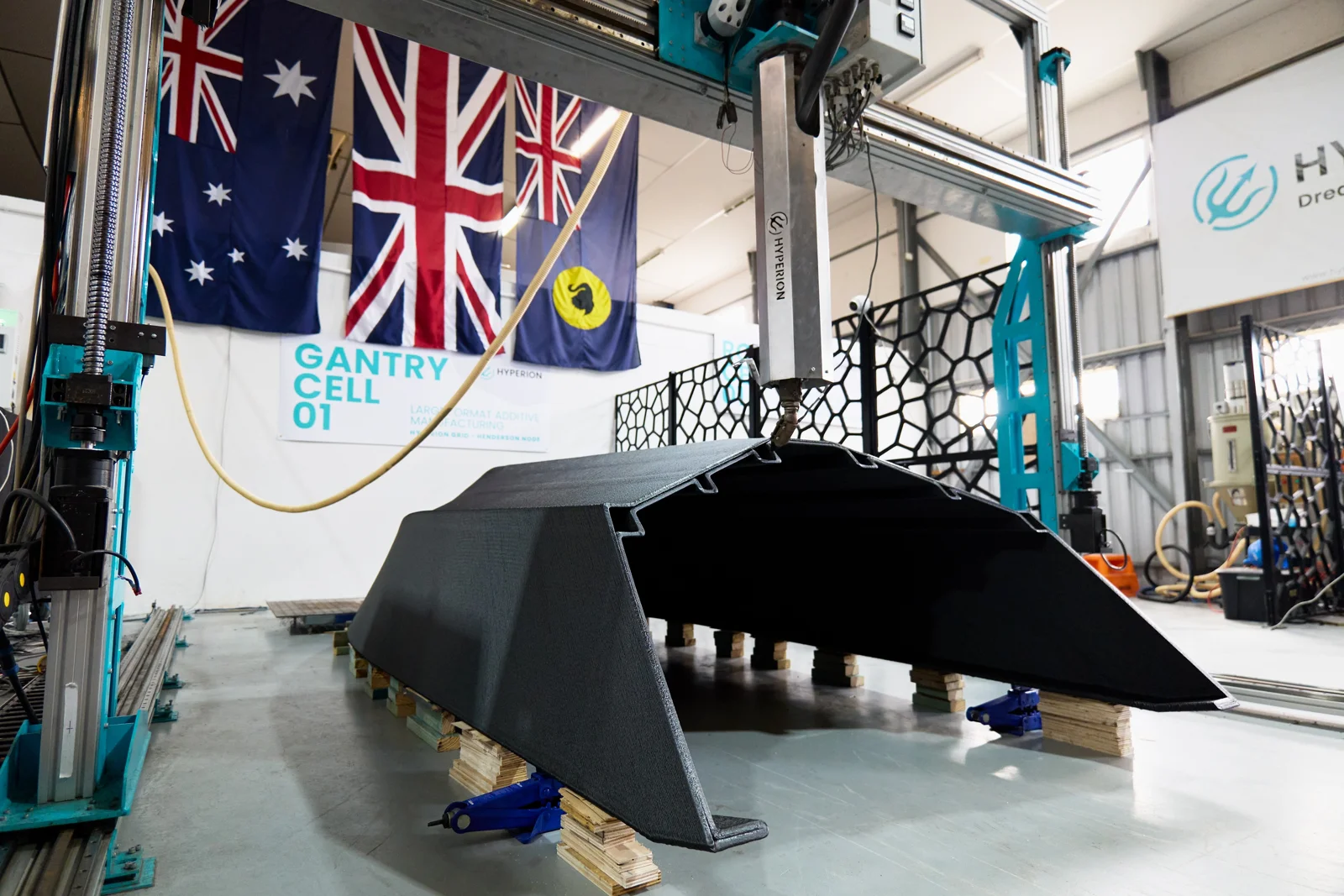
The Western Australian company builds the 4.6-metre vessel at its facility in Henderson, and Baird Maritime has now reviewed the boat in detail. During the remote-controlled trial, the USV (uncrewed surface vessel) reached its top speed. Later tests will check a cruising speed of 20 to 30 knots, a payload of more than 200 kg and a range of up to 200 kilometres. Henderson naval architecture firm Versatile Marine designed the hull, while ASTRA 460 is the first configuration in Hyperion’s wider ASTRA platform.
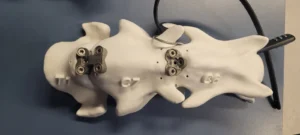
The hull is printed in HDPE, a tough plastic, with recycled polymer waste as the raw material. Hyperion uses large-format additive manufacturing for this, a method Baird describes as fused granulate fabrication. In that process, a screw extruder on a robot arm or gantry melts plastic pellets and lays them down as beads, so the hull grows layer by layer. The boat also benefits from HDPE’s impact resistance and anti-fouling properties, which help keep marine growth off the hull.
Speed is the main argument for printing. A hull takes about 40 hours, compared with four to six weeks for traditional boatbuilding. According to CEO Joshua Wigley, printing and fitting out a complete vessel takes about seven days. One machine can make two hulls a week, so the five machines now available could deliver more than 40 a month. Hyperion is preparing to build 10 units a month, with room to scale beyond 100.
Partners supply the rest of the boat. Fiction Labs installed the propulsion unit and guidance system for the trial, and the boat can be fitted with either an internal waterjet or an outboard engine. Greenroom Robotics’ GAMA software handles navigation and control, which means the boat can be steered remotely or run on its own along waypoints, grid searches and patrols.
“We see the [USV] playing a key role supporting missions including intelligence, surveillance and reconnaissance, border protection and security operations,” said project manager Jacob Kleinman. Next, Hyperion plans to deliver an eight-metre prototype to an unnamed European navy for a major naval exercise before the end of the year.
For Wigley, the boat is also a test case for local production. “Our longer-term ambition is to connect Australian vessel manufacturing with the ability to produce closer to where vessels are needed,” he said.
Source: Baird Maritime, Hyperion Systems