
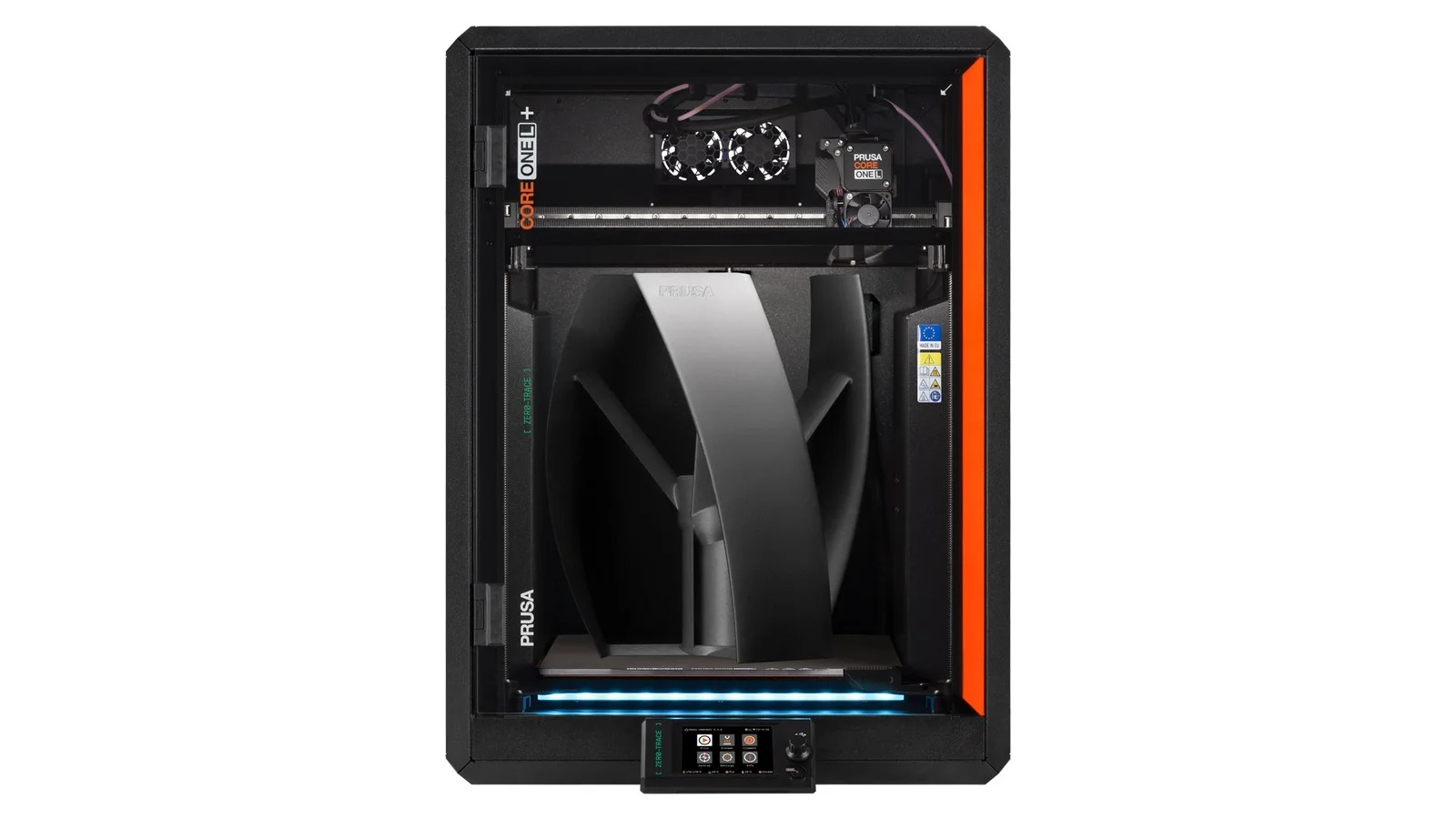
Prusa has introduced the CORE One L+ Zero-Trace at Formnext 2026, a 3D printer that holds print files only in memory that clears at power-off.
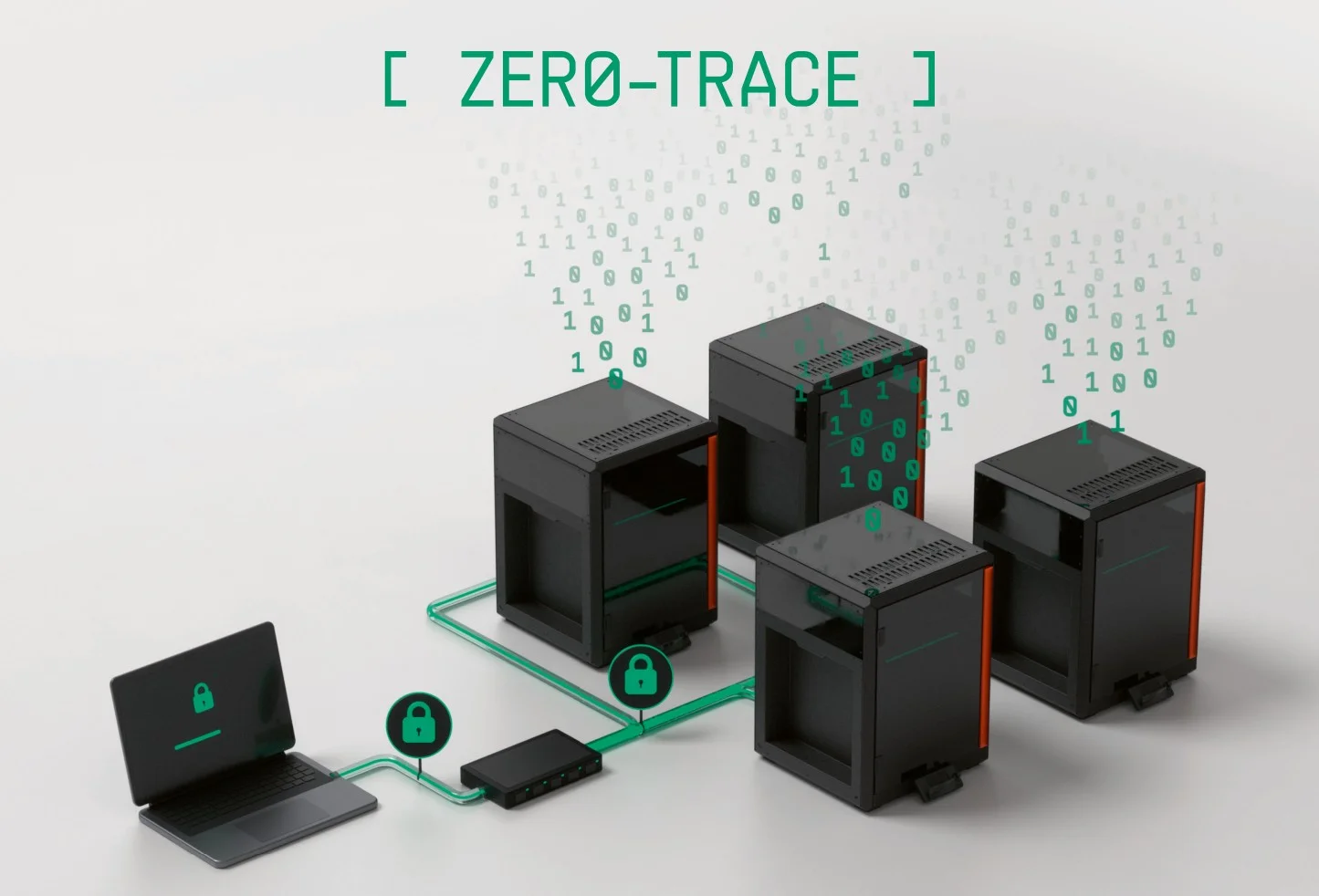
The problem it targets is physical access. Anyone who takes a USB drive or SD card from an ordinary printer can walk away with design files. For defense sites, export-controlled aerospace parts and unreleased designs, that is a real risk, so Prusa removed every place where a file could stay behind.
The Zero-Trace version therefore has no persistent storage, no USB port, no Wi-Fi and no camera. Instead, print files stream from the customer’s own local server over an encrypted Ethernet connection. On the printer, the job sits in volatile memory, which only holds data while it has power, and the decryption key lives on a separate circuit board. As a result, cutting the power wipes both the file and the key.
Each printer is cryptographically paired with that server and refuses jobs from anywhere else, while audit logs record who printed what and how many copies. Firmware updates also run fully offline, and the printer only accepts signed firmware.
Underneath, it is the regular CORE One L+, a CoreXY machine in which two motors work together to move the print head. It keeps the 300 x 300 x 330 mm build volume, and optional hotends up to 400 °C handle engineering materials such as PA-CF and PEI (Ultem).
That local server is where Prusa’s software news comes in. Prusa Connect, so far a cloud service, now also comes as Connect Local, which customers run on their own hardware without internet or a Prusa account. Back on August 13, Prusa described it as the successor to PrusaLink, the interface built into each printer. It is now a public beta, free for personal use and small businesses, with its source code on GitHub.
“You own the hardware. And you should own the software, too,” said Josef Průša, CEO of Prusa Research.
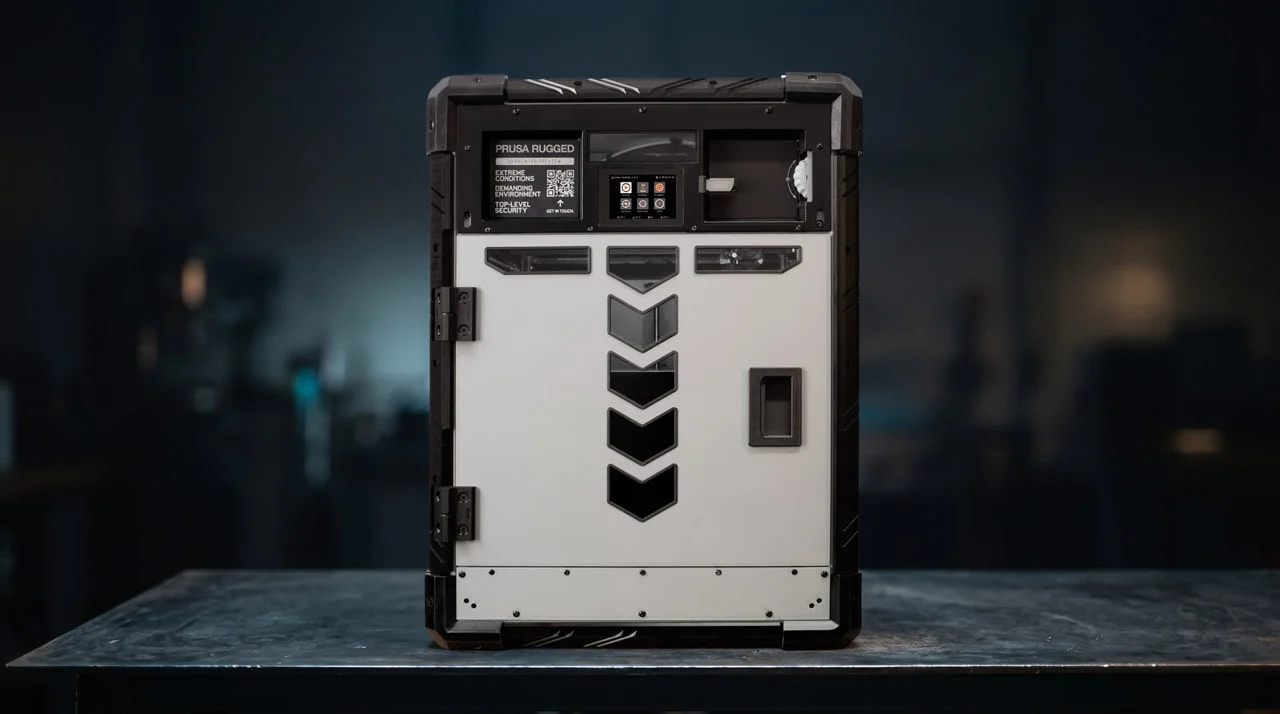
For larger users, Prusa now offers turnkey print farms, combining machines such as the MK4S, XL, HT90 and Zero-Trace, with installation and training included. It also showed a Rugged preview based on the CORE One L+, built to be dust-resistant, transport-proof and usable with gloves. However, it is not for sale yet, as Prusa is still collecting feedback.
Prusa’s Formnext stand also gives room to a partner. Israeli startup Filament2 is printing silicone there live with its Liquid Filaments. Each one is a flexible tube filled with silicone or another paste, which the printer feeds just like regular filament. On the Prusa XL, a Filament2-developed toolhead mixes the two-part liquid in a precision nozzle, and the outer tube peels away to leave a pure silicone part.
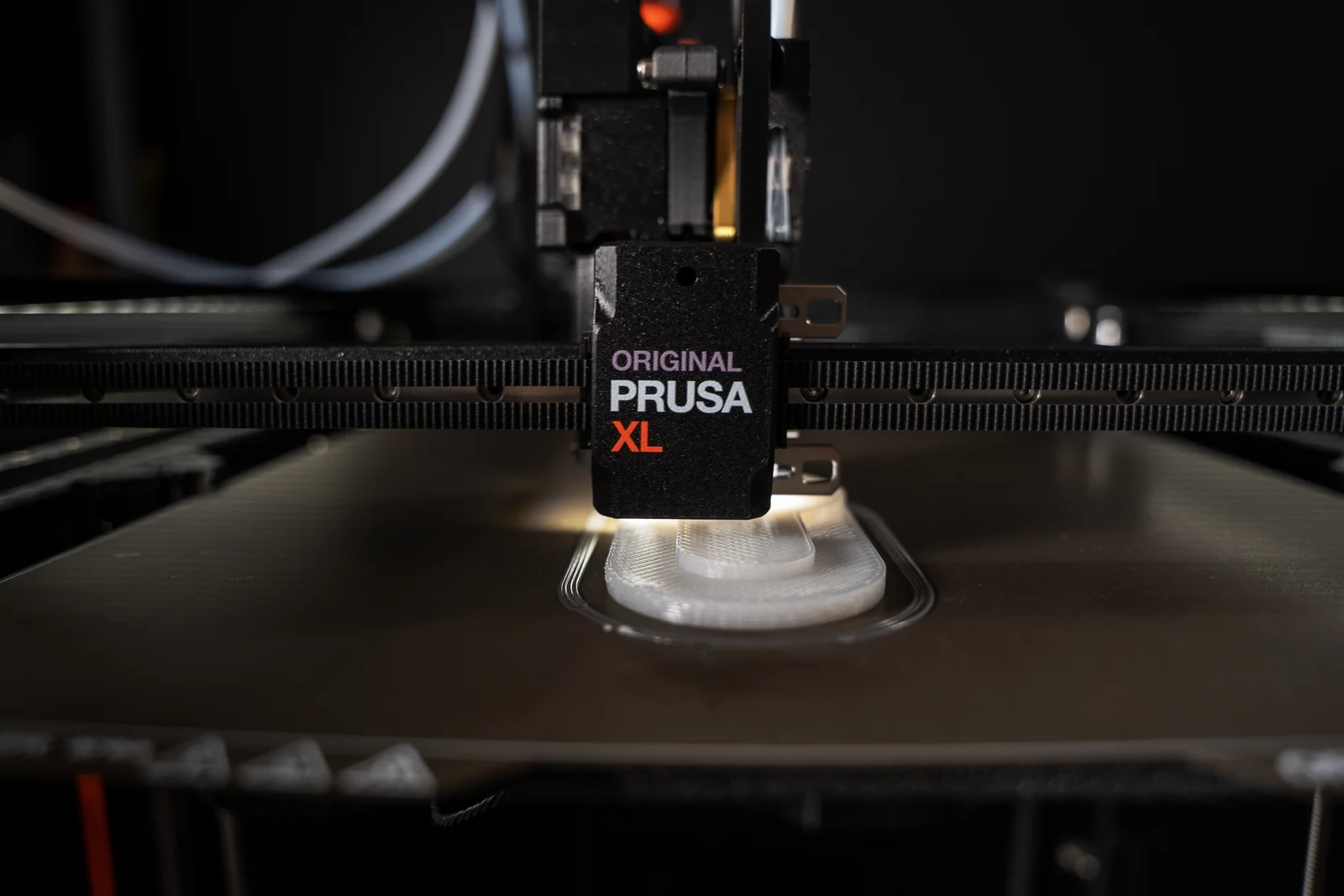
Thanks to the XL’s tool changer, silicone and standard FDM plastic can even be combined in a single part. The toolhead itself is not new, though. Prusa and Filament2 already showed it at Formnext 2025, and Prusa now sells it as an XL add-on for €969. Its shop currently lists it as out of stock, while Filament2 promises “some exciting new things to show you” at this year’s show.
Zero-Trace demonstration units are available now, and first deliveries are planned for January 2027. Prusa shows the lineup at Formnext in Frankfurt, Hall 12.0, booth C01.
Source: Prusa at Formnext 2026