
Bosch Industrial Additive Manufacturing is showing the second generation of its Bosch Pellet Printer for the first time at Formnext 2026.
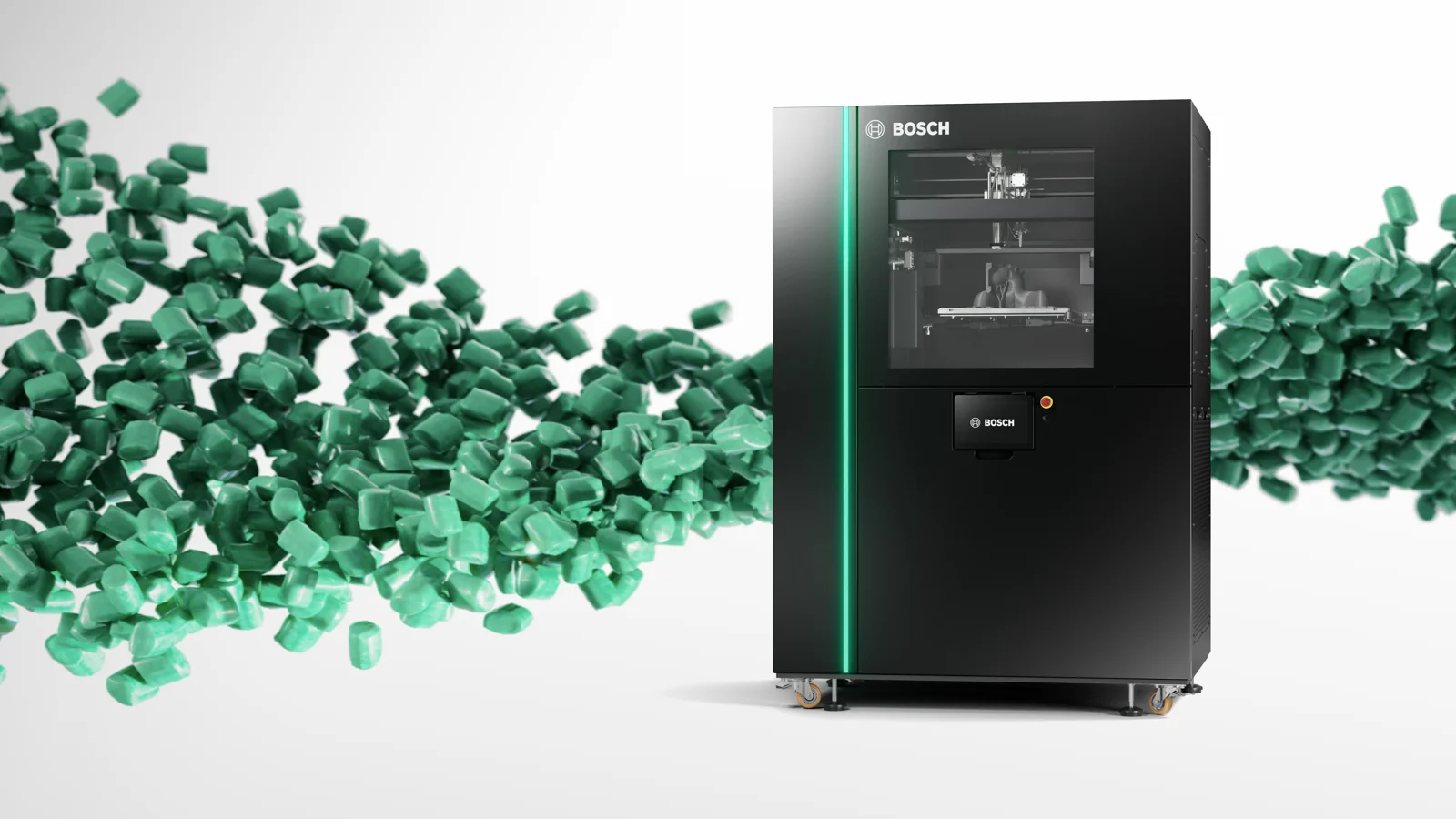
The printer is built around a simple idea. Injection molding machines turn plastic pellets, small granules of raw material, into series parts. The Bosch Pellet Printer melts the same standard pellets instead of expensive materials made specially for 3D printing. As a result, a part can be prototyped, tested and later produced in one material, which matters for checks such as leak testing and flammability.
Bosch kept Generation 2 under wraps until the show, where it gives live demonstrations. On its website, the company explains that the new machine uses the same technical process as the first generation, although some individual elements sit in different positions.
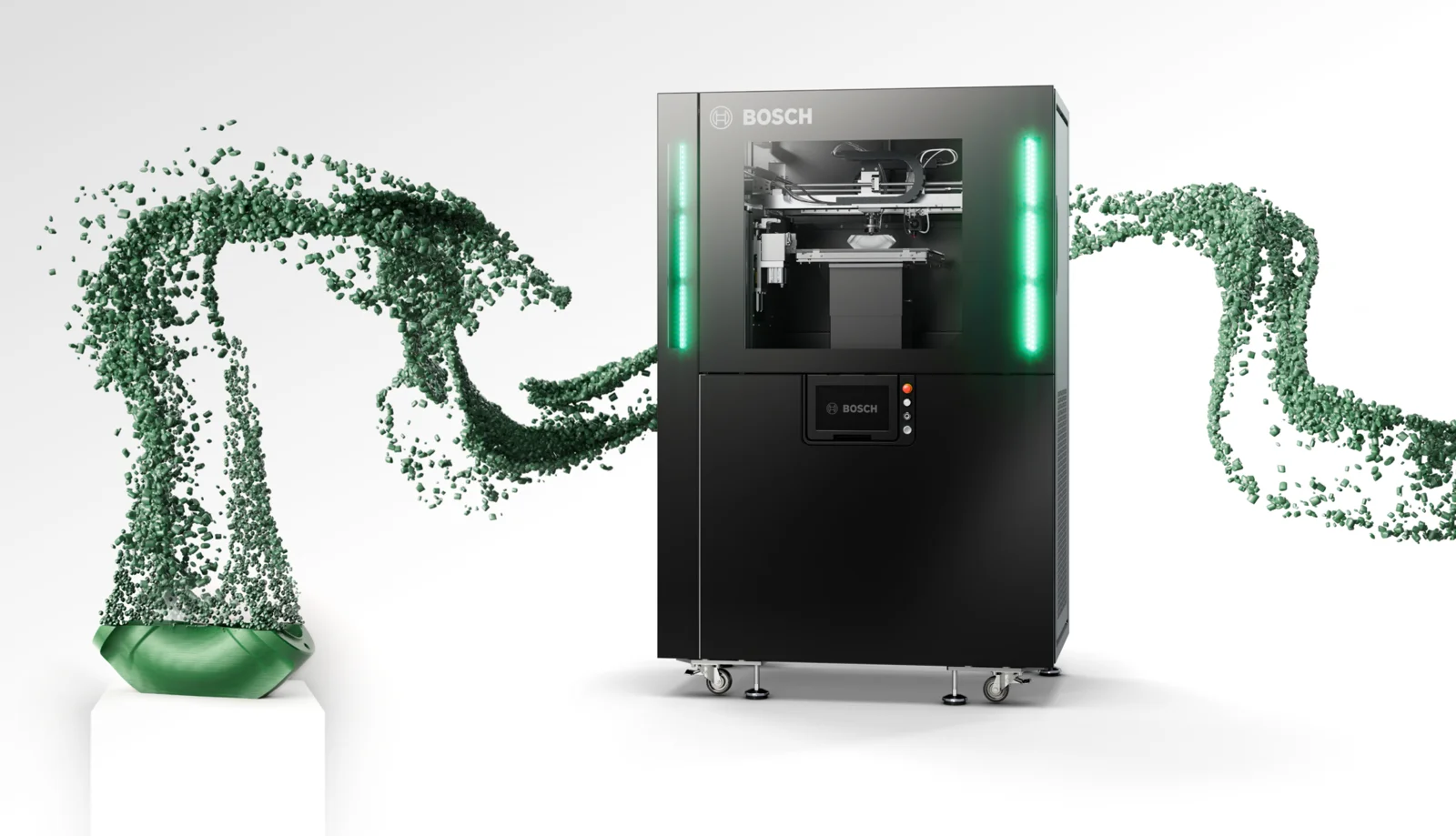
That process starts with an integrated drying unit, which removes moisture from the pellets before printing. After that, the system combines a material-friendly melting unit with a dynamic print head. Because the process treats the plastic gently, certified grades keep their certification in the printed part. That ranges from ESD-safe plastics, which safely discharge static electricity, to flame-retardant compounds.
On the first-generation printer, the material range is wide as well. It runs from soft TPE of 32 Shore 00, a hardness scale for very soft rubbers and gels, to fiber-reinforced PA6 GF30 and high-performance PPS GF40. In those names, the GF figure gives the glass fiber content in percent. Tensile tests to ISO 527 with PA6 GF30 showed mechanical properties up to 300% better than conventional 3D printing processes. However, those tests ran under laboratory conditions with optimized settings, and results may be lower when beginners operate the printer.
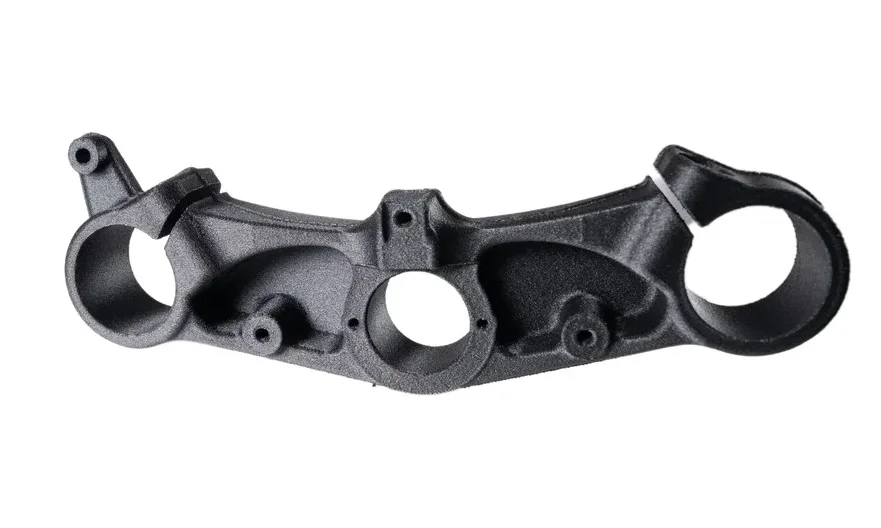
Customer parts show where this leads. For BMW Motorrad, Bosch printed sample triple clamps in PA6 GF30 HI for early fit checks. A gasket seal for Austrian railway operator ÖBB was printed in TPS Shore 50A and meets the DIN EN 45545-2 fire safety standard. Within Bosch itself, the fuel cell division used the printer for gas-tight functional prototypes in PPS GF40, the material planned for series production.

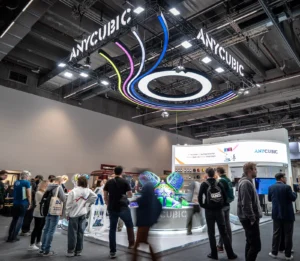
At Formnext 2026, which runs from November 17 to 20 in Frankfurt, the stand also features parts in PEEK and PA6 GF30 and certified materials such as flame-retardant grades. Bosch colleagues from metal 3D printing join the team, and a customer is on hand to share practical experience. Visitors can find the booth in Hall 12.1 at stand C41.