
Atomik AM and Concr3de have launched CoBound HiC, a binder for 3D printing silicon carbide whose carbon ends up contributing to the finished part.
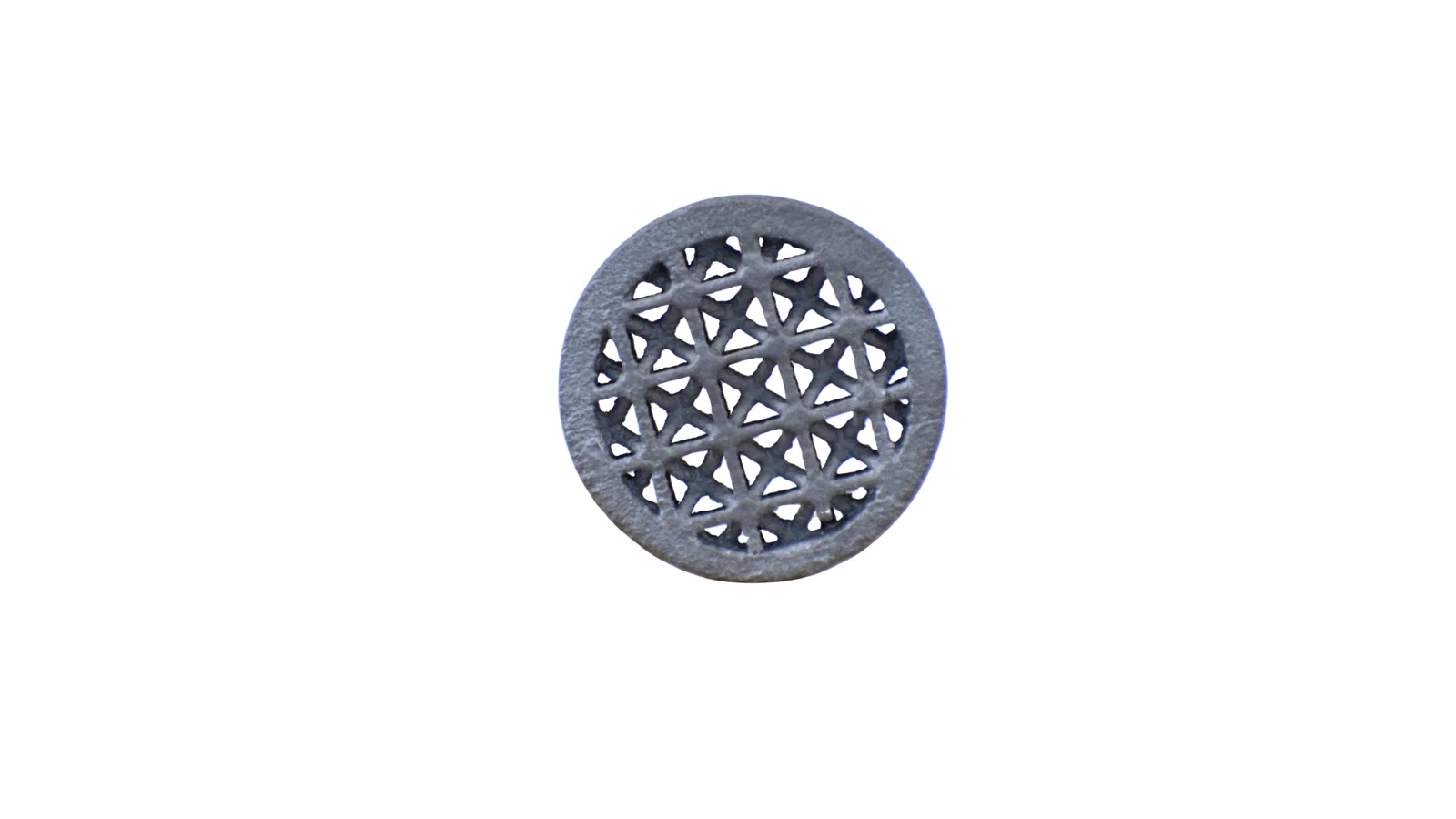
The binder is made for binder jetting. In this 3D printing process, a print head deposits a liquid binder onto a thin layer of powder, gluing the particles together layer by layer. What comes out of the printer is a green part, a shape that holds together but still needs further processing before it is finished.
CoBound HiC Binder was designed around what silicon carbide (SiC) needs during printing and in the processing that follows. Besides giving printed parts enough strength to be handled, its high carbon content serves a second purpose, because the carbon contributes to the final part. That makes the binder chemistry an active part of how the material is processed, rather than only binding the powder.
Testing at Atomik AM recorded green strengths of about 3-4 MPa in cured, printed silicon carbide samples. Green strength is a part’s strength before final processing, and MPa (megapascal) is a unit of stress. The values come from three-point bend testing, which loads a sample in the middle while it rests on two supports. They apply to the samples and conditions tested, since performance depends on powder characteristics, printing parameters and curing conditions.
“We designed CoBound HiC Binder around what silicon carbide needs after printing, not just during it,” said Professor Kate Black, CEO of Atomik AM. “Concr3de’s printing expertise has let us test that in real printed parts, and Formnext is the first chance for people to see the parts for themselves.”
The roles are clearly split. Atomik AM, based in Liverpool, UK, developed the binder and holds its intellectual property. Rotterdam-based Concr3de, which builds binder jetting systems and materials, brings its expertise in printing and processing silicon carbide. The two companies have signed an agreement to bring the product to market together.
“I’m excited to collaborate with Atomik,” said Eric Geboers, Founder at Concr3de. “This binder, designed for silicon carbide and working on CONCR3DE printers, is just a first example.” In his view, binder jetting has many applications, which each need materials and hardware that are fully in sync.
Concr3de’s own machines start with the Armadillo, which offers build volumes up to 440 x 440 x 250 mm for research and small-scale production. At the other end, the Elephant prints parts up to 2 x 1 x 1 m.
CoBound HiC Binder is available to order now through either company, and both provide quotations on request. Meanwhile, visitors to Formnext 2026 in Frankfurt can see printed samples on the Concr3de stand in hall 11.0, B49. Representatives of both companies are there to discuss the development work and potential applications.
Source: Atomik AM