
Swiss 3D printing firm Neoshapes and software company Spherene are combining metal binder jetting with generative design to make lighter jewelry.
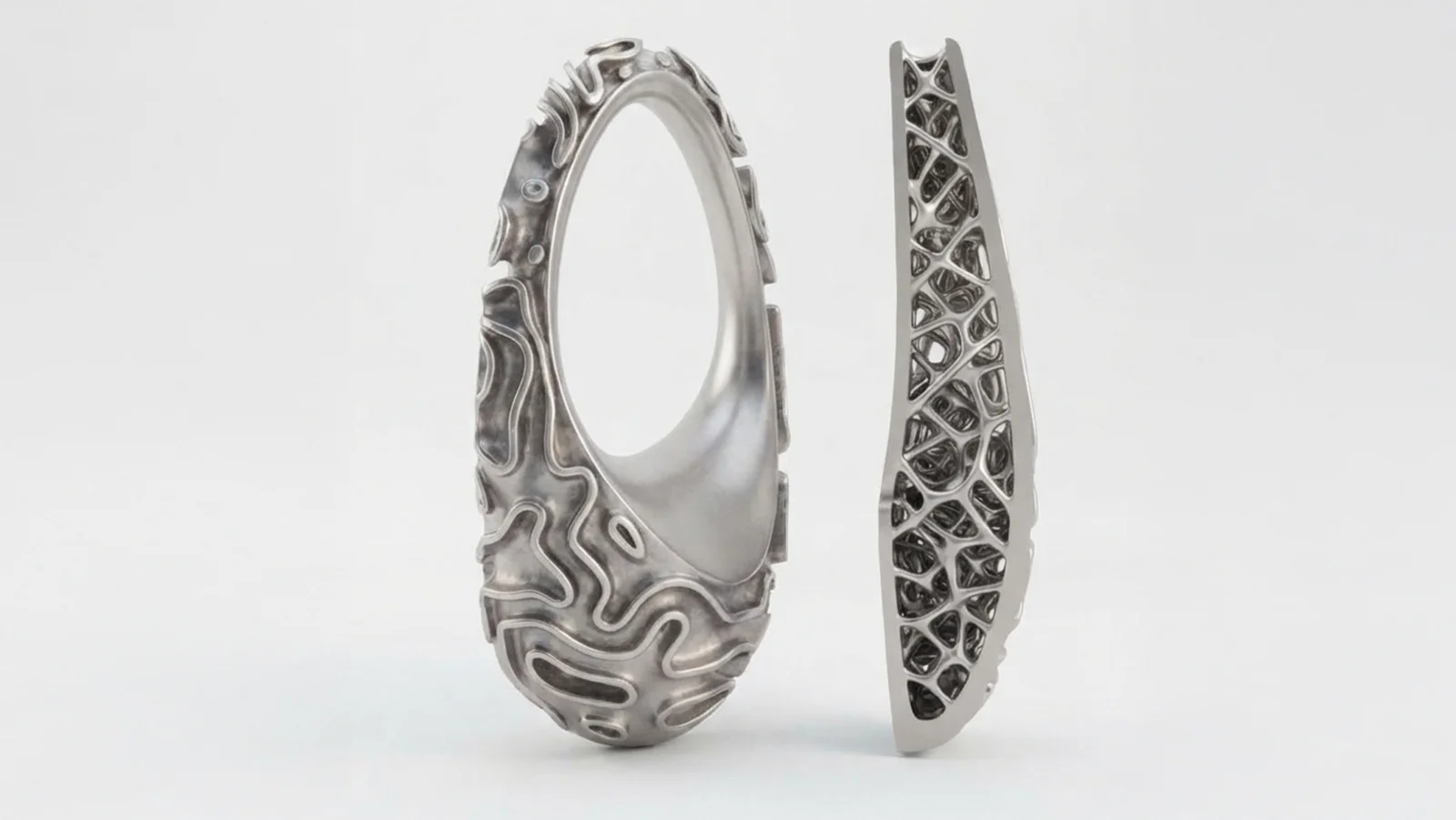
In jewelry, every gram of precious metal adds cost. Geneva-based Neoshapes runs a 3D printing center for the luxury industry, serving makers of jewelry, watches and accessories. Hollow or lightened shapes therefore matter to its customers, because they improve the ratio of weight to volume against material costs.
Spherene, based in Zurich, supplies the design side. Its software generates internal structures with a patented method called Adaptive Density Minimal Surface (ADMS), so the inner architecture adapts locally to performance demands. Designers can tune those structures for strength, weight, thermal management and cost. It runs as a plugin inside CAD tools such as nTop, Fusion, Rhino and Grasshopper, and the company earlier showed its Rhino plugin for implant printing.
Together, the two firms use algorithms to generate both internal and external structures. These cut the weight of a piece while it keeps its structural integrity, according to Neoshapes. Metal binder jetting then turns the designs into parts, including intricate channels, hidden cavities and complex lattices that are hard to make by conventional methods.
Binder jetting works without lasers. A print head deposits a liquid binder onto thin layers of metal powder, which glues each slice of the part together. The printed part is still fragile, so it is then sintered, meaning heated in a furnace until the metal particles fuse. Where required, parts can also be infiltrated, which means a second material fills the remaining pores.
The workflow is also short. It starts from a CAD file and needs no tools, fixtures or molds. Printing a piece takes a few hours, while heat treatment takes 48 hours. On its website, Neoshapes highlights bracelets and chains that come out of the printer already assembled. After sintering, the metal has fine grains and high density, so jewelers can still machine, polish, set stones and weld it.
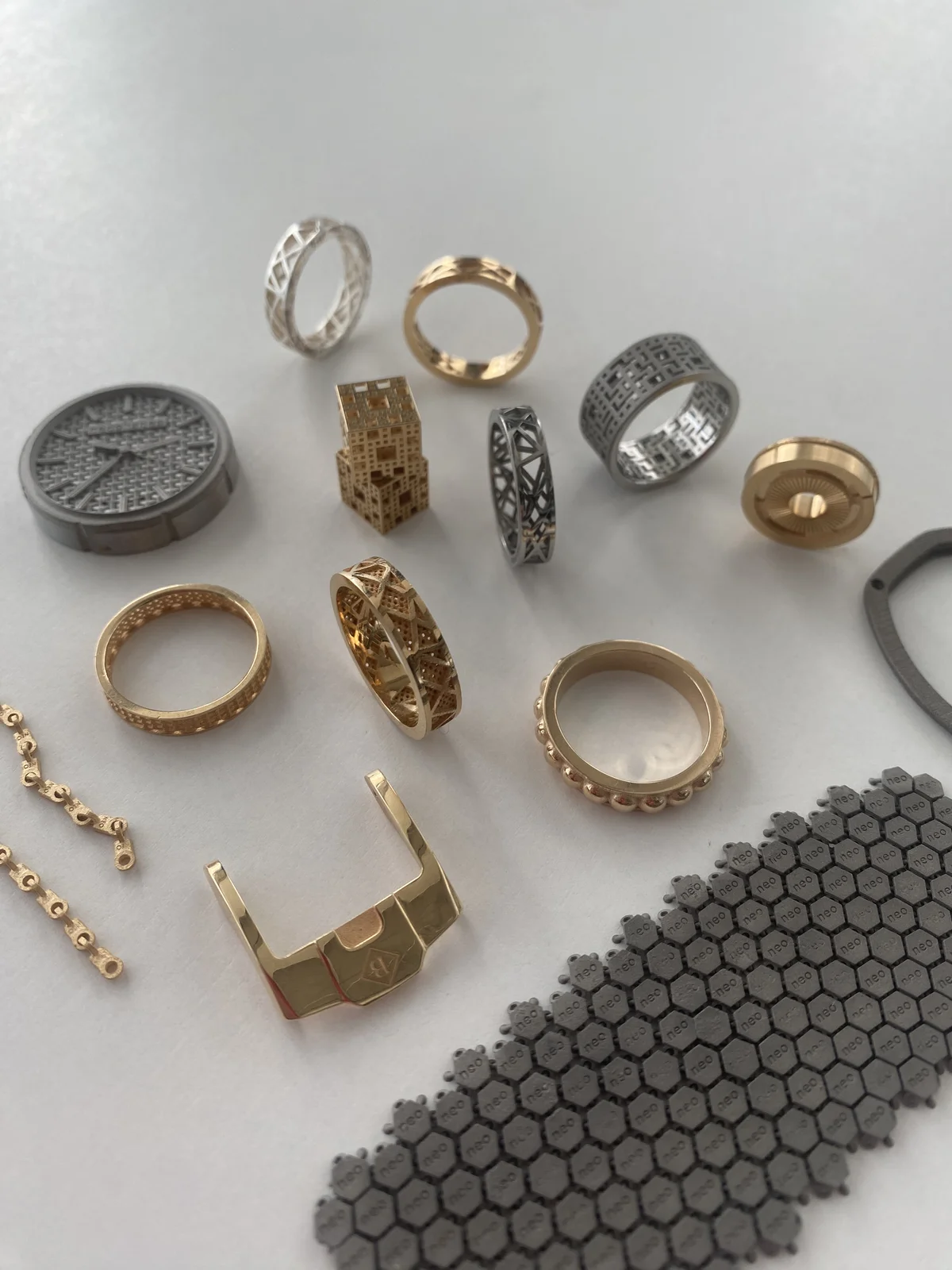
Beyond printing, Neoshapes produces and supplies metal powder and offers post-processing and consultancy. It also sells 3D printers and related equipment, including binder jetting systems. Jewelry makers can therefore order finished parts or buy the equipment to print in-house.
Formnext Magazine lists the project among this year’s new applications, alongside a copper rocket engine and a 3D printed modular house. Next, visitors can see the lightweight pieces at Formnext 2026 in Frankfurt, where Neoshapes exhibits in Hall 11.0, Booth A30.
Source: Formnext Magazine