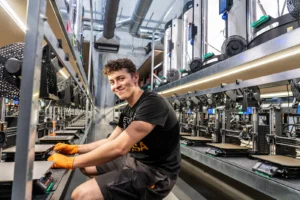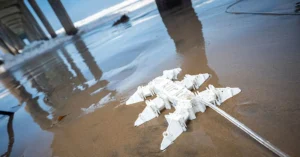

A design lab at Taiwan’s National Yang Ming Chiao Tung University (NYCU) 3D prints prototypes from recycled marine plastic pellets with a robotic arm.
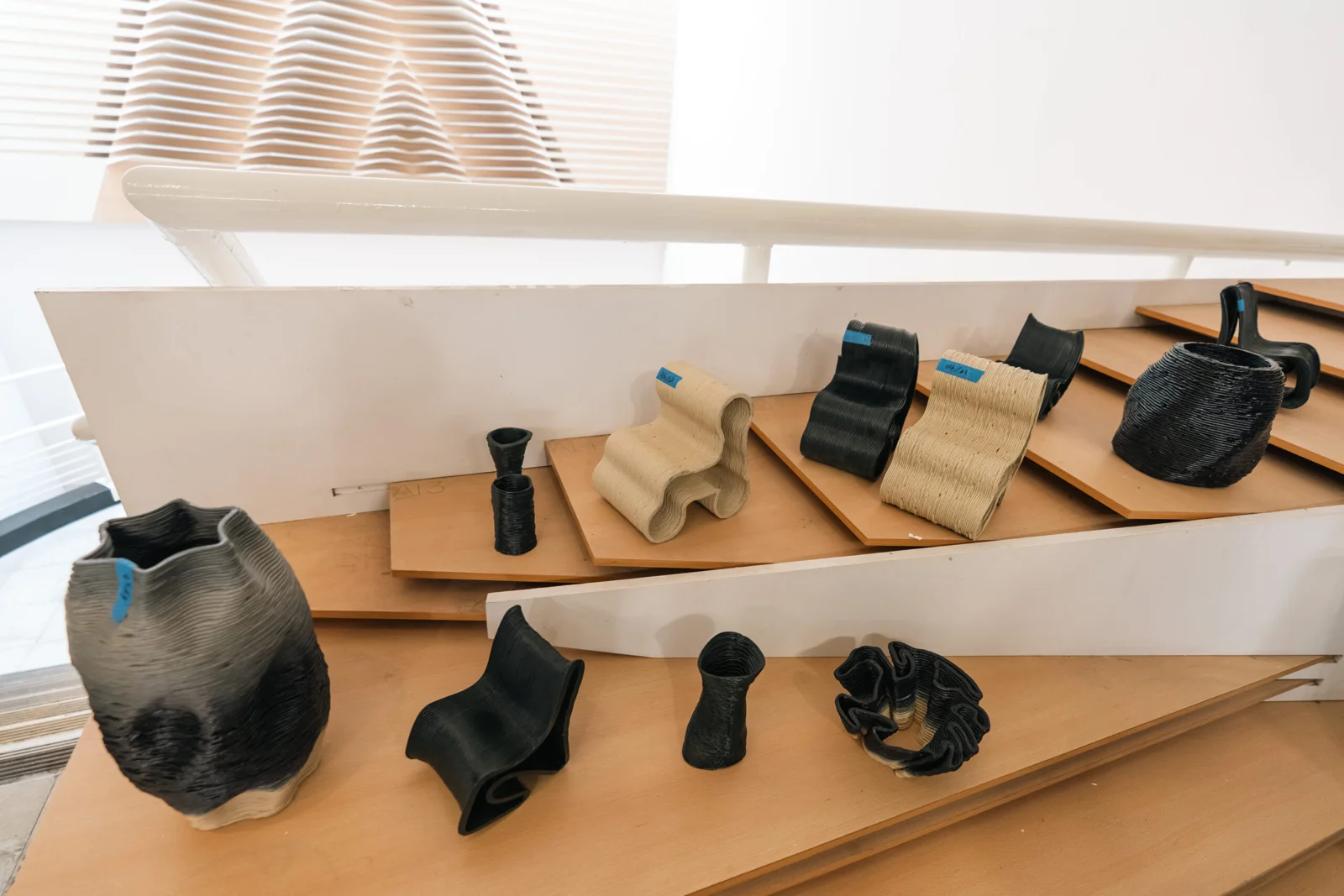
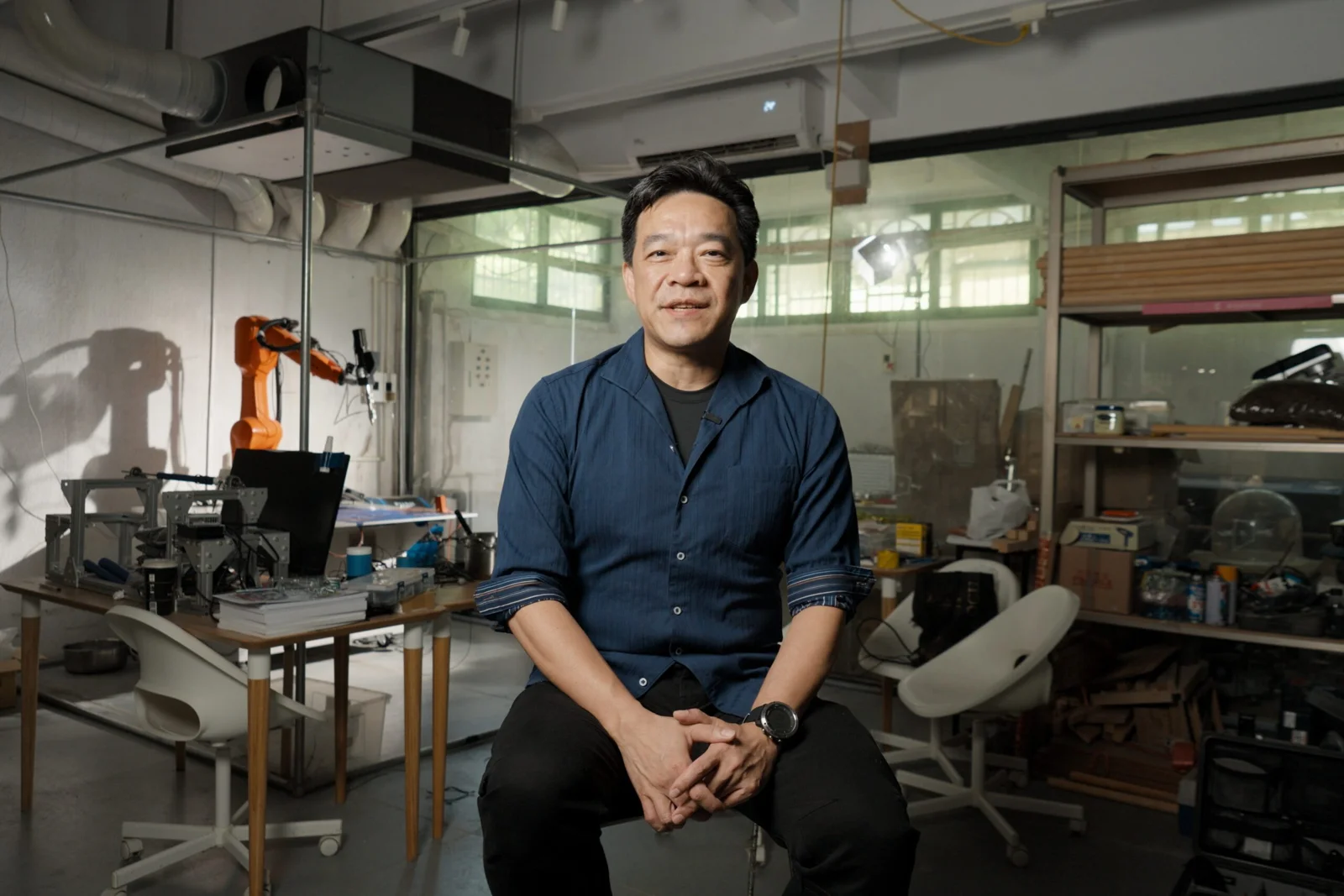
The lab belongs to Assistant Professor Jian-You Li of NYCU’s Institute of Applied Arts. Li grew up in Keelung, a port city where waste piles up on beaches and around harbors. That sight drew him to circular materials, and his team now combines materials development, 3D printing and design to bring discarded resources back into daily use. Its fish-scale project won bronze in Asia Pacific and silver in Taiwan in 2024, while its marine waste project took bronze and gold in 2026.
Fish scales came first. Their natural gelatinous components help a material solidify, which made them a candidate for 3D printing. Supply was the hard part, until a Keelung seafood processing plant offered to collect and dry the scales. Even so, a mix of fish glue and fish powder starts to set soon after mixing, so printing time stays short.
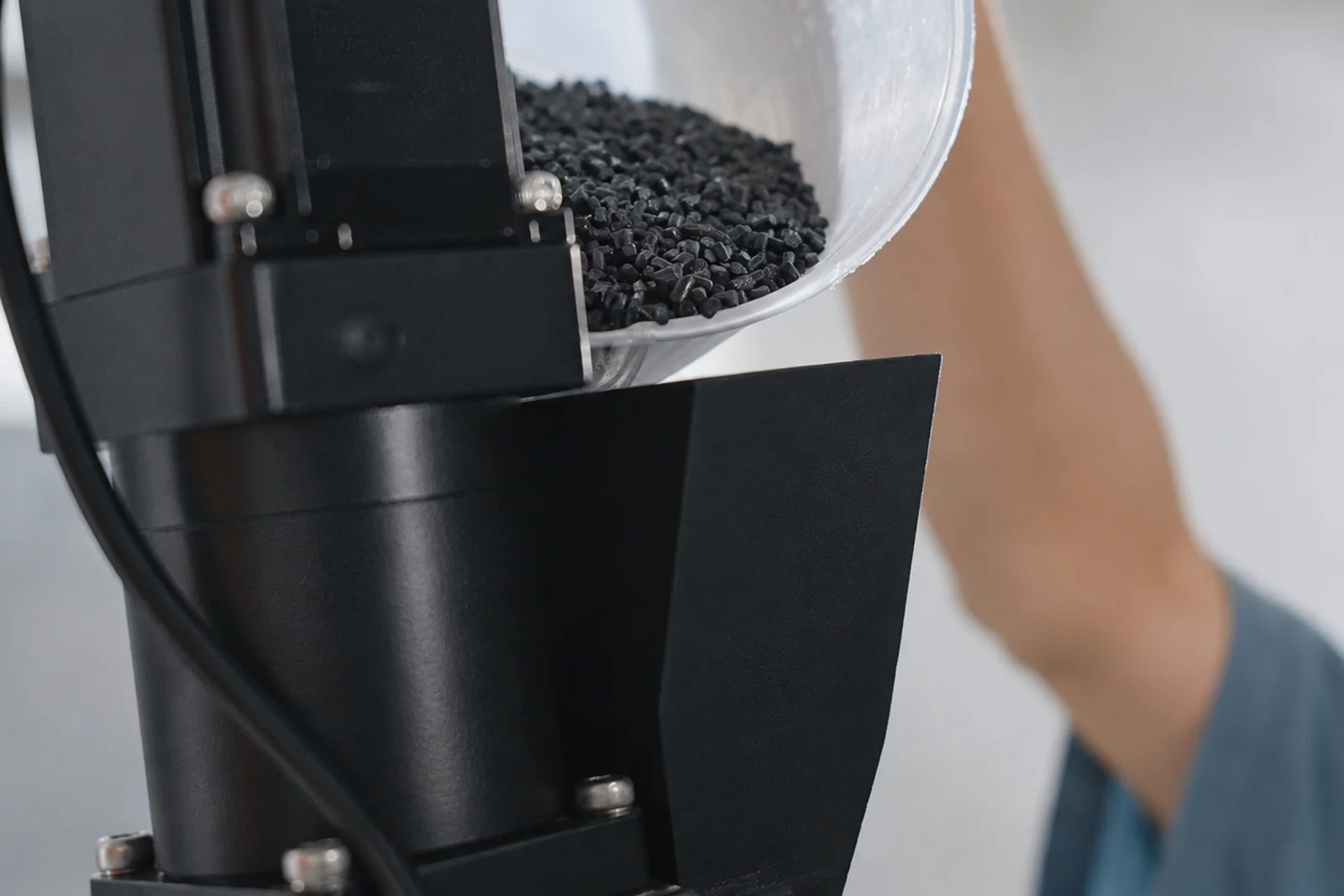
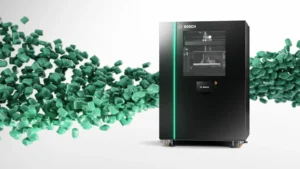
Marine plastic needed less groundwork, because industry already collects, cleans, shreds and pelletizes it. The team turned to it after talks with faculty at National Taiwan Ocean University. It now prints with pellet extrusion, in which a printer melts plastic granules directly instead of first turning them into filament. A robotic arm guides the extrusion nozzle along the design.
That setup prints objects straight from design files, so there are no molds to develop. Skipping molds saves time and money, while quantity and form stay flexible. Li puts it simply. If five chairs are needed today, make five, and if a table is needed tomorrow, adjust the design.
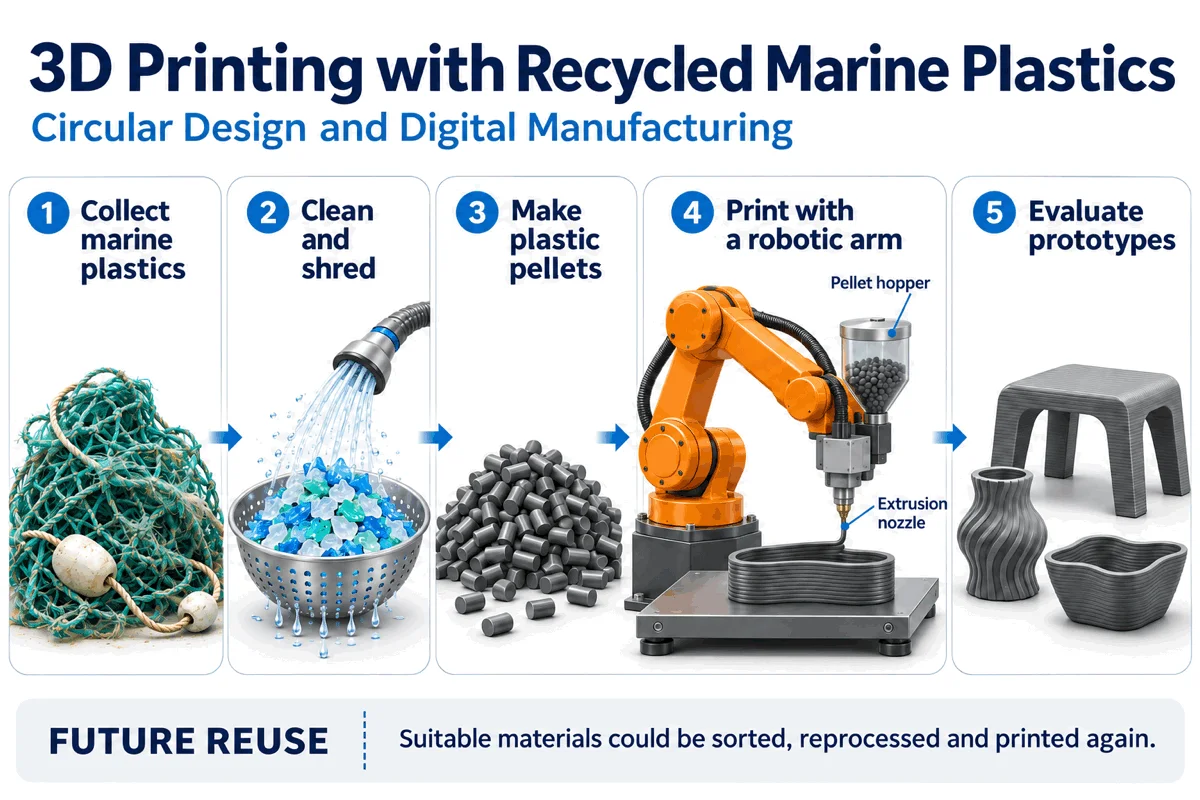
Progress has been slower than expected, however. Batches of marine plastic differ in origin and degradation, which means printing conditions may need adjusting. Aging and impurities also affect appearance, and recycled plastic is not necessarily cheaper than new plastic. Drying pellets in a humid climate and finding equipment big enough for larger objects are further hurdles. Before any furniture use, the team must still assess strength, weather resistance and safety for users.
“The material is still there. It simply takes on a different form to meet different needs,” Li said.
Local production is the larger goal. During the pandemic, the lab 3D printed plastic face shield frames for a military hospital. Li now pictures schools and community sites sharing design files and printing parameters, so each site can make what it needs.
Next, the plan is to start on campus with furniture, display stands and outdoor installations. The team has held a workshop with Keelung Senior High School, and Li hopes to explore seating for fishing-port neighborhoods. That echoes The New Raw’s public seats made from Rotterdam harbour rope. Meanwhile, it is working with environmental engineering researchers on black soldier fly rearing facilities made from marine waste.

Source: NYCU, NYCU ELITE