
Researchers at the University of Eastern Finland have found simpler ways to give 3D printed plastic parts durable metal and ceramic coatings.
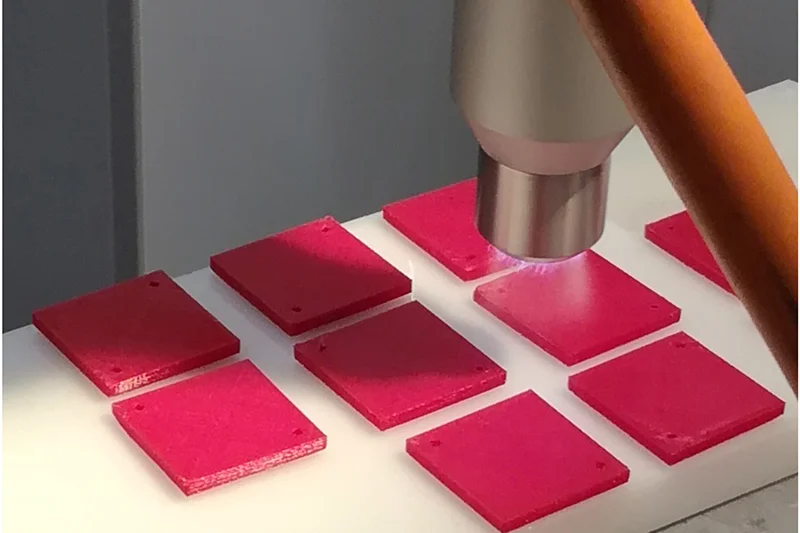
Polymer parts can come off the printer with rough surfaces, visible layer lines or damage from removing supports. They can also lack wear resistance or electrical conductivity, so demanding applications need extra finishing. Coatings can add those properties, yet metal and ceramic layers are hard to bond to plastic. Conventional plating on plastics also relies on chromic acid and palladium.
The team, led by Kimmo Laitinen, therefore looked for routes without those pre-treatments. In a study published in August in Results in Surfaces and Interfaces, it tested polyurethane (PUR), polypropylene (PP) and polyamide (PA), which coating research has largely overlooked. It coated 3D printed specimens and reference specimens of the same plastics, building every coating up in several layers.
For the ceramic coatings, the plastic was plasma-cleaned and primed before enamel paint or enamel spray went on. Plasma cleaning strips contaminants with an electrically charged gas.
The metal coatings started with a conductive layer, because electroplating needs a surface that carries current. The researchers either brushed on silver or deposited thin titanium and nickel films by ultra-short pulsed laser deposition (USPLD). In this vapor deposition method, very short laser pulses knock material off a target, which then settles on the part as a thin film. Electroplated copper and nickel followed, with chromium added on the USPLD route.
According to Laitinen, this is the first time USPLD has added a conductive layer directly to an insulating polymer before electroplating. “USPLD is especially interesting because it can deposit virtually any solid material, even alloys, giving much greater freedom in material selection than most polymer metallisation methods,” he told IOM3.
Tests show what the layers can handle. The best coatings reached pull-off adhesion strengths of around 8 to 15 MPa. That is the force per area needed to pull a coating off. Some withstood scratch loads above 100 N before failing completely. In pin-on-disk wear tests, a loaded pin rubs against a spinning sample. Most coatings lasted 12000 rounds, or 377 m of sliding, under a 300 g load without wearing out.
PUR did particularly well in scratch resistance, while PA generally gave the strongest pull-off adhesion. On 3D printed PA, only USPLD produced a well-adhering metal coating. Among the ceramic coatings, enamel paint generally beat enamel spray.
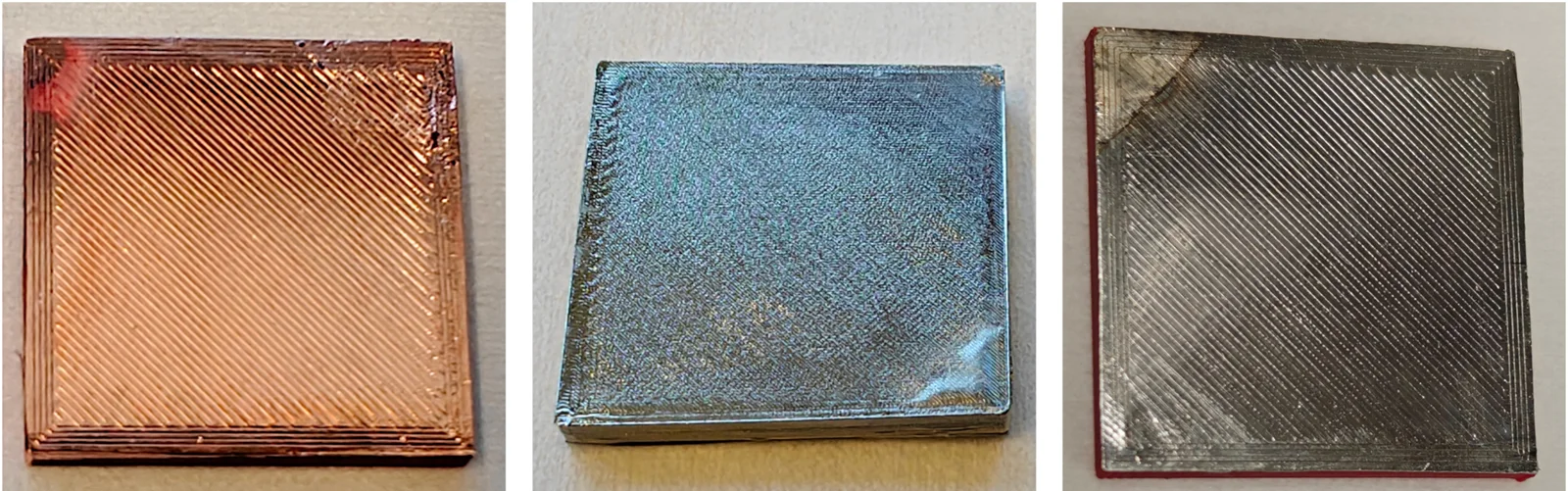
Surprisingly, Laitinen found that “3D-printed surfaces sometimes outperform smooth sheet materials because their inherent surface texture can improve mechanical interlocking.” In other words, the coating grips the rough printed surface.
The two metal routes scale differently. The silver-brush route should be easier, since it uses basic equipment and conventional electroplating. USPLD is harder, because “equipment costs are relatively high, processing is limited mainly to line-of-sight surfaces and vacuum compatibility of some polymers may present challenges,” Laitinen noted. He sees it for high-value parts such as conductive electronic housings, sensors and customised medical devices.
Larger studies with more specimens are still needed, and later work could test USPLD with alloys, oxides, nitrides and carbides.
Source: Results in Surfaces and Interfaces, IOM3