Rotterdam studio The New Raw has robotically 3D printed Buoy, a series of swinging public seats made from discarded rope collected in the city’s harbour.
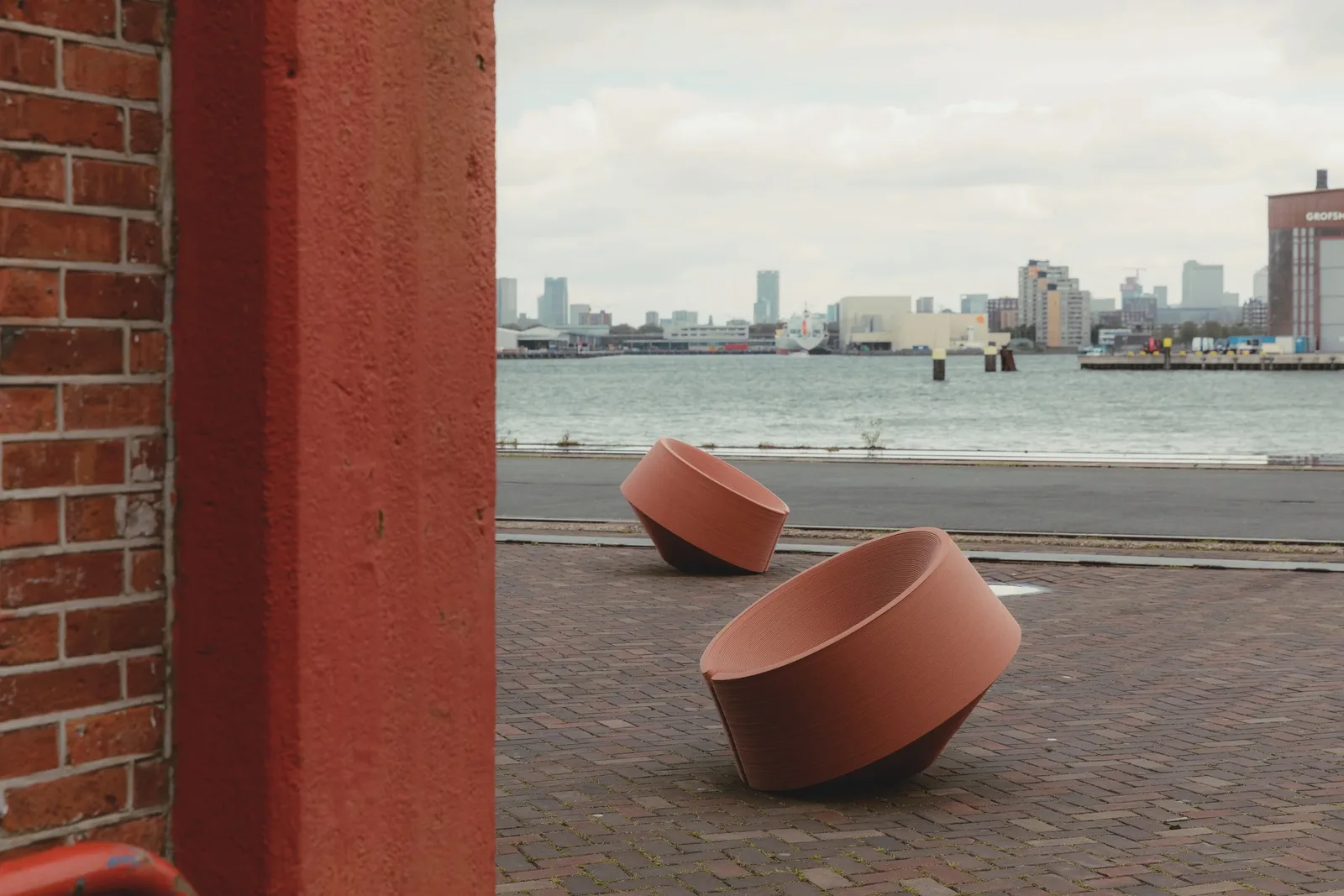
Buoy takes its cue from the floating movement of maritime buoys. The pieces swing, so sitting on one becomes a small exercise in balance. They are meant to invite interaction and shared use in public space.
The New Raw was founded by Panos Sakkas and Foteini Setaki. The studio designs circular furniture and builds it with robotic 3D printing from locally sourced plastic waste. Material sourcing, design and production all happen in its Rotterdam facility.
The raw material for Buoy started out as maritime rope thrown away in the harbour of Rotterdam. The studio worked with rope supplier IKM Hendrik Veder and with Healix, one of its material and research partners. The rope was mechanically recycled in the Netherlands into recycled polypropylene (rPP). The New Raw then printed that material back into objects for the city.
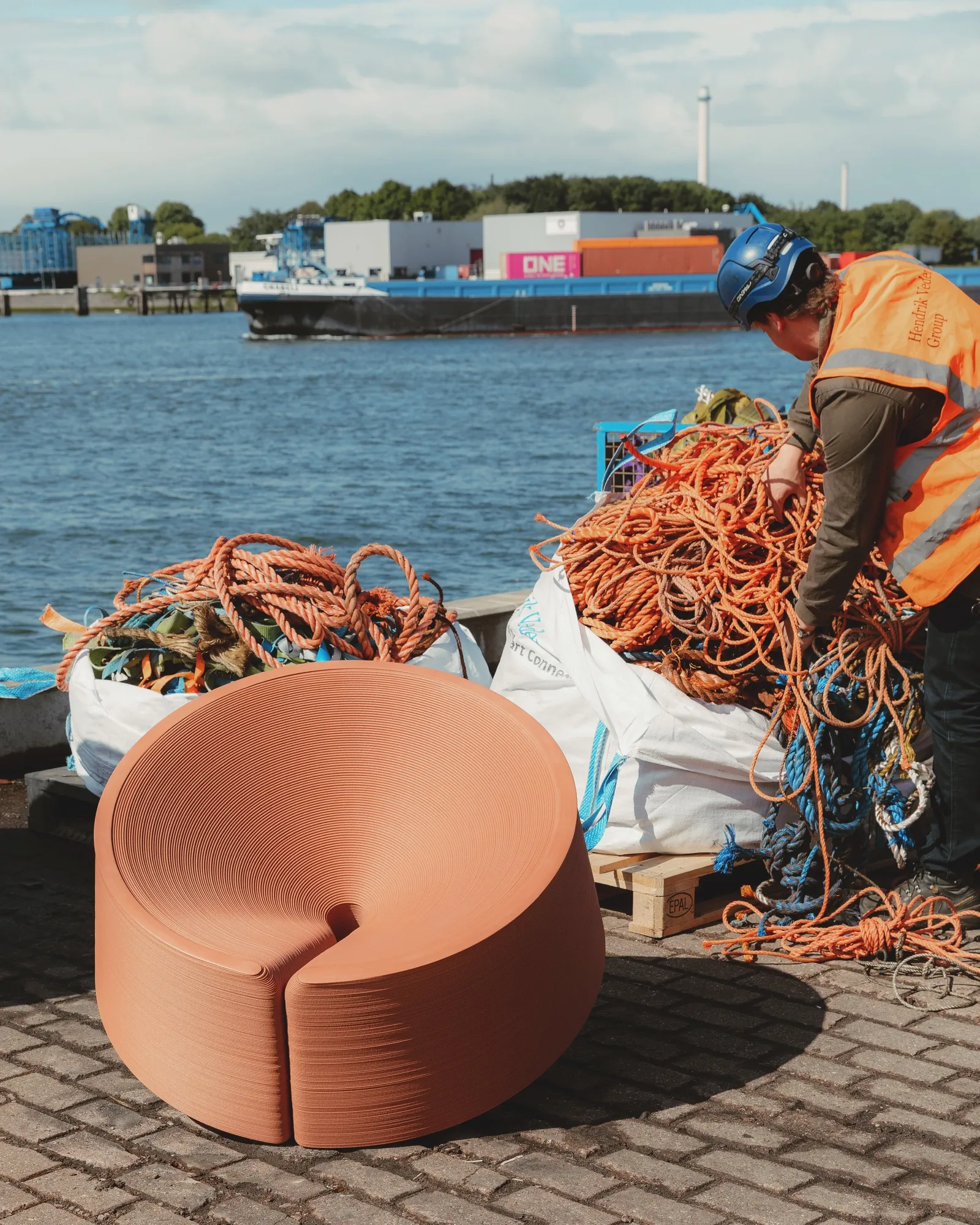
The colours come straight from the old ropes. No pigments or coatings are added. Each seat therefore shows where its material came from. The series used 45 kilograms of recycled plastic.
The New Raw describes Buoy as part public artwork, part urban furniture and part material system. Movement is the point. By rocking on recycled harbour waste, people experience a local recycling loop with their own bodies.
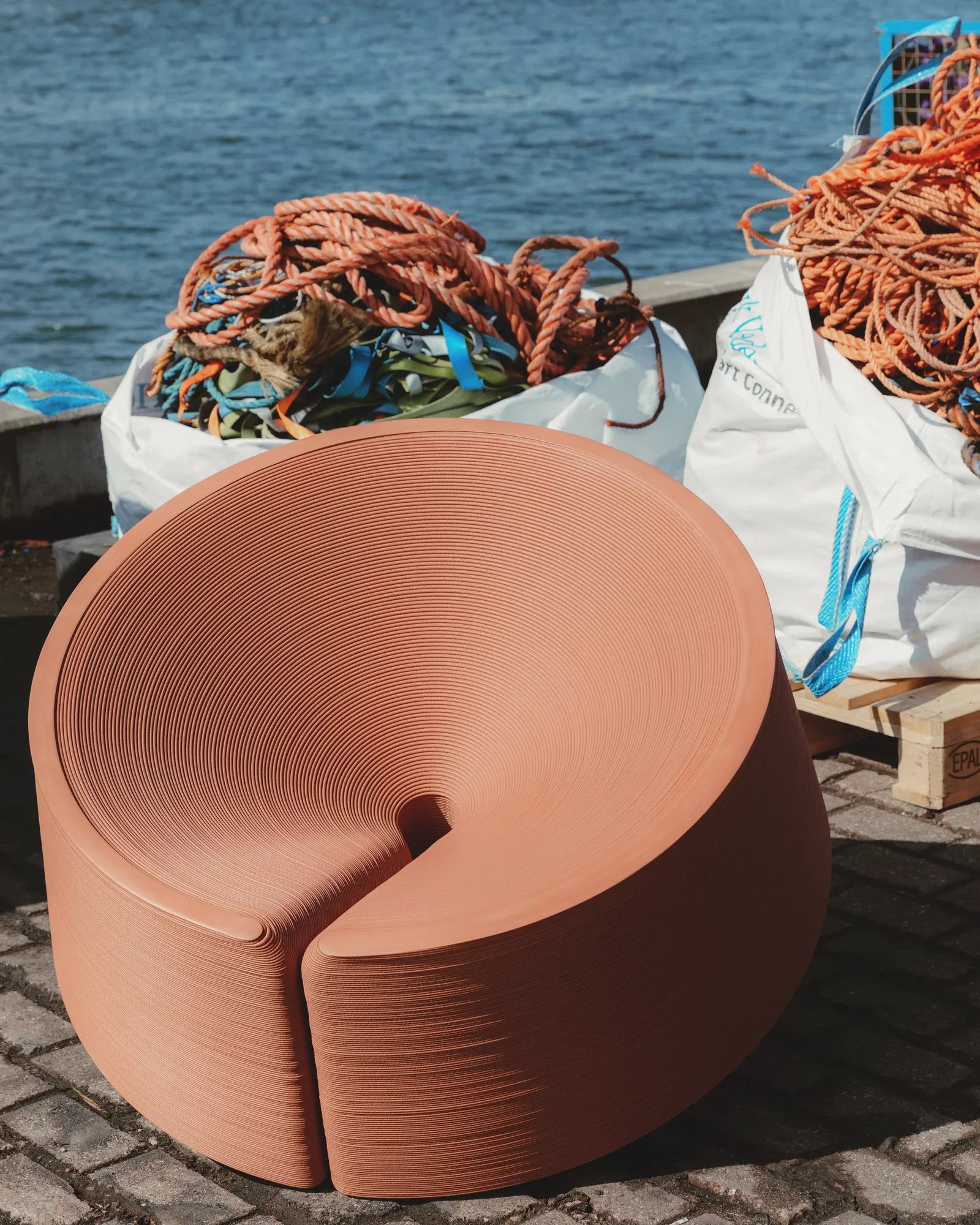
The project follows the way the studio already works. Its products are mono-material and avoid adhesives and coatings. That keeps them fully recyclable at the end of their life. Misprints, prototypes and production leftovers are shredded and reused in its own manufacturing.
Local production is part of the same logic. The studio buys material directly from recyclers and prints on demand. That cuts unnecessary transport and keeps production waste low. Its pieces are developed for high-use public and professional settings. They are built for longevity and repair rather than short-term use.
Buoy also points to a wider idea. Cities could keep renewing their public space from their own waste streams, one local material loop at a time.
Source: The New Raw