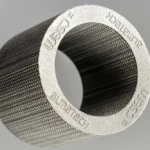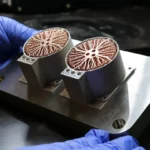

GKN Aerospace says it is the first company in the world to earn Nadcap accreditation for laser wire directed energy deposition (L-DED-w).
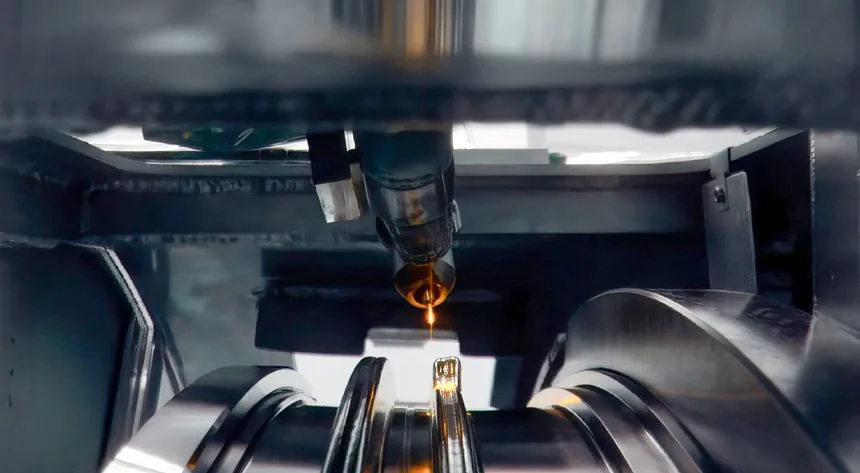
The British aerospace supplier sees the milestone as a step toward industrializing additive manufacturing for aerospace and defense. It already uses the wire-fed metal process to make certified parts that are flying today. The accreditation gives those parts, and the ones that follow, an independent seal on how they are made.
Nadcap, short for the National Aerospace and Defense Contractors Accreditation Program, is one of the most recognized accreditation schemes in aerospace. It covers special processes, the manufacturing steps where quality cannot simply be inspected into a finished part. Accreditation confirms that a process meets strict requirements for quality, traceability and process control.
Getting there took a full audit of how GKN Aerospace runs L-DED-w. Auditors reviewed its process controls and operating procedures. They also looked at personnel qualifications, equipment, material control and traceability.
For aerospace buyers, the result is outside validation that the process is repeatable. That matters more than any single part. A customer weighing a printed component wants to know the next hundred will come out the same way as the first.
“Our customers are looking for trusted partners that can help industrialise advanced manufacturing technologies,” said Sébastien Aknouche, senior vice president of Material Solutions at GKN Aerospace. “For additive manufacturing, that means having robust and repeatable processes that can support the move into industrial production. Nadcap accreditation is an important step in that journey, giving us a stronger foundation for broader application of L-DED-w across aerospace and defence.”
GKN Aerospace has already designed, developed and delivered fully certified L-DED-w components. The open question for the industry has been how fast such parts move from individual programs into routine production. The accreditation is meant to speed that up, giving new applications an audited process to build on.
The appeal for aerospace is familiar to anyone in metal additive manufacturing. The process can produce complex components with less material, and it opens new options for how parts are designed and made. What has held it back is the paperwork and proof that production engineers need before they sign off.
With Nadcap in place, GKN Aerospace plans to take L-DED-w from a proven technology toward broader industrial use. The target is future additive manufacturing applications in both aerospace and defense production. The accreditation gives that move an independently validated foundation, rather than resting on internal qualification work alone.
Source: GKN Aerospace