
A copper powder made from electronic waste without melting and an inline filament dryer were among six winners of the Formnext Awards 2026 in Frankfurt.
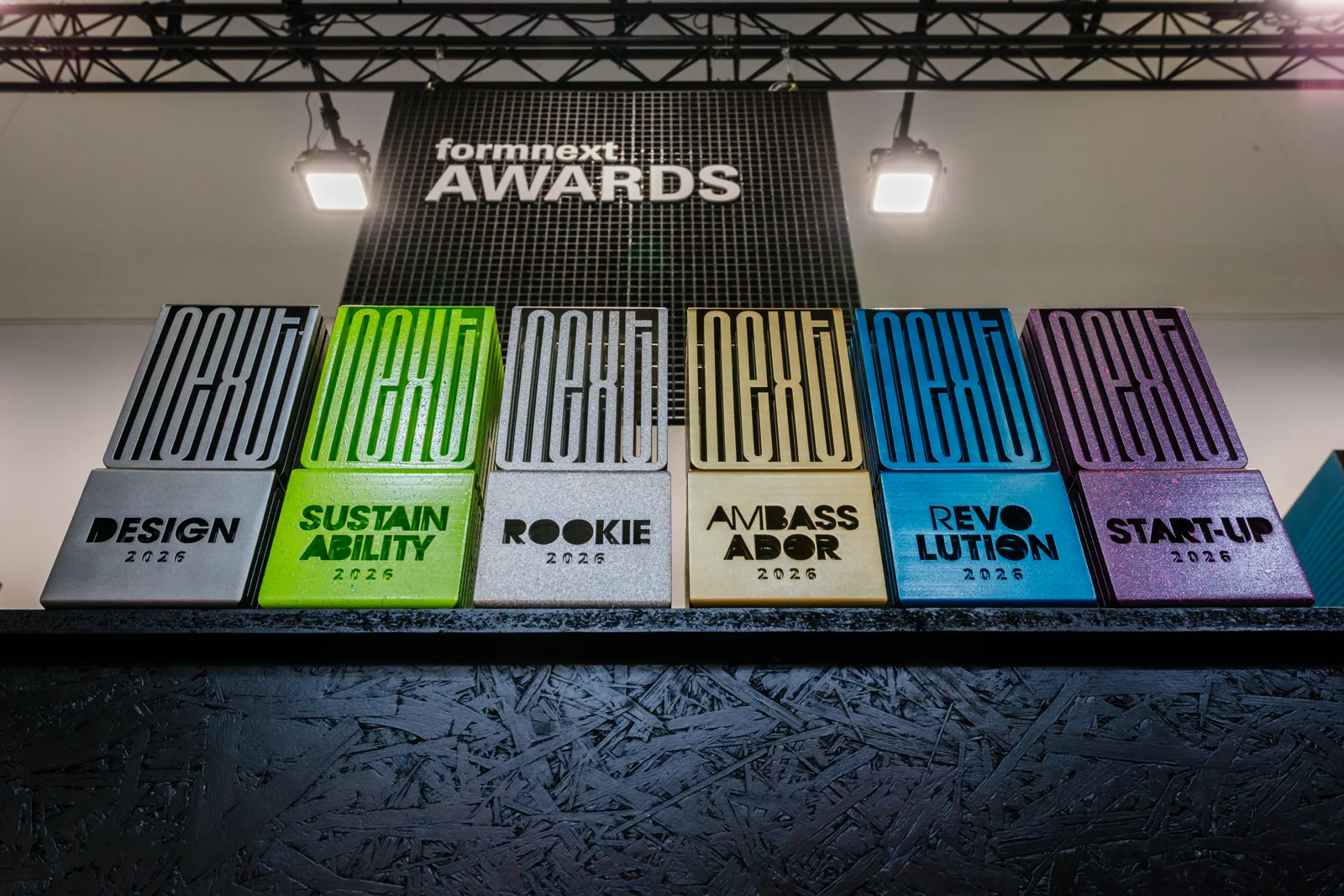
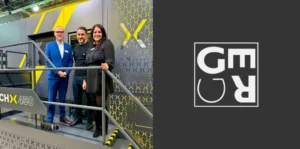
The winners were honored on November 19 during a ceremony at Formnext, the additive manufacturing trade show. A jury picked the winners in six categories, while a public vote counted as one extra jury member. Each winner received a 3D printed trophy made by FKM Sintertechnik.
Copper Powder Without Melting
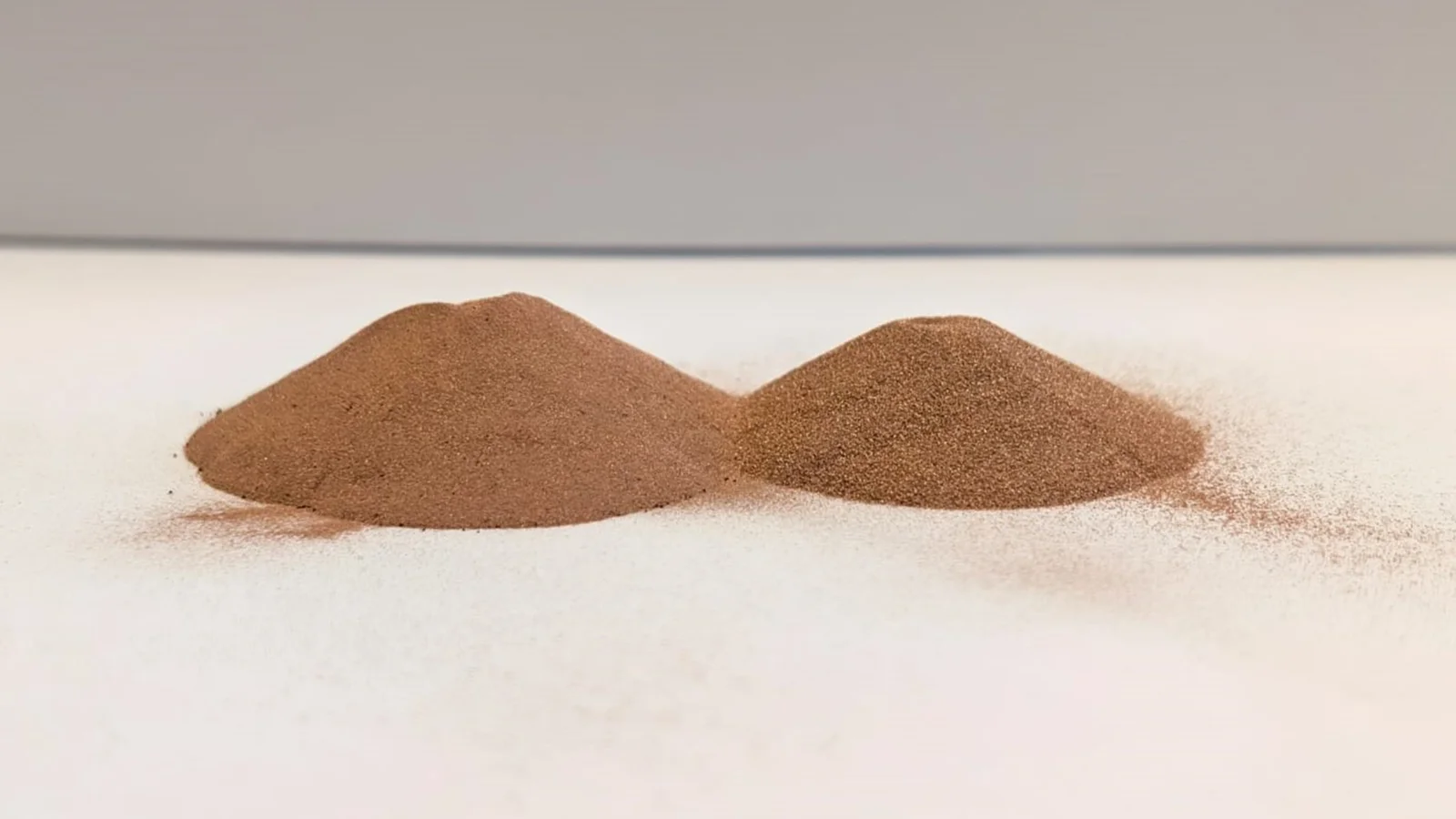
FlexCycle Solutions won the Sustainability Award supported by Renishaw. Copper powder is usually made by atomization, which means the metal is melted and sprayed into fine droplets. FlexCycle instead turns electronic waste into powder with a purely mechanical process, so nothing is melted. Its awards entry puts the energy use at around 650 kWh per tonne, against 9,000 kWh or more for gas atomization. The particles are roughly spherical but rough, so they absorb laser light better. That helps laser powder bed fusion (LPBF), where a laser melts powder layer by layer.
Drying Filament During the Print
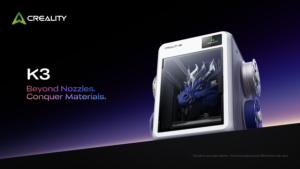
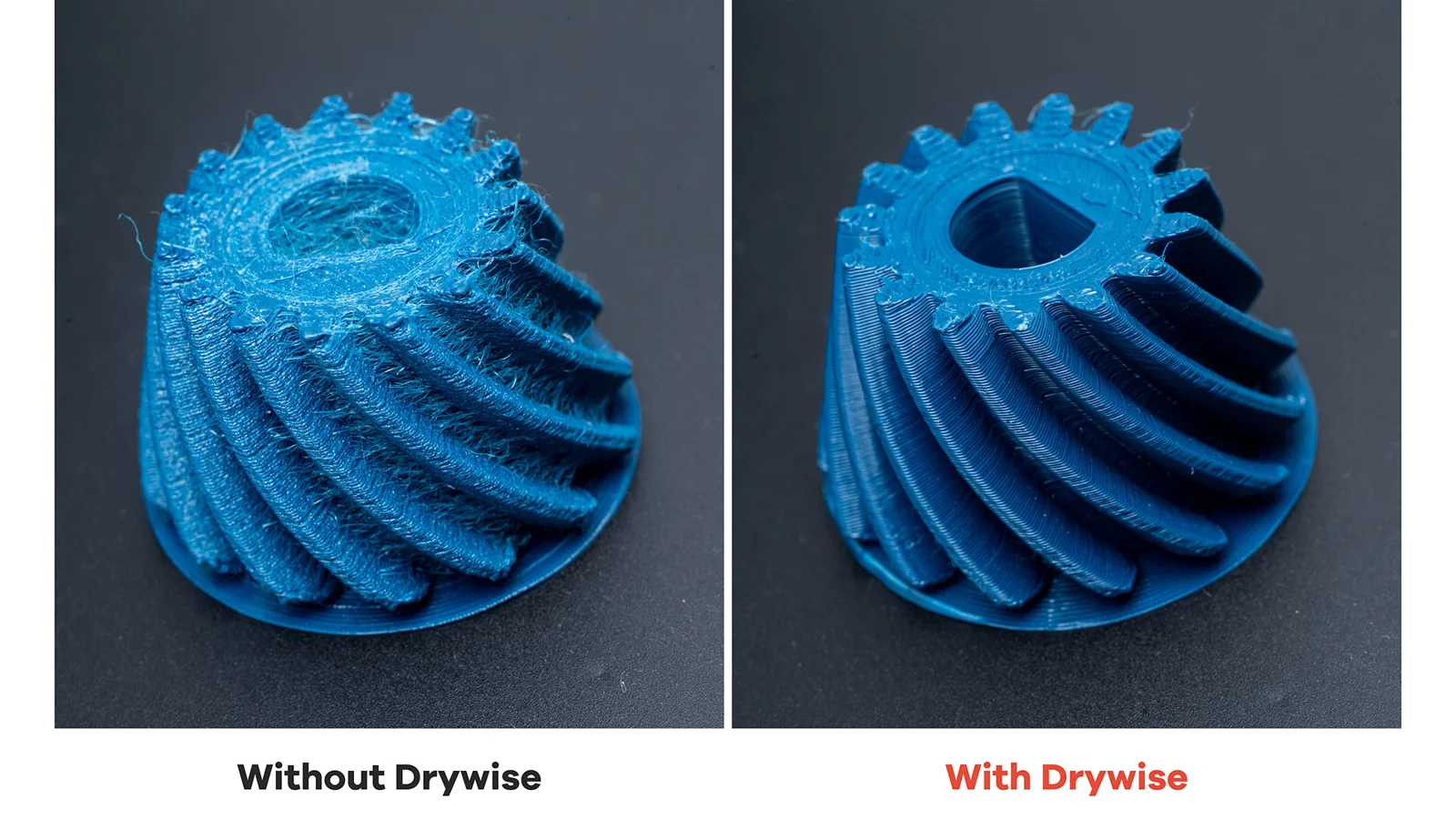
The (R)Evolution Award went to Malta-based Thought3D, which also makes the Magigoo adhesive range. Engineering plastics such as nylon absorb moisture, and wet filament prints weak parts. So instead of oven-drying a whole spool, its Drywise system conditions only the filament about to be extruded. Pre-drying drops from up to 48 hours to 40 to 90 minutes, and an UltiMaker Cura plug-in adds that step to the print job. Against oven-dried nylon, test parts gained around 7% and 12% in tensile strength, depending on direction.
New Ideas From Start-ups and Students
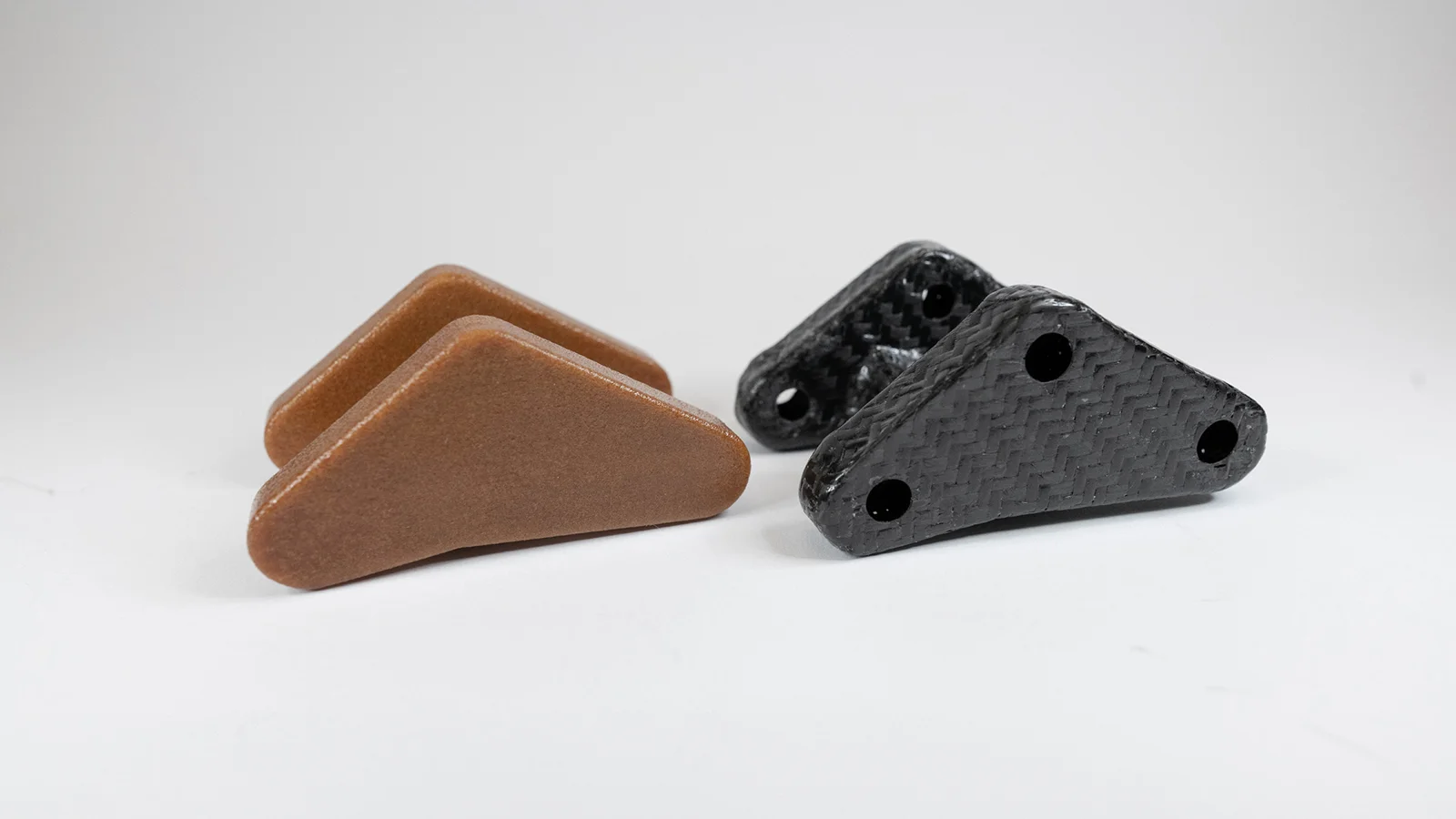
Swiss start-up sallea won the Start-up Award for its 3D printed wash-out tooling and cores. The printed core shapes a hollow part and is then washed out with water, so complex lightweight parts are easier to build. The first applications are thermoset carbon fiber reinforced plastic (CFRP) parts for motorsport and sporting goods.
The Rookie Award went to cAIclone, a Munich team that has not yet founded its company. It designs 3D printed hydrocyclones, cone-shaped separators that spin a liquid to sort fine particles of 1 to 50 μm. The shapes come from CFD simulation, meaning computer modeling of fluid flow, and Bayesian optimization, with battery recycling as the first target.
Maya Kaplan received the Design Award for Computational Bra, her master’s project at the Technion, Israel Institute of Technology. The bra is fully 3D printed from a single TPU material on a desktop FDM printer. Because its printed structures provide elasticity, support and compression, the garment needs no separate pads or underwires. Finally, the AMbassador Award honored Dr. Michael Kraemer of the Additive Manufacturing Center at TU Darmstadt. He supports about 50 to 60 students a year and helped set up AM training for apprentices.
Jury member Arno Held, principal of Held Holding, sees value for investors. “For me as an investor, it is a highly important tool to identify the future winners very early and before many others,” he said.
Source: Formnext, Formnext Awards