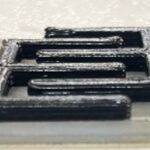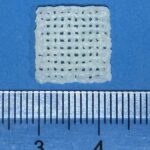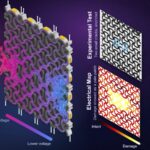

An MIT team used category theory to break a pine cone’s humidity response into independently validated building blocks, mixed some of those blocks with wheat-awn twist mechanics, and 3D-printed a thermal twisting actuator that matched the predicted motion.
Humidity moves a pine cone by changing cellulose fibers, then laminas, tissue layers, and the whole organ, a chain engineers usually rewrite from scratch for each new system. The framework treats each scale as its own block, composes those blocks with mathematical rules that keep transitions valid, assigns each block a synthetic counterpart, and writes verified manufacturing specifications plus executable print code.

Lead author Lee Marom, an MIT graduate student, said the missing piece was that full math-to-part chain. “What we were missing was a way to connect the mathematical description of a natural system all the way to its physical realization. The goal of this framework is to make that entire chain explicit so we can reason about what has to be preserved at each step,” Marom said.
The group first ran the method on the pine cone as a simple, well-understood case, then treated pine-cone bending and wheat-awn twisting as separate block sets. Combining pieces from each produced the thermal twisting actuator without a new design pass. The work extends more than a decade of category-theory research in corresponding author Markus Buehler’s lab, including earlier categorical prototyping that preserved selected molecular-scale mechanics in large 3D-printed parts. This pipeline closes the remaining gap from multiscale biological mechanics through an engineered realization and fabrication specification to an experimentally validated, machine-executable design.
Gioele Zardini, assistant professor of civil and environmental engineering, said reuse is the practical return. “The systematization of our framework allows you to reuse pieces without needing to start from scratch each time, saving a huge amount of computation. That’s the real-world payoff,”.
The paper, “A Category-Theoretic Framework from Biological Mechanics to Engineered Stimulus-Response Systems,” appears in the Journal of the Mechanics and Physics of Solids. Marom and Buehler are joined by Zardini and associate professor of architecture Skylar Tibbits. Support included the MIT Lemelson Engineering Fellowship, Singapore DSO National Laboratories, and the MIT Generative AI Impact Consortium.
Source: news.mit.edu