
A Kansas State researcher is printing full-size 4-by-4-foot concrete modules off-site, then assembling them as storm-shelter blocks meant to take tornado winds and a two-by-four traveling at 100 mph.
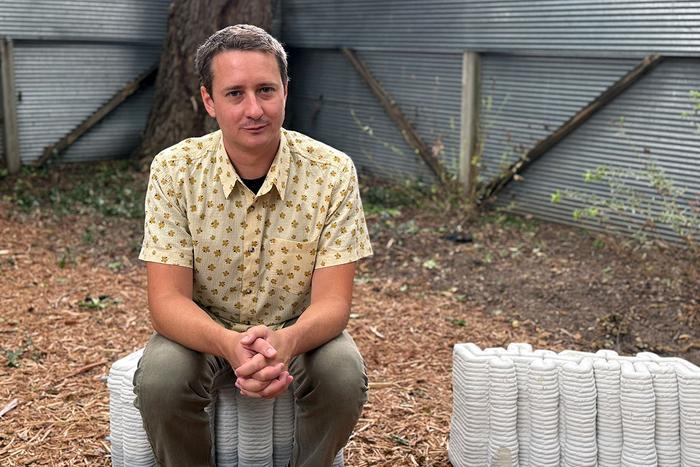
Reese Greenlee, an assistant professor of architecture at Kansas State University, is working with Shelby Doyle and Iowa State’s Computation & Construction Lab on whether 3D-printed concrete can act as the structure, not a printed shell around another frame. The work is aimed at manufactured home communities that lack adequate shelter. More than 22 million Americans, about 1 in 15 people in the country, live in manufactured homes, according to the U.S. Department of Housing and Urban Development. Storm shelters designed to ICC 500 and FEMA P-361 criteria must account for that lumber impact.
“The issue is that 3D-printed concrete often functions as an outer shell, with another structural system embedded within it,” Greenlee said. “My goal is to understand what it takes for 3D-printed concrete to become more of a viable structural system through the particular concrete mixture, printing process and geometry.”
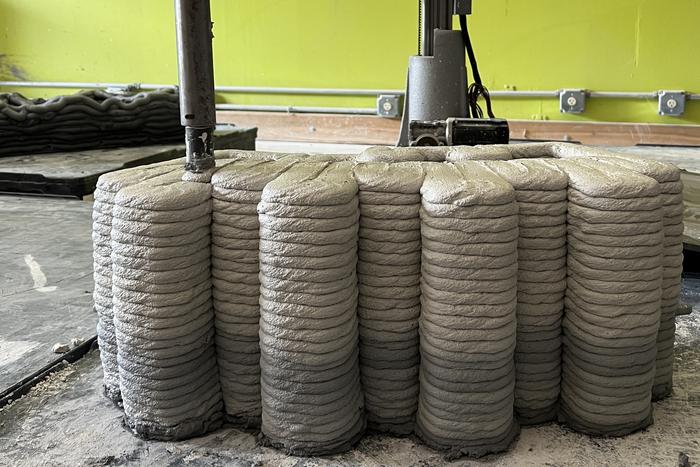
The team is working at the scale of a single module because printing a large building typically requires bigger gantry printers. Instead they print pieces in a controlled environment, ship them, and assemble them on site. The mix has to flow well enough to be pumped and extruded, then become stable enough to hold its shape and support the layers above it. They are testing whether print orientation, infill, and geometry improve performance under extreme wind pressure and debris impact.
The next phase is at an Intertek facility in Minnesota, where the full-scale module will be tested at tornado wind speeds. “Storm-shelter assemblies have to undergo debris-impact testing, and you focus on the places where components come together or where there’s a window or a door,” Greenlee said. “Those conditions can become potential points of weakness.”
Source: eurekalert.org