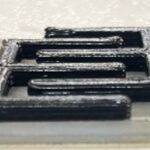

A Heidelberg University team has designed a light-curable 3D printing polymer that a chemical trigger can take apart at room temperature. Printed parts break down into their molecular building blocks in seconds. Those blocks can be recovered and printed again with the same composition and mechanical properties.
Eva Blasco’s group at the Institute for Molecular Systems Engineering and Advanced Materials (IMSEAM) is targeting vat photopolymerization methods such as digital light processing that turn liquid inks into fine, light-cured parts for personalized medicine and soft robotics. Those inks are usually thermosets. Once the network is locked, the part is stable and almost impossible to recycle.
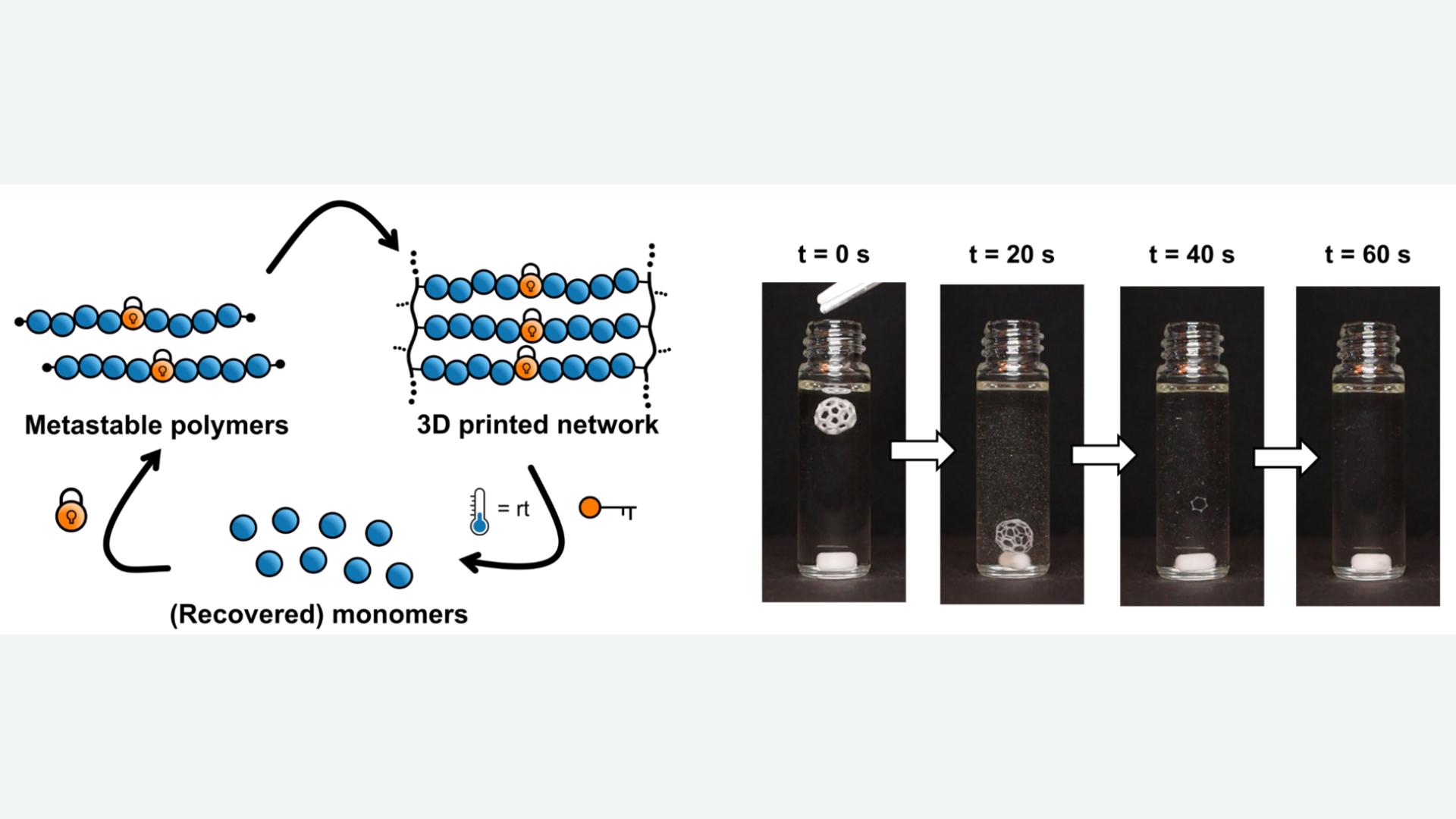
The new material is metastable. A long molecular chain is held together at one predetermined breaking point. Open that “lock” with the right chemical key and the chain unzips.
“The long molecular chain is held together by a single predetermined breaking point. As soon as a specific chemical trigger opens this site, the entire chain breaks down into its constituent parts within seconds at room temperature, like a row of dominoes,” said doctoral researcher Johannes Markhart.
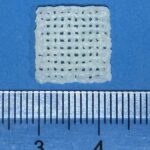
The group printed micrometer-scale structures with the ink, then isolated the fragments and converted them back into polymer. Spectroscopy showed the recycled material matched the original at the molecular level. “When reused, the material exhibited the same properties as it did during the first printing process,” said Philipp Mainik, who worked on the project as a doctoral student.
Markhart said the ink “combines high print quality with a property that has been virtually nonexistent in polymer materials for 3D printing until now: it can be completely disassembled into its individual parts without leaving any residue.”
The work sits in the 3D Matter Made to Order excellence cluster (Heidelberg and Karlsruhe Institute of Technology), with funding from the German Research Foundation, the Carl-Zeiss-Stiftung, and the Chemical Industry Fund. J. Markhart, P. Mainik, and E. Blasco published the paper, Metastable Polymers for Circular 3D Printing, in Advanced Materials on 18 August 2026.
Source: uni-heidelberg.de