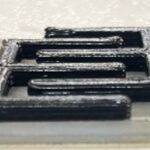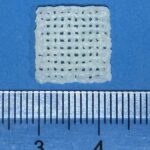

Researchers at Tel Aviv University have developed a bioactive 3D-printing ink that pairs high printing precision with enhanced cell adhesion and antibacterial activity.
The work comes from Prof. Lihi Adler-Abramovich’s group at the School of Dental Medicine in the Gray Faculty of Medical and Health Sciences. Mor Tsuriano-Zernichov and Francesca Netti led the study. Dr. Moran Aviv and Dr. Sigal Rencus-Lazar also took part.
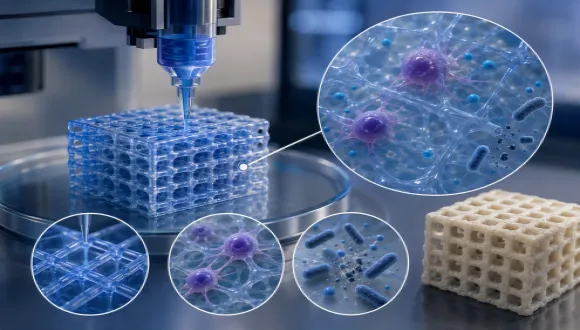
Bioprinting inks often pull in two directions. The material needs mechanical and rheological properties that support accurate printing and a stable three-dimensional shape. It also has to give cells a surface they can attach to. Those needs don’t always line up.
Their ink keeps high printability and carries biological activity on its own. It lets researchers fabricate precise three-dimensional structures that promote enhanced cell adhesion. It also shows antibacterial activity, a trait that matters for materials meant to contact living tissue.
They treat the ink as a way to put biological function into the printed construct, not just to build a shape. The approach could help design multifunctional materials for 3D printing, especially scaffolds for tissue engineering and regenerative medicine. The study was published in Advanced Functional Materials.
Source: en-med.tau.ac.il