
Engineers at the University of Illinois Urbana-Champaign have built the first physical device that can hide objects from heat in any direction, a development with potential uses ranging from protecting sensitive microchips to shielding people and equipment from infrared detection.
The device works by guiding heat around an object rather than blocking it. To an infrared camera, the cloaked object appears to simply not exist. Past thermal cloaks only worked in two dimensions or along a single direction of heat flow. This one works from essentially any angle, and it’s been physically fabricated and tested, not just modeled on a computer.
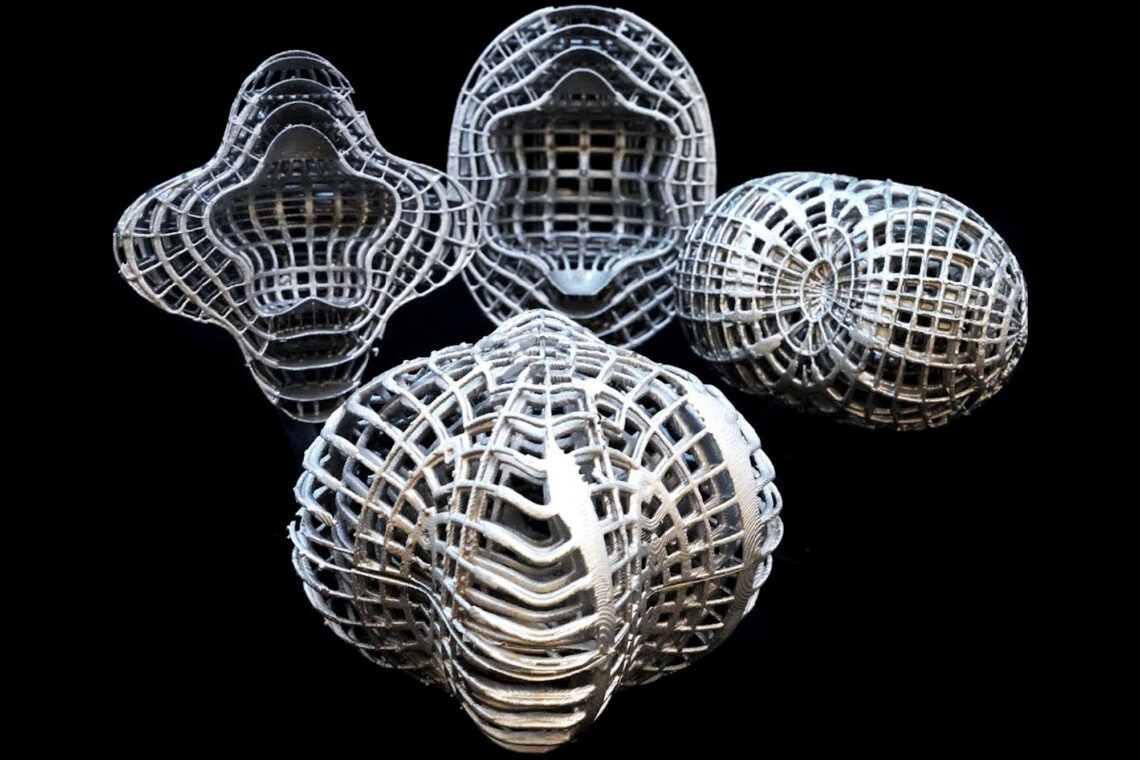
“A real thermal cloak should work no matter where the heat comes from,” said Shelly Zhang, a civil and environmental engineering professor at Illinois who led the research. “Our device can hide a complex 3D object in an infinite number of directions while keeping the temperature inside stable and protected.”
The cloak’s structure is a hybrid material: a precise aluminum lattice made with 3D-printed metal for high thermal conductivity, with the gaps filled using mold-cast rubber for low conductivity. By tuning these materials across three dimensions, the team can precisely control how heat moves through different regions of the device. That range of thermal conductivities is wide enough to closely match what the theory of transformation thermotics says a perfect cloak would require.
In lab tests, the researchers placed the device between hot and cold regions and tracked heat flow with an infrared camera. The temperature field outside the cloak looked as if nothing was there; inside, temperature stayed uniform and shielded from external extremes. To stress-test the design, the team successfully cloaked detailed, head-like 3D shapes. Zhang’s team says no previous experimental thermal cloak has matched that level of geometric complexity.
The research was published in Nature Communications. Zhang’s collaborators included postdoctoral researcher Weichen Li, graduate student Yibo Wang, and professor Ole Sigmund at the Technical University of Denmark. Funding came from the National Science Foundation, the Villum Foundation, and the Air Force Office of Scientific Research.
Next, the team wants to tackle a harder problem: cloaking an object that generates its own heat. That would require a cloak that can actively concentrate, spread, or redirect heat within the protected zone on demand. “The next step is to make cloaks that don’t just hide and protect, but also actively manipulate heat in useful ways,” Zhang said.
Source: news.illinois.edu