Robot maker PathOn Robotics has released print files for the 3D printed hand its own robot uses to grab objects. Rex Zhang, the company’s founder, announced the release in an X post with a demo video.
We just open-sourced the dexterous hand that runs on our robot: 3 fingers, 4 motors, all 3D printed. We designed it to be as simple as possible for our own use case. We think that is enough for many others too, so here it is.https://t.co/X3kcntNNuQ pic.twitter.com/uHYkNHibGA
— Rex Zhang (@RexDQZhang) November 3, 2026
PathOn Robotics says it works where AI agents meet robotics. The company has teams in the San Francisco Bay Area and Shenzhen, China. Its robot is a mobile manipulator. That is a machine that moves around and handles objects with an arm. The new hand sits at the end of that arm.
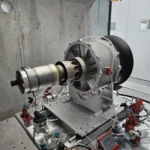
This is the third version of the hand. It is the one the company runs on its robot. Nearly every part comes off a desktop 3D printer. That lets other builders make their own copy. “We designed it to be as simple as possible for our own use case,” Zhang wrote. “We think that is enough for many others too, so here it is.”
The clip shows the hand at work on the robot. The arm reaches for a toy bear on a table. The fingers close on the bear. Then the robot lifts it away.
Simplicity drives the design. Each finger is a single printed link with a soft printed fin at the tip. The fin lets the grip conform to an object without a second joint. One servo motor bends each finger. A fourth servo spreads two of the fingers. Those two sit on turrets and counter-rotate through a pair of printed gears. The third finger works as a fixed thumb.
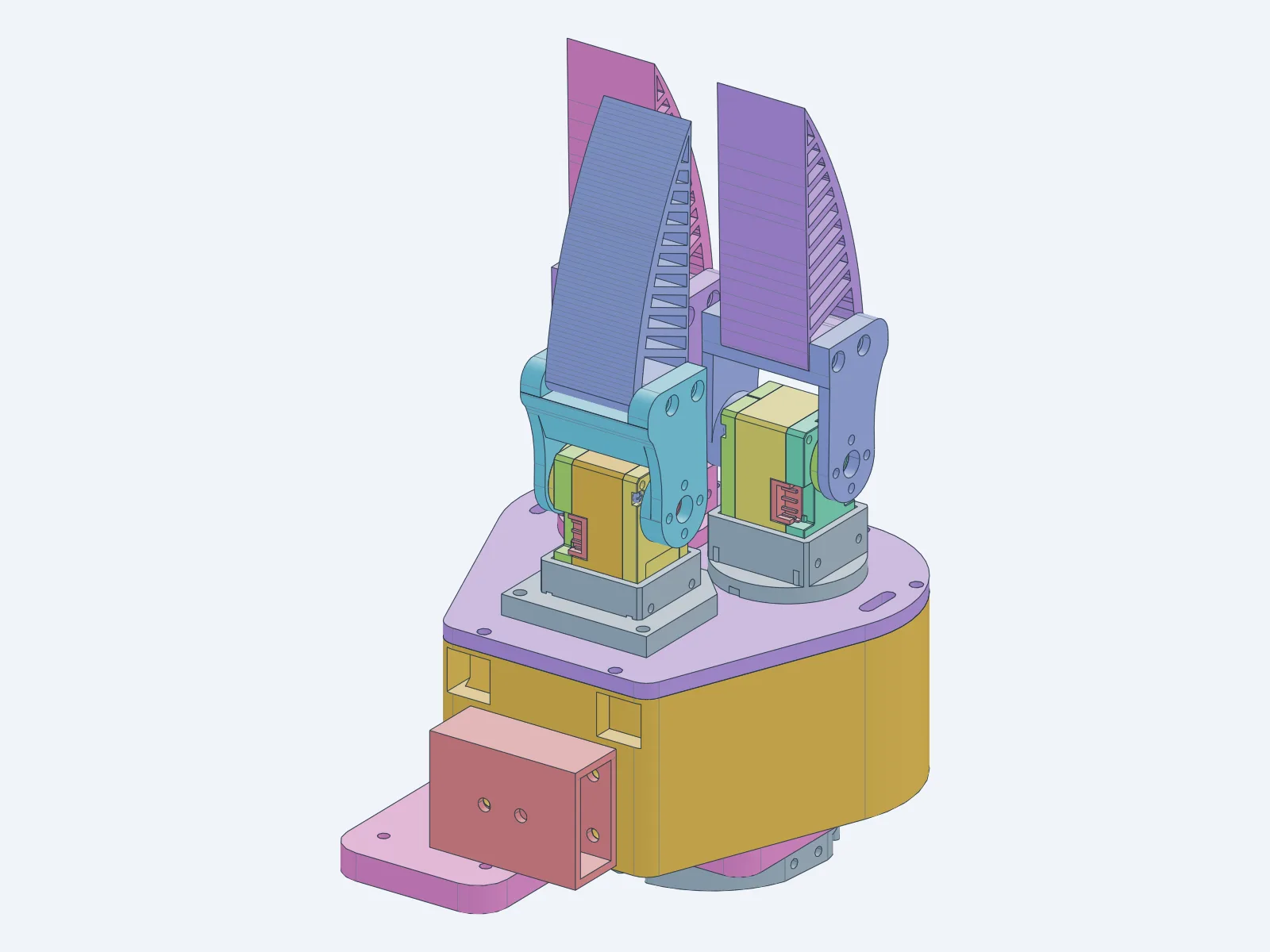
The motors are four small DYNAMIXEL servos. Bearings, pins, screws and heat-set inserts are standard bought parts. Everything else is printed with an FDM printer. The rigid parts print in PLA or PETG. The finger links and turrets call for PETG. The soft fins use flexible TPU.
The GitHub repository holds STL files for 13 printed parts. A hosted assembly guide walks builders through 23 steps in the browser.
The files come with limits, though. The hardware license allows printing, building and modifying the hand for personal, noncommercial use. It bars reposting the files or printed parts. Companies, schools and universities need written permission to use them.
Source: Rex Zhang on X