
Florida Atlantic University has received an $800,475 grant from the U.S. Environmental Protection Agency to develop AI-guided, 3D-printed structures that pull excess phosphorus out of freshwater systems before it can trigger harmful algal blooms. The three-year project, which began July 1, will use Lake Okeechobee as its primary testbed.
The structures are made from sargassum, a naturally abundant seaweed, modified with lanthanum to adsorb phosphorus from both the water column and lake sediments. That’s a meaningful departure from how lanthanum-based materials are typically used. Conventional applications involve fine powders that settle into lake sediments and can slowly leach lanthanum back into the environment. Because these 3D-printed structures can be retrieved, regenerated and reused, they don’t leave that residue behind.
AI and machine learning will drive two key functions: rapidly identifying the most effective adsorbent formulations and pinpointing where in the lake deploying structures will do the most good. The system will pull in environmental monitoring data alongside land use records, weather patterns, fertilizer applications, livestock operations and septic system information to help predict where phosphorus removal would most reduce bloom risk.
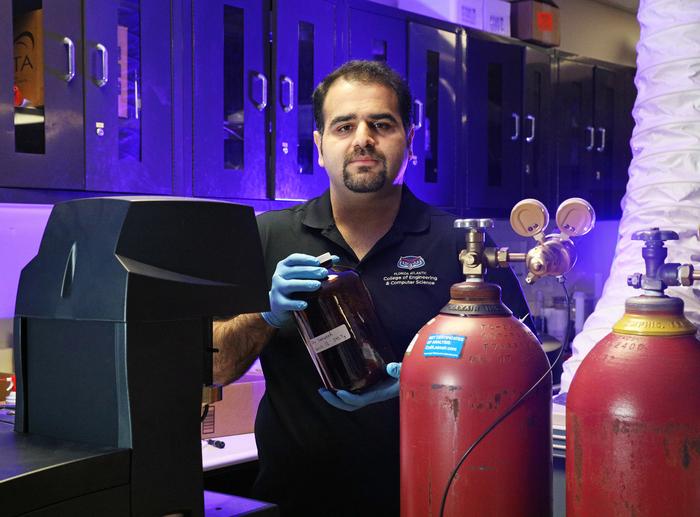
“By combining sustainable 3D-printed materials with the power of AI, we can develop a smarter, more effective and environmentally responsible solution for removing phosphorus from our waterways,” said principal investigator Masoud Jahandar Lashaki, Ph.D., an associate professor in FAU’s Department of Civil, Environmental and Geomatics Engineering. “This funding allows us to accelerate the development and field testing of this technology while creating a model that can ultimately benefit freshwater ecosystems far beyond Florida.”
The research team also includes co-principal investigators Yalan Liu, Ph.D., and Mohammed Abdellatef, Ph.D., both assistant professors in the same FAU department, along with sub-awardee Huichun (Judy) Zhang, Ph.D., of Case Western Reserve University. Field results, including water quality measurements and drone-based monitoring of bloom activity, will be shared through the EPA’s Water Quality Exchange.
Lake Okeechobee sits at the headwaters of what the EPA now calls the Gulf of America watershed, meaning phosphorus that enters the lake flows downstream into rivers, estuaries and coastal ecosystems across the region. The project’s backers say a working solution there could be adapted for lakes and reservoirs worldwide facing similar nutrient pollution problems.
Source: eurekalert.org