
Newcastle University and the Vindolanda Charitable Trust have used 3D scanning and printing to create a playable replica of a 1,700-year-old Roman game board, allowing museum visitors to physically play the ancient strategy game for the first time.
The original board, excavated at Vindolanda in 2019, was made for Ludus Latrunculorum, a two-player strategy game sometimes called “the game of little brigands or soldiers.” Archaeologists found it between a bath-house drain and a workshop wall beside a late third-century road. It’s the most popular board game found in Roman Britain, and Vindolanda holds 16 boards in total, roughly 15% of every example discovered across the country.
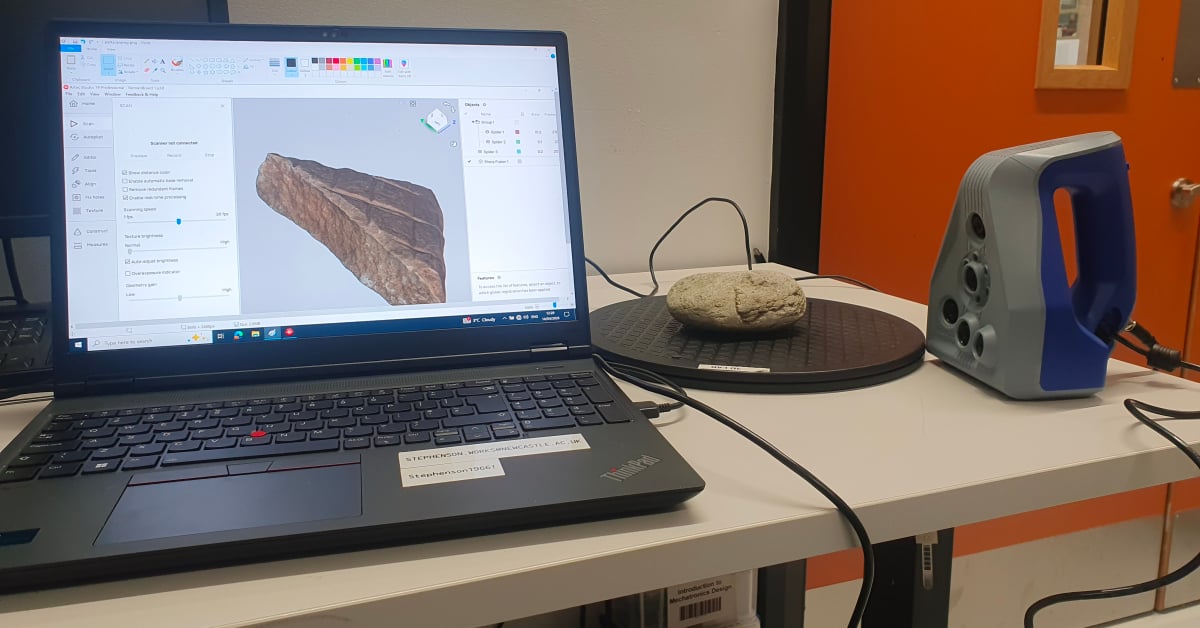
Paul Watson, Electrical and Electronic Team Leader at Newcastle, and Dr. Jenny Olsen, Lecturer in Mechanical Engineering, led the scanning work after Vindolanda’s staff escorted the five-piece stone board to the university’s Stephenson Building. Each piece was scanned separately using a handheld Artec 3D Spider scanner, generating positional point data that produced a detailed 3D model. The pieces were then printed in PLA, a biodegradable material.
Capturing a real-world object like this starts with 3D scanning. If you want to do the same, our 3D scanner buyer’s guide compares handheld and desktop scanners across every budget.
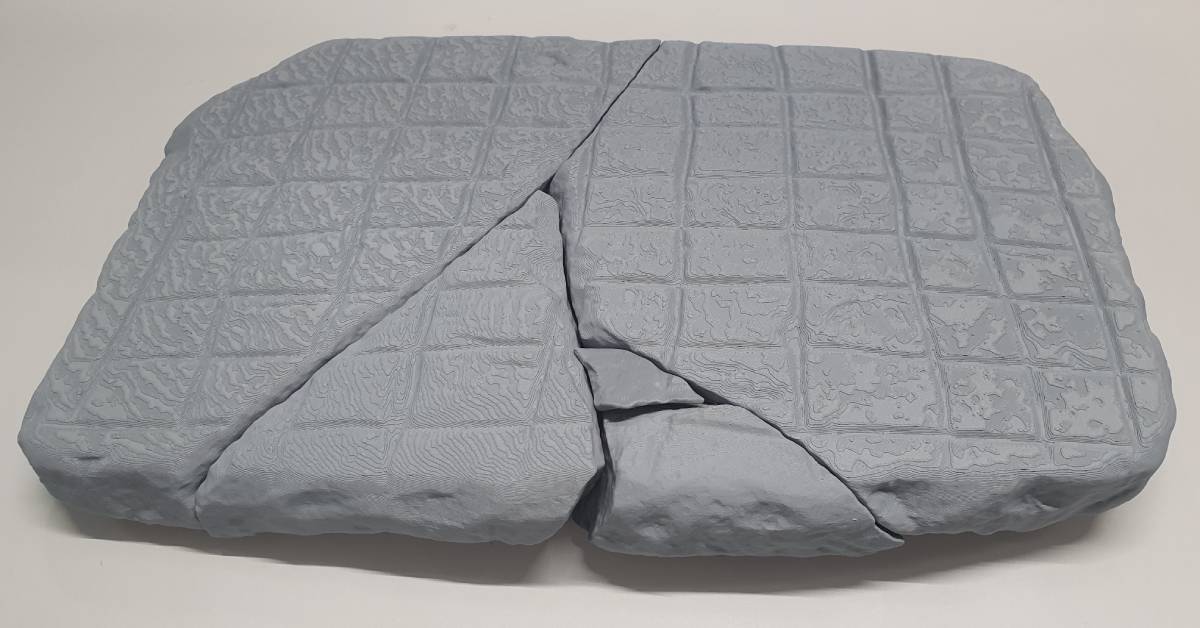
The original board is currently on loan to Toronto’s Bata Shoe Museum as part of the exhibition “Unearthing Vindolanda: Footwear from the Edge of the Roman Empire,” running throughout 2026 and 2027. The 3D-printed replica stays behind at Vindolanda’s Roman Army Museum for public use. An interactive computer-based model was also created from the same scan files, letting visitors zoom in and rotate the board digitally.
The collaboration gave both sides practical skills they didn’t have before. Newcastle’s engineering team used the project to refine their scanning methodology, then transferred those skills to train other university staff for related engineering work. Vindolanda’s Sophie Westlake, Activity and Diversity Officer, who participated in the scanning herself, said: “It was amazing to be involved in the actual scanning process and to see something so complex and historical be realistically recreated. It will be very beneficial for the Vindolanda Trust to have a replica Roman game board and 3D interactive model, both whilst the original Roman board is on loan and to create a more engaging, tactile experience for the visitor.”
Source: from.ncl.ac.uk