

IU Health has launched one of the country’s first hospital-based, FDA-cleared 3D printing programs, allowing physicians to produce patient-specific anatomical models in-house rather than through outside vendors.
The IU Health 3D Print Studio lets surgeons order custom models for pre-surgery planning and patient consultations without waiting on third-party suppliers. That speed matters most for cancer patients. “Among the most important things about having a print lab here, oftentimes, especially for cancer surgery, we don’t have many treatment options other than surgery first,” said Dr. Avinash Mantravadi, associate professor of otolaryngology, head and neck surgery. “So, when we see a patient, we’re just trying to get them into surgery as fast as possible.”
The studio can deliver a finished model within 24 hours. That timeline means a surgeon can meet a patient, schedule an operation for the following week, and still have a physical model ready for planning before the procedure. “Over the years that our print labs here have worked, we have been able to get models done in as fast as 24 hours which means we can see a patient, have them in surgery next week, but still have that model ahead of time,” Mantravadi said.
The program’s cost savings extend to both the health system and patients, though IU Health hasn’t released specific figures. Dr. Christopher Collier, musculoskeletal oncology division chief, said his department’s experience with 3D-printed products made the shift to in-house production an easy case to make. “The more of this we’re able to do in-house and the less that we’re doing with third party vendors, it’s going to be a tremendous cost savings for both the system and the patients,” Collier said.
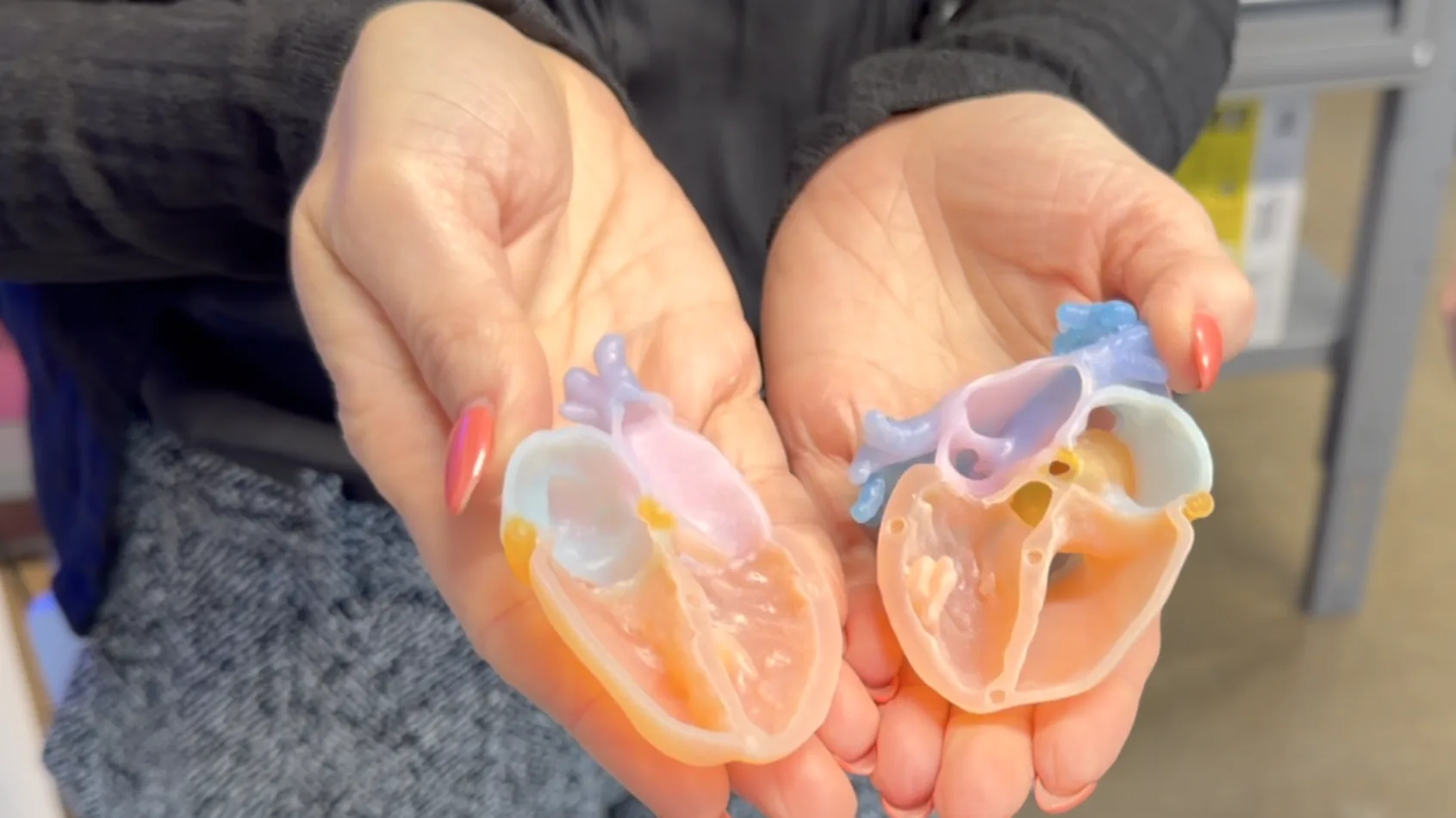
Mantravadi’s team also uses the models to explain complex procedures to patients facing advanced conditions. “All these patients come with their own imaging studies, so our ability to print models in-house allows us to have things that are physically in our hands that we can talk to them about when it comes to their surgeries,” he said.
Source: iuhealth.org