
A Purdue University researcher has developed a patent-pending, 3D-printed groundwater sensor that costs a few hundred dollars per unit, offering a cheaper alternative to devices so expensive and specialized that the U.S. Geological Survey owns only a handful of them.
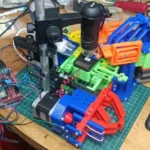
Jacob Hosen, assistant professor of internet-of-things and ecological analytics in Purdue’s Department of Forestry and Natural Resources, designed the sensors from scratch with Zaven Arra, lead engineer at River Restoration Intelligence and Verification. The devices use circuit boards with arrays of temperature sensors to track both the speed and direction of groundwater movement. The sensor housings are 3D printed in the lab and can be iterated quickly without outside manufacturing.
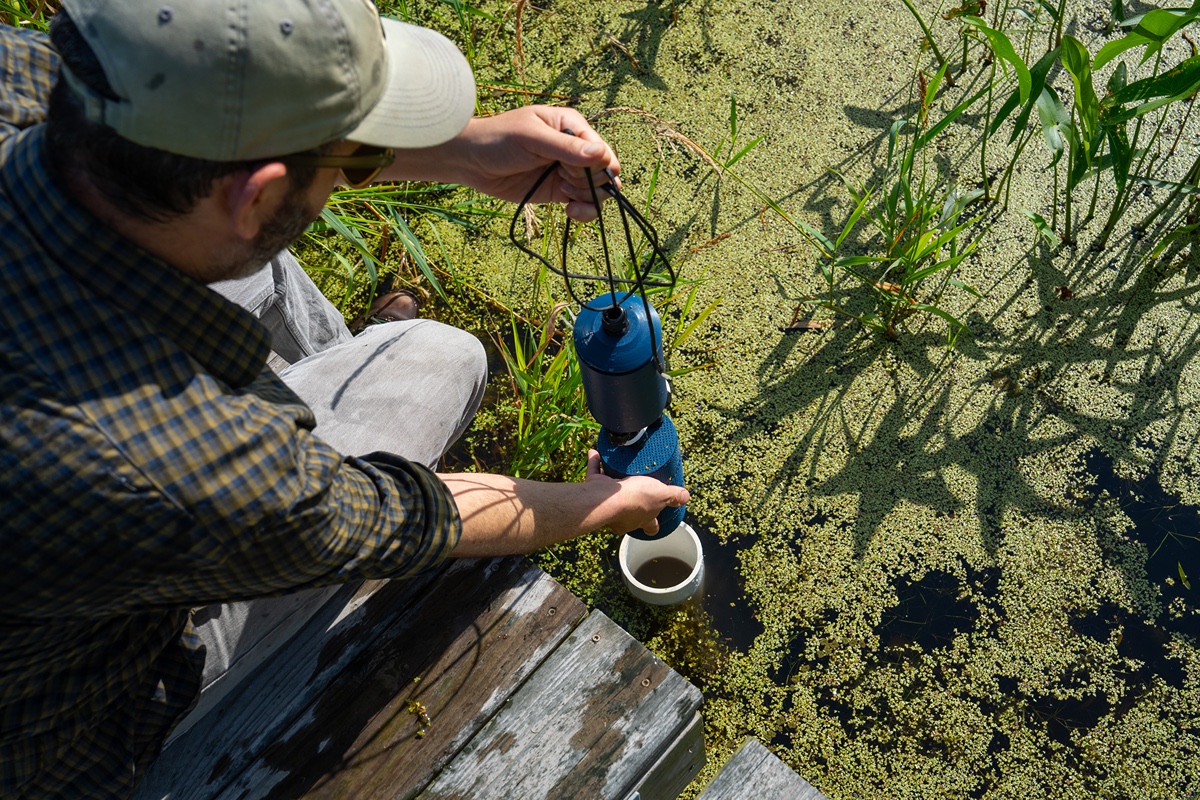
The housing design isn’t incidental. “A big part of designing an accurate sensor is creating a housing that won’t disrupt the water flow,” Hosen said. “We’re 3D printing textures that will recreate the soil environment, so the water flows through the sensor in the same way it flows through the ground.” The team assembles the units in-house using a small number of U.S.-based vendors for components like circuit boards, plus a specially modified toaster oven. “We can make all of this with just a few vendors in the U.S., and then do the rest of the assembly in-house for just a few hundred dollars a unit,” Hosen said. “That’s not something you can do in most ecology labs.”
Initial durability testing showed the devices operated continuously underwater for seven to eight months without failure. The sensors transmit data wirelessly over LoRa networks set up by Agriculture IT and also store data locally as a backup, a design meant to prevent data loss in remote areas.
The first major field test will take place at a USGS site along the Kankakee River near the Illinois border. Additional units will be deployed at Purdue’s ACRE Wetland to study hydrology. Keith Cherkauer, professor of agricultural and biological engineering and director of the Indiana Water Resources Research Center, is co-principal investigator on the project, which is funded by the USGS Next Generation Water Observing System.
The team is pursuing a patent not to commercialize the design, but to keep it open-source. Hosen has disclosed the work to the Purdue Innovates Office of Technology Commercialization, which has applied for the patent to protect that open-source status. Potential applications include tracking contaminated groundwater for the Department of Defense, monitoring water use by data centers, assessing building stability in waterlogged soil and studying subsurface water flow in wetlands. “It works anywhere that water moves underground,” Hosen said.
Source: ag.purdue.edu