
Update · June 2026
The POP 4 Kickstarter campaign closed in May 2026 and pre-orders are now open directly through Revopoint at $755, a 10% saving on the $839 regular price. This article has been updated to reflect the move from Kickstarter backing to Revopoint pre-order; the original campaign coverage is preserved below.
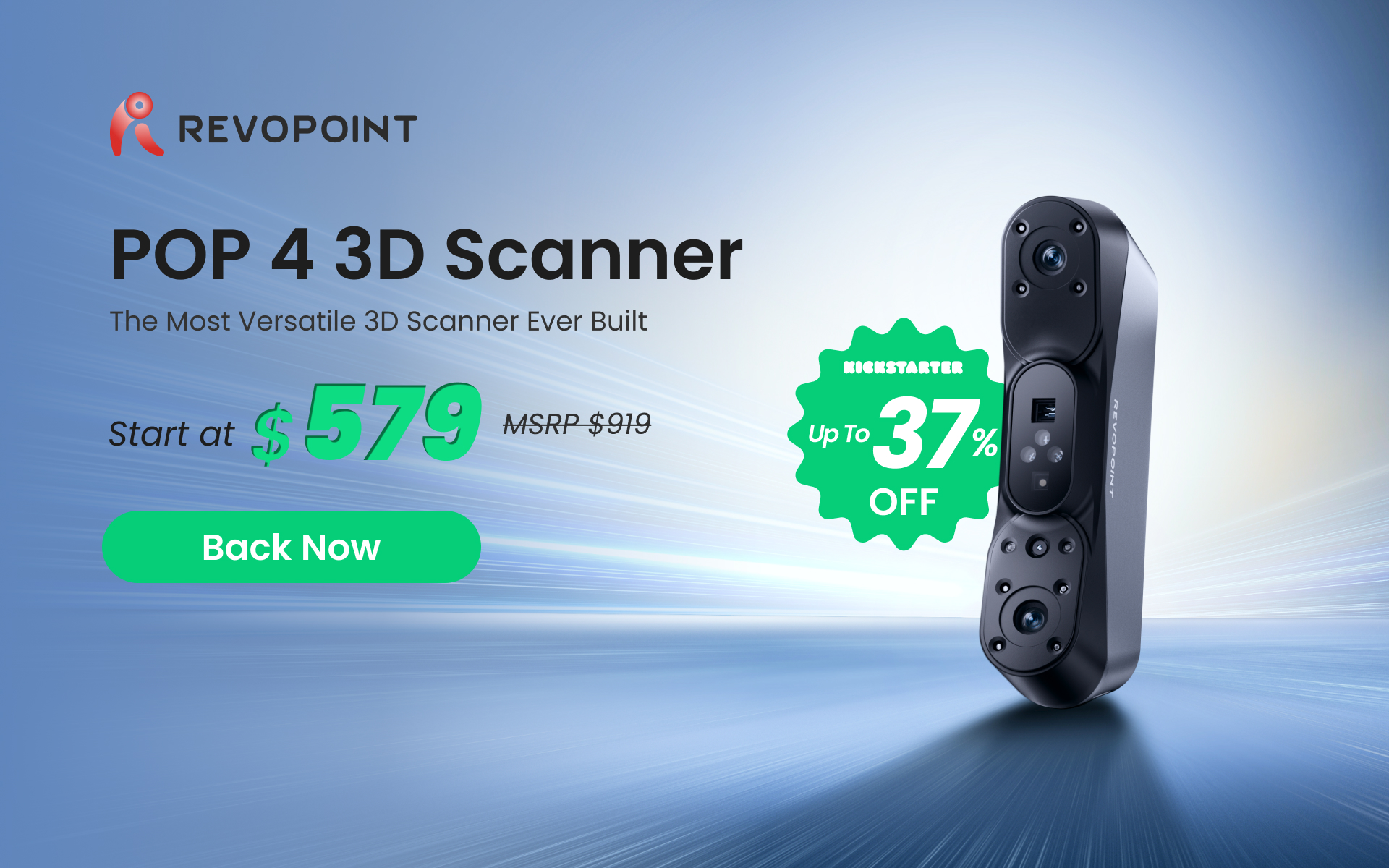
Revopoint’s next-generation handheld 3D scanner is now available for pre-order. The Revopoint POP 4 wrapped its Kickstarter campaign in May 2026 and is now open for pre-order directly through Revopoint, combining blue laser and near-infrared structured-light scanning in a single handheld unit at a $755 pre-order price, a 10% saving on the $839 regular price.
POP 4 is built for creators and professionals working across product design, VR and AR content creation, automotive, and heritage preservation, plus general makers and reverse-engineering hobbyists who want one tool that handles small detailed parts and larger workpieces without switching scanners.
One scanner for almost any object
Most handheld 3D scanners ask you to choose. Blue laser modes capture fine detail and dark or shiny surfaces. Near-infrared structured light is faster and covers a broader area in a single pass. Generalist scanners compromise on both. POP 4 ships both technologies in a single device.
The hybrid system supports five scanning modes: Full-Field HD, VCSEL Rapid, Hybrid HD, 30-Cross Blue Laser Lines, and Single-Line Deep Hole. In practice that covers fine details on jewelry or mechanical parts, fast bulk capture of larger objects, and a deep-hole mode for awkward internal geometry that defeats most prosumer scanners.
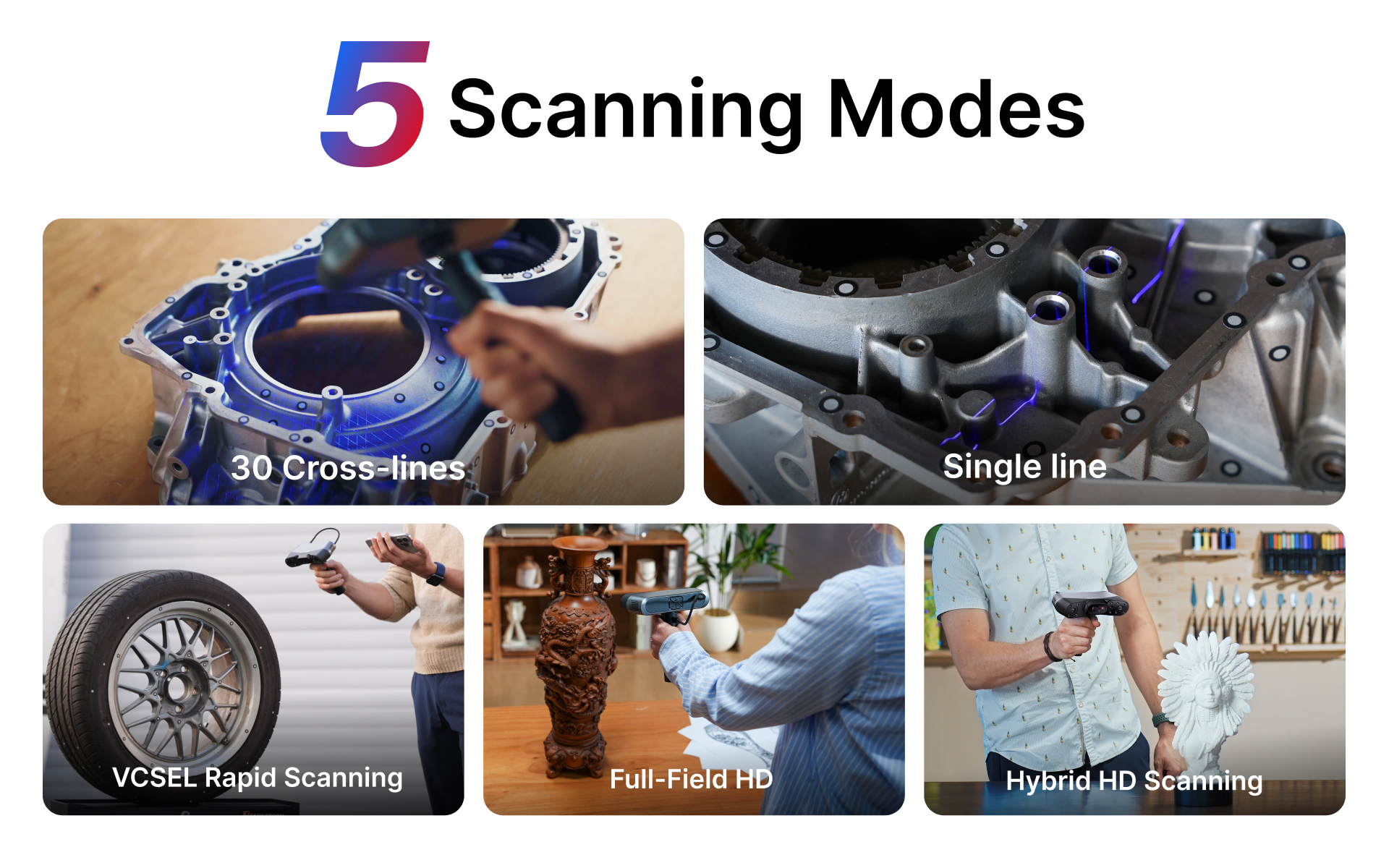
The blue laser modes deliver volumetric accuracy of 0.03 + 0.05 mm × L(m) at scanning speeds up to 105 fps, with a working distance of 200 to 400 mm. They also handle the surfaces that traditionally defeat structured-light systems, including glossy black plastics, polished metal, and dark fabrics, reducing the time you spend coating parts in scanning spray.
That flexibility is the headline argument for buyers who currently juggle multiple scanners across 3D printing, reverse engineering, product visualization, and digital archiving workflows.
Outdoor scanning and AI-assisted capture
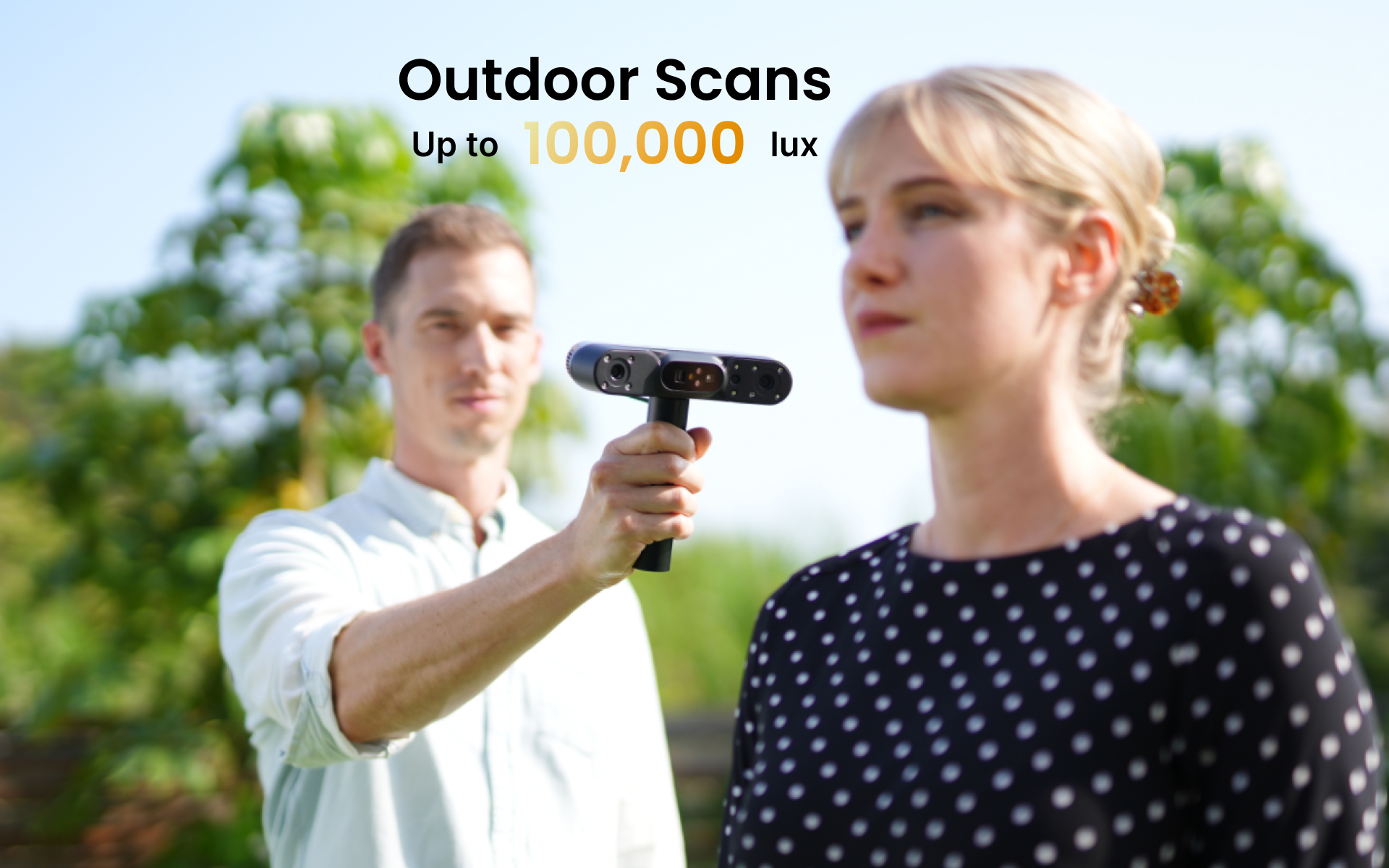
Direct sunlight is the enemy of structured-light scanners. POP 4 is rated for capture in environments up to 100,000 lux, which covers most real-world outdoor conditions. That makes it useful for automotive bodywork scans, on-site heritage preservation, and field documentation where you cannot control the lighting.
Inside the software, real-time AI object segmentation isolates the part you are scanning from background clutter automatically. Less time cleaning data on the desktop, fewer floating mesh fragments to delete, more usable scans the first time through.
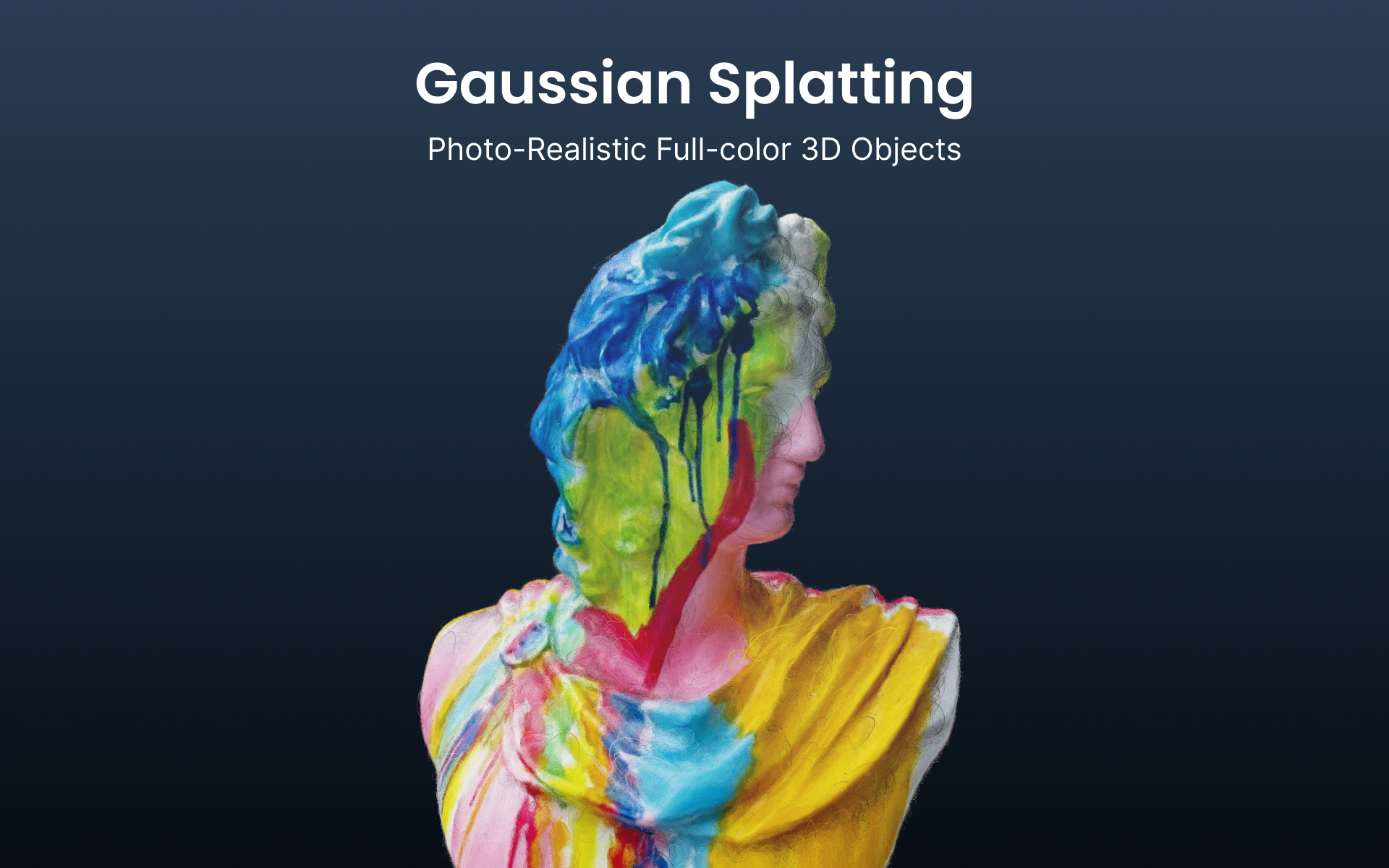
POP 4 also exports 3D Gaussian Splatting models in splat format. For VR and AR developers, photogrammetry users, and visualization workflows that need photorealistic captures rather than clean geometry, that is a meaningful addition to the export toolkit.
Untethered with a 5500 mAh battery grip
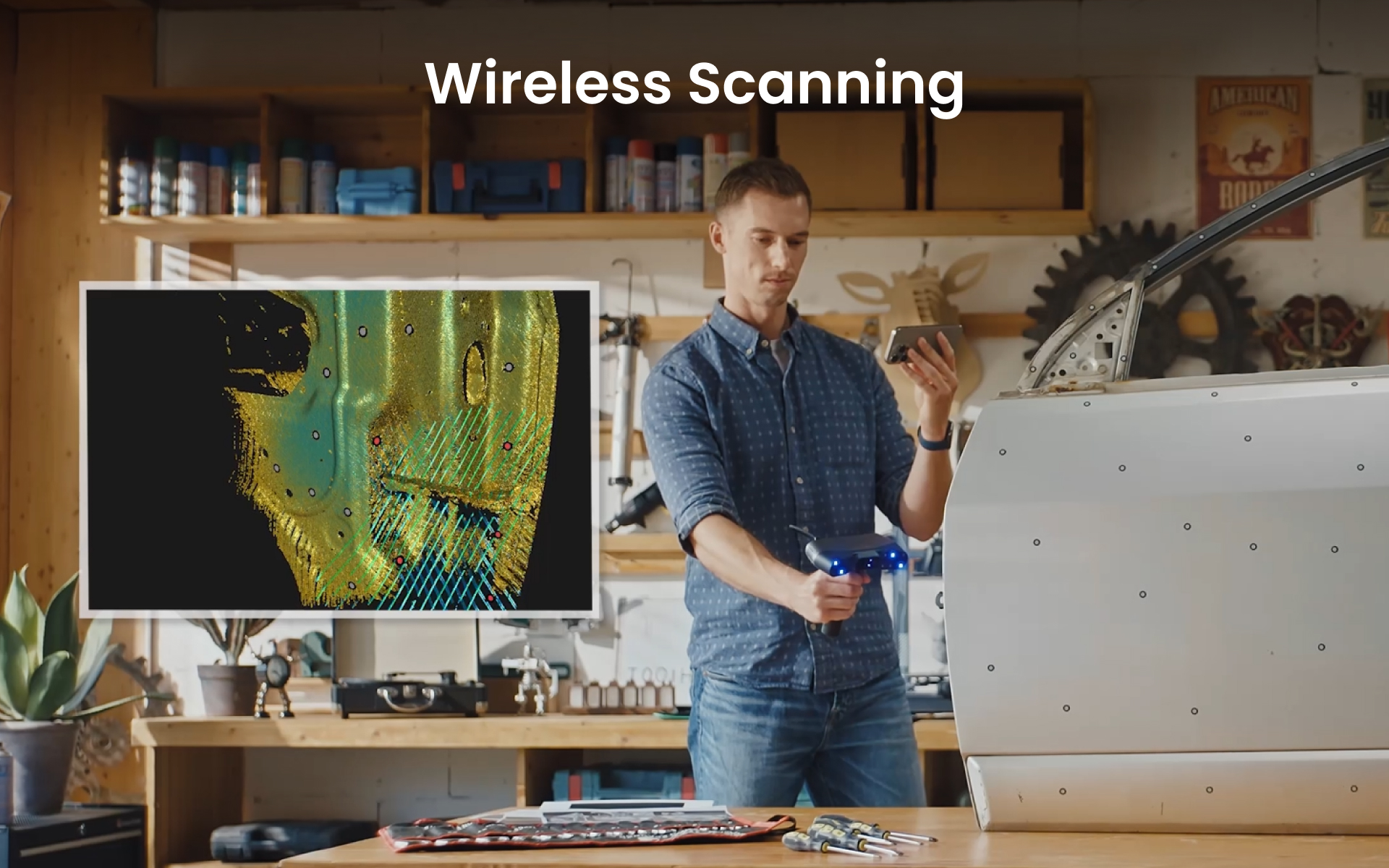
The included battery grip and Wi-Fi support let you operate POP 4 wirelessly from a mobile phone or tablet. No laptop, no USB tether, no extension lead trailing across the workshop. The 5500 mAh grip delivers around four hours per charge, enough for a full client visit, a museum capture session, or a day of vehicle restoration without stopping to recharge.
This is the kind of detail that matters more in practice than it sounds on paper. Anyone who has tried to scan a sculpture in a gallery or a car panel in a body shop knows that a tether forces compromises on angles and reach.
Built into Revopoint’s software ecosystem
POP 4 plugs into Revopoint’s full software pipeline rather than ending at the scan capture step. One-click handoffs move data from Revo Scan into Revo Measure for measurement and inspection, or into Revo Design for reverse engineering. From there, scans flow on to 3D printing, manufacturing, or further refinement.
For prosumer buyers, the software ecosystem is often harder to evaluate than the hardware. Capture quality is largely a solved problem at this price point. The real question is what you can do with the data without paying enterprise licensing fees on top. Having Revo Measure and Revo Design in the same pipeline is a meaningful advantage when comparing POP 4 against scanners that ship with capture software only.
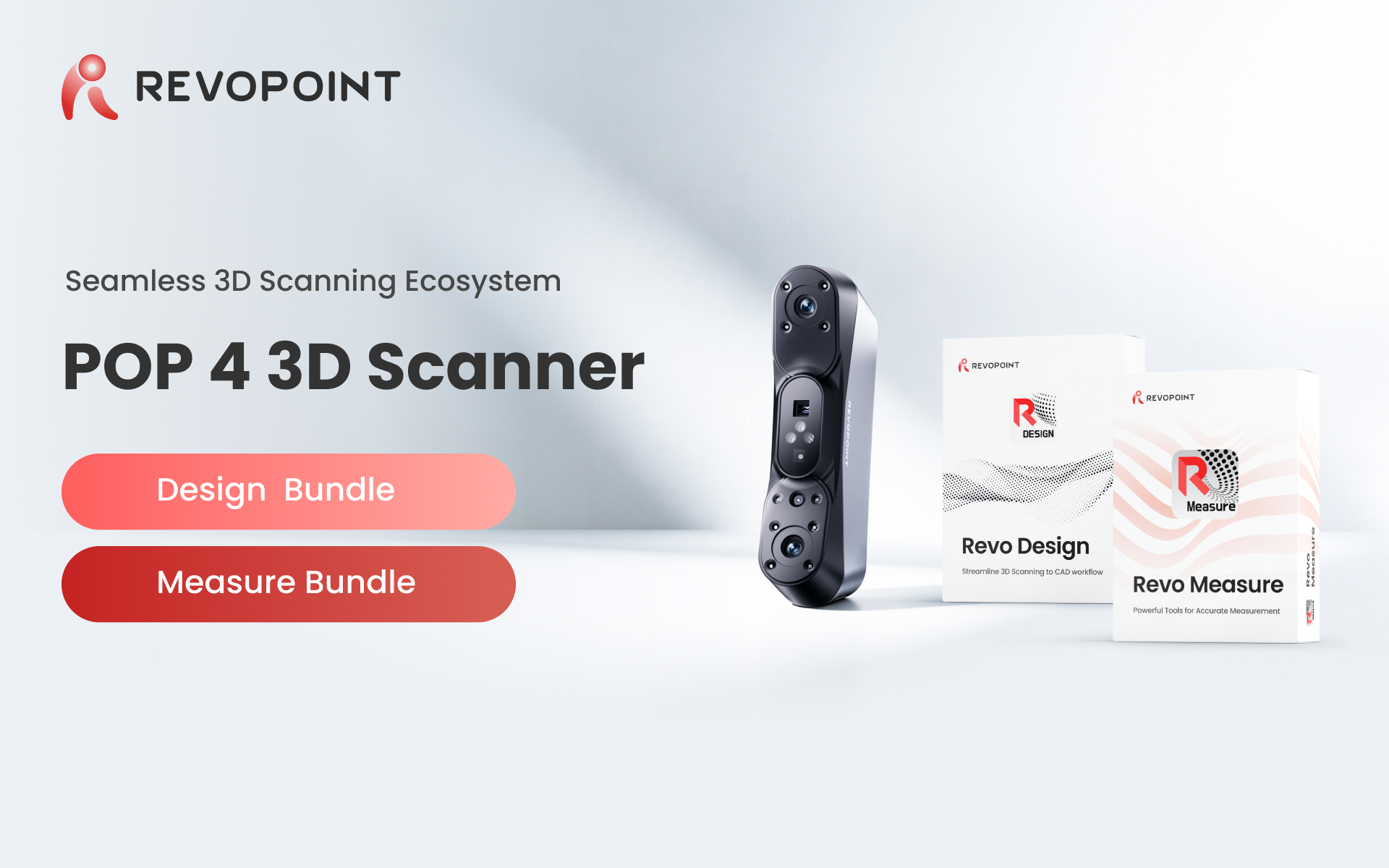
How to pre-order POP 4
The Kickstarter campaign closed in May 2026. Pre-orders are now open directly through Revopoint at $755, a 10% saving on the $839 regular price, with shipping scheduled to follow the campaign fulfilment window. Click through for current pre-order details and any bundle options Revopoint is running.