
Vinmec Da Nang International Hospital has carried out the first knee replacement procedure in Central Vietnam to combine 3D modeling with robotic assistance. The milestone marks a meaningful step forward in individualized orthopedic care and contributed to a faster functional recovery: the patient was able to stand and take her first steps within hours of the procedure.
From Chronic Pain to Critical Intervention
For years, 63-year-old Phan Thi Nghiep from Da Nang had been living with chronic knee pain that steadily eroded her independence. Despite medication, physiotherapy, and rehabilitation, her condition continued to worsen. Sleep became increasingly disrupted, and her mobility declined to the point where she relied on family members for daily support.
Evaluation at Vinmec Da Nang confirmed Grade 4 knee osteoarthritis, the most advanced stage of the condition, characterized by extensive cartilage loss and pronounced joint deformity. Without timely intervention, cases at this stage carry a high risk of further mobility loss and potential permanent disability. Following a comprehensive, multidisciplinary review, the Vinmec medical team determined that total knee replacement offered the most effective path to restoring her function.
3D Modeling in Action
Given the complexity of Nghiep’s joint deformity, the surgical team selected the CORI robotic platform, making this the first deployment of AI-integrated orthopedic robotics in Central Vietnam. Developed in the United States, the CORI system combines robotic execution with AI-powered intraoperative navigation and real-time decision support. Vinmec is the first private healthcare provider in Vietnam to implement the technology, with surgical teams trained and certified by international experts.
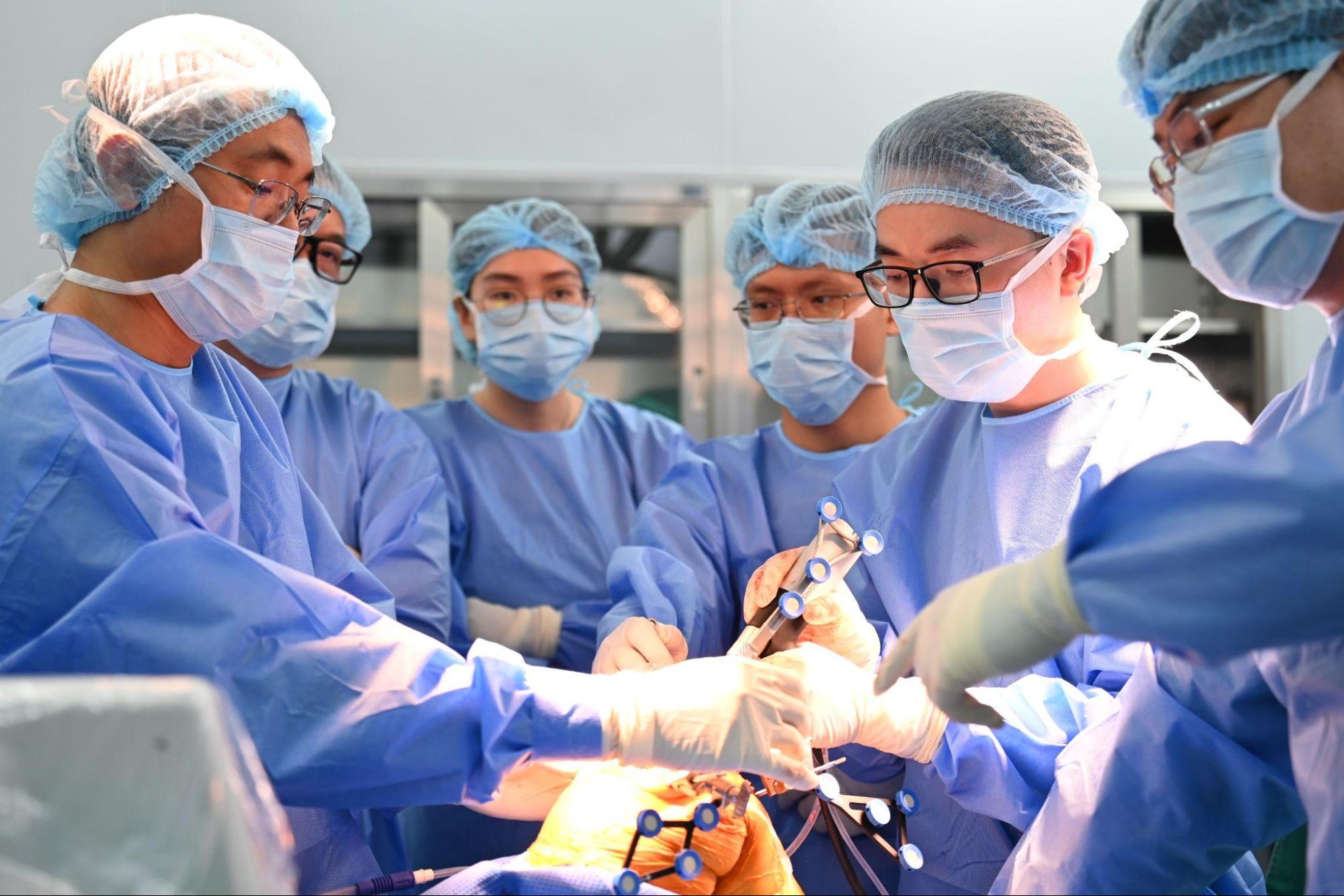
One of the platform’s defining capabilities is its ability to generate a real-time 3D model of the patient’s knee during surgery. This allows surgeons to tailor bone resection, implant positioning, and soft tissue balancing with an error margin of under one millimeter, without requiring a pre-operative CT scan.
“Robotic assistance reduces dependence on subjective experience while optimizing surgical outcomes,” said Dr. Le Quang Minh, Head of Surgery at Vinmec Da Nang. “This means less invasive procedures, reduced pain, and shortened recovery times.”
The approach is backed by clinical evidence. A 2025 review published in the Journal of Robotic Surgery, analyzing 25 studies, found that AI-assisted procedures reduced operative time by 25% and lowered intraoperative complications by 30% compared with conventional techniques.
For Nghiep, the results were immediate. Within hours of surgery, she was able to stand and begin walking with staff assistance, an early mobility milestone that is particularly significant in elderly orthopedic patients. “It feels like these are truly my own legs,” she shared.

Building a 3D-Enabled Care Ecosystem
The introduction of robotic knee surgery at Vinmec Da Nang reflects a broader effort to expand access to advanced medical technologies across Central Vietnam, according to Prof. Dr. Tran Trung Dung, CEO of Vinmec Healthcare System.
Over the past decade, Vinmec has built a track record in complex, technology-led interventions, including locally developed 3D printing applications. These include the world’s first 3D-printed femur transplant performed for a child with cancer, and an in-hospital 3D-assisted reconstruction of a rare elbow deformity that had gone untreated for 27 years.
Since opening in 2017, Vinmec Da Nang has established itself as a center for advanced diagnostics and treatment in Central Vietnam. With a quality management score of 959 out of 1,000, the hospital has also become a credible destination for medical tourism, drawing both domestic and international patients.
As 3D modeling transitions from a supplementary tool into a core surgical capability, Vinmec’s deployment demonstrates how precision-led, patient-specific care can be extended well beyond major medical centers.