
Scientists at Oak Ridge National Laboratory have developed a hybrid manufacturing method that 3D prints a polymer form, electroforms a nickel shell around it, and uses that shell as a leak-free can for powder metallurgy hot isostatic pressing. The work, done with Connecticut-based A.J. Tuck Company, is aimed at critical parts for advanced nuclear reactors and other energy and defense hardware, and it is designed to skip some of the forging and casting steps that currently bottleneck U.S. supply chains.
PM-HIP already fuses metal powder into dense, near-net-shape parts by sealing it in a container and subjecting that container to high heat and pressure. The cans themselves have been the weak link. Conventional HIP cans take several fabrication and assembly steps, and welded process tubes are a common leak point. ORNL has already shown that metal 3D printing can produce HIP canisters directly. This project takes a lower-temperature path: print plastic, grow metal.
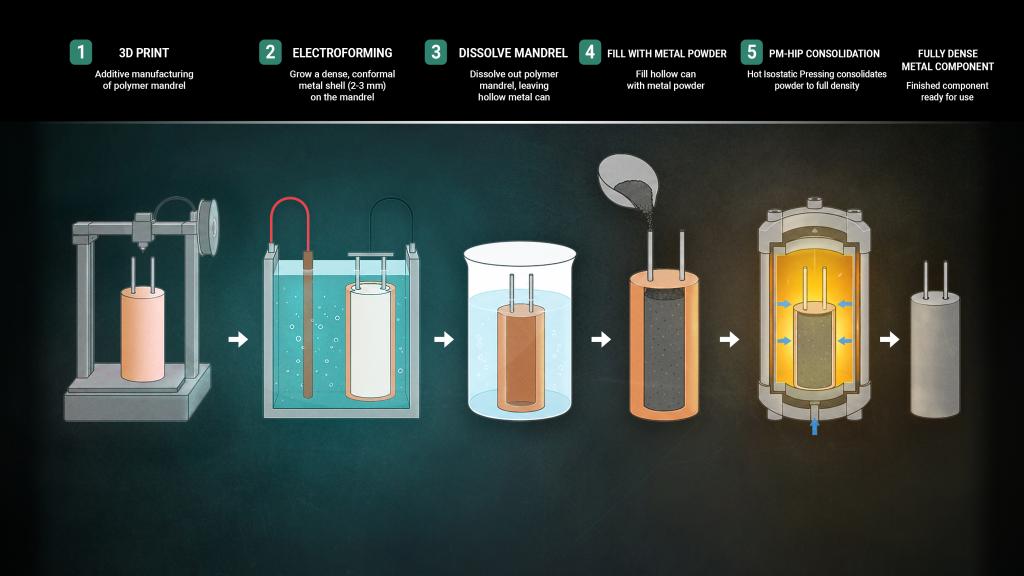
The sequence starts with a polymer mandrel printed to the shape of the finished component. That form goes into an electrolyte bath, where electroforming deposits a uniform nickel shell about 2 to 3 millimeters thick. Acid dissolves the plastic, leaving a hollow metal vessel. The vessel is filled with metal powder, sealed, and run through HIP to consolidate the powder into a solid part.
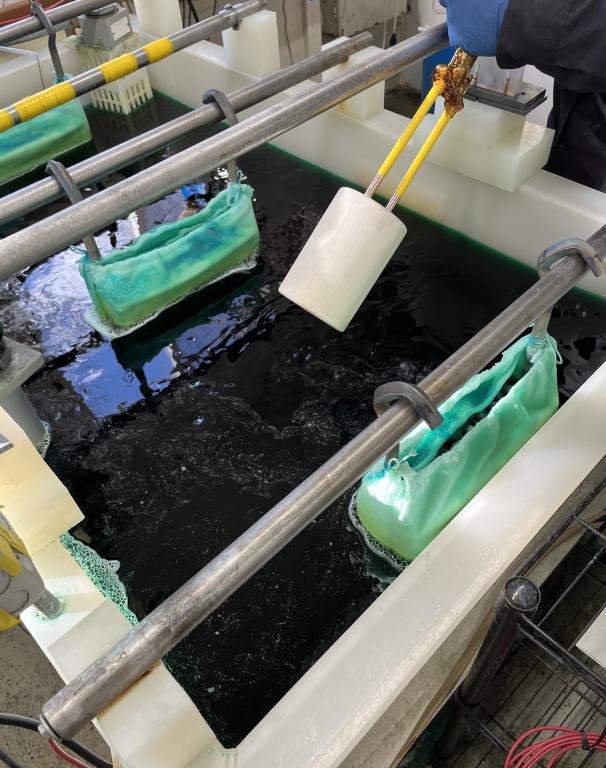
“This project shows that electroforming can successfully produce leak-free HIP cans for advanced nuclear energy applications,” said Vanshika Singh, an ORNL research associate staff scientist. “This approach could make it easier to produce these components in the U.S., reducing supply chain challenges for advanced nuclear energy systems.”
Using polymer 3D printing for the form keeps the first step off high-temperature metal printers, which cuts material and equipment cost, reduces distortion, and makes it easier to iterate on the geometry. Electroforming also scales differently than most metal additive processes. “Because the process depends mostly on how thick the metal layer needs to be — not how large the part is — we can scale production efficiently and even batch multiple components in a single process,” said ORNL mechanical engineer Amiee Jackson.
Nuclear power supplies about 20 percent of U.S. electricity, and demand for small modular and advanced reactors is putting pressure on a domestic forging base that is already thin. ORNL says the hybrid cans are a fit for large, high-precision parts such as reactor pressure vessels, valves, and turbine hardware.
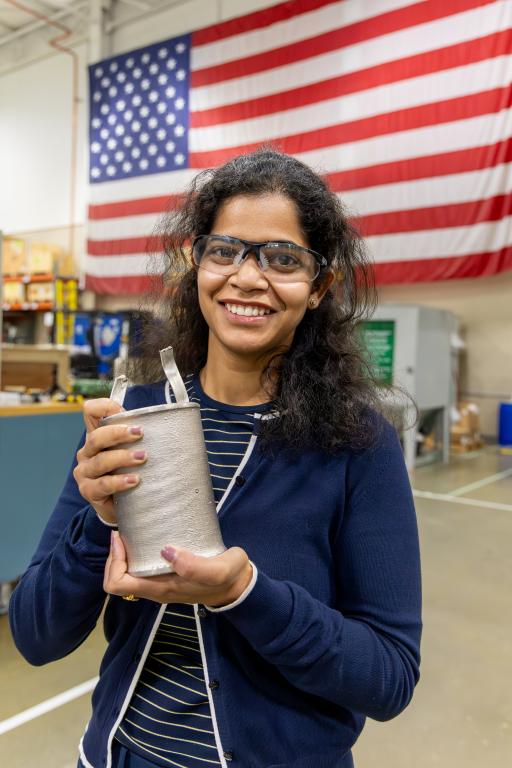
In the first phase, the team electroformed five leak-free cylindrical HIP cans, each 6 inches tall and 4 inches in diameter. They also built an integrated port into the can so process tubes no longer have to be welded on separately. That work produced a 15.7-pound solid nickel component.
Phase two, now underway, moves to a more demanding shape: an impeller or a nuclear-relevant valve. ORNL and A.J. Tuck have a cooperative research agreement plus a license on the process. An invention disclosure and a provisional patent are on file. The lab’s share of the work ran at the Manufacturing Demonstration Facility, supported by DOE’s Advanced Materials and Manufacturing Technologies Office.
“Working alongside ORNL allowed us to bring our deep electroforming expertise into an entirely new domain,” said Dara Williams, president of A.J. Tuck Company. “Demonstrating that this process can produce leak-free HIP cans at this level of precision opens real doors for domestic nuclear manufacturing — and we’re just getting started.”
Source: ornl.gov