
RMIT engineers have created a 3D-printed titanium material that floats in water even after severe damage, a candidate for jetties, buoys and marine sensors.
Metal lattices can be lighter than water, but they usually sink because water floods the open cells. The RMIT team printed hollow titanium struts and filled only those tubes with polyurethane foam, so water can still flow through the structure while the foam keeps it buoyant.
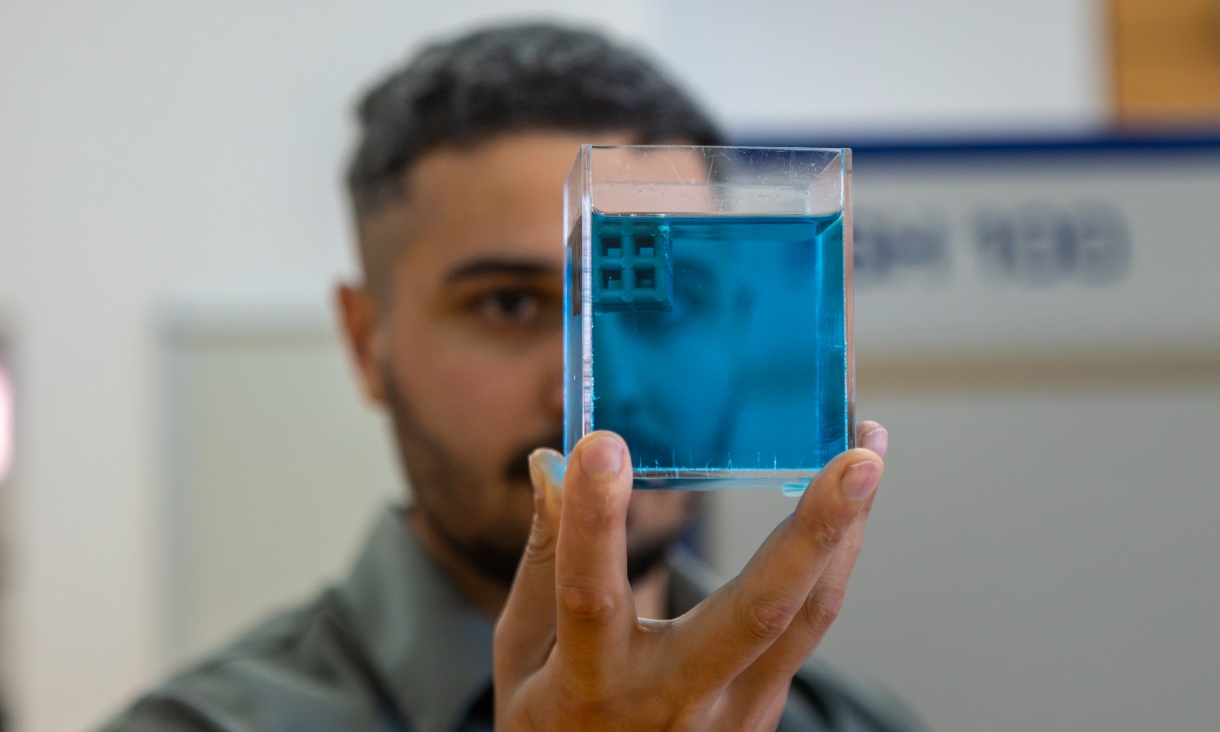
“Although metallic lattices can be incredibly light, with densities less than one-tenth the density of water, their open, interconnected spaces allow water to enter, causing them to sink,” said Jordan Noronha, lead researcher at RMIT’s Centre for Additive Manufacturing. “This has made these strong, lightweight structures unsuitable for marine infrastructure, until now.”
Samples stayed afloat in freshwater for more than two months. At the same overall density, the lattice was 70 percent stronger than the stainless steel or high-density polyethylene used in marine gear. After two weeks in Port Phillip Bay seawater, it lost 0.15 percent of its mass and less than 1 percent of its strength. It stayed buoyant after cracking, failed joints, and a broken lattice layer, and sank only after being crushed.
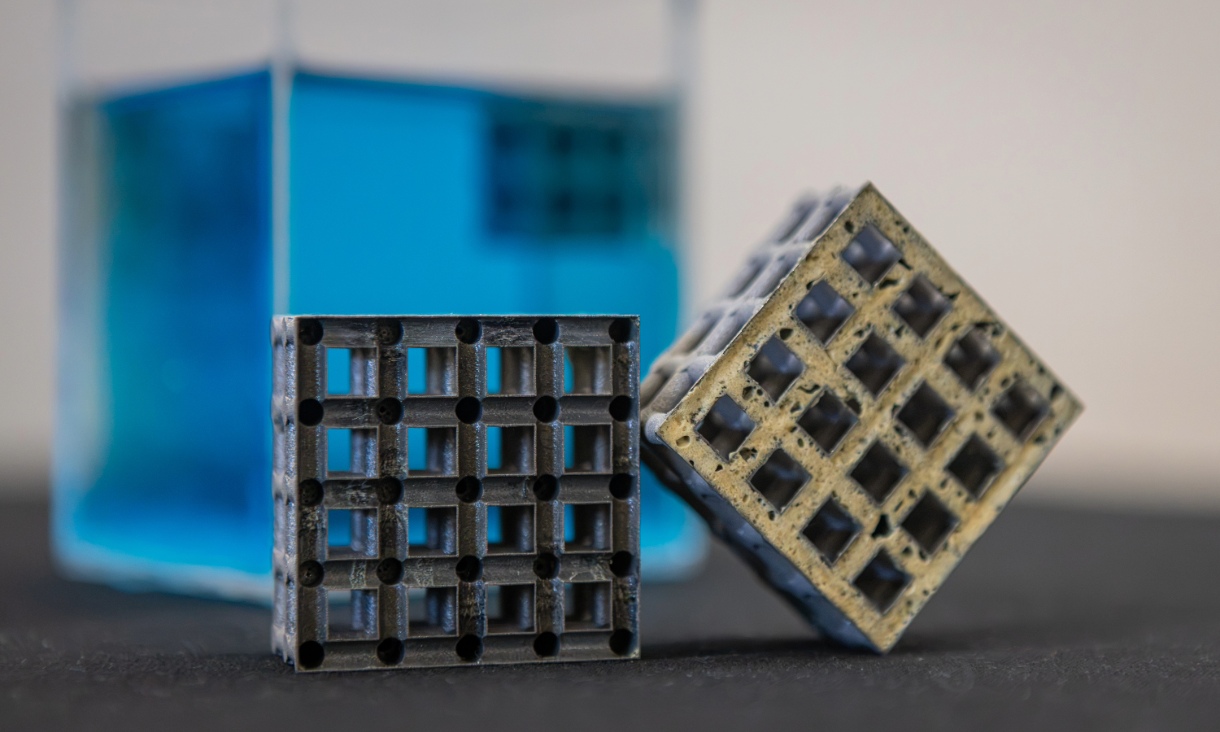
The group also defined skeletal density, a measure that counts only the titanium walls and sealed foam-filled channels, not the open space water can occupy. If that number is lower than the surrounding liquid, they say, the part should float even when water runs through every external opening.
“By filling only the hollow titanium struts with polyurethane foam, we created a structure that allows water to flow through it while remaining buoyant even after significant cracking and damage,” Noronha said.
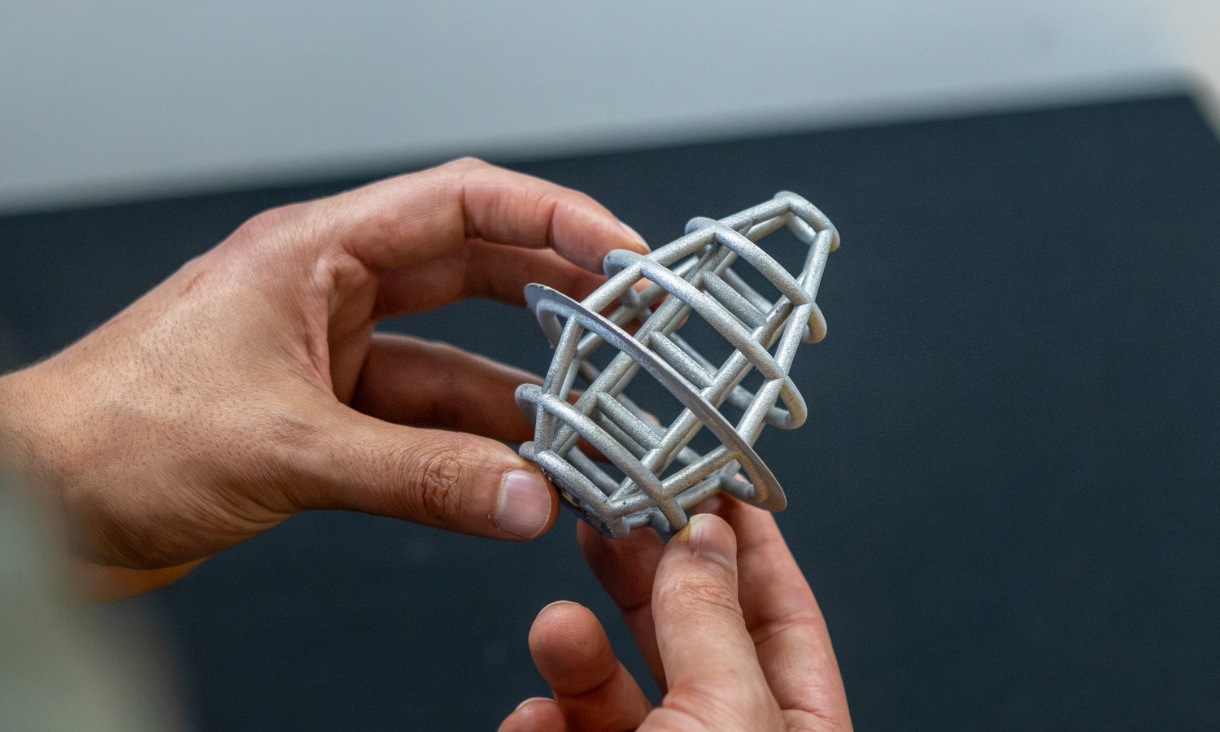
A printed buoy stayed stable in a turbulent seawater tank tilted up to 45 degrees, with no sealed casing, coating, or extra flotation. RMIT led the work with Conservatoire National des Arts et Métiers in France. The Australian Research Council and RMIT’s School of Engineering supported it. The paper, Breaking the surface: buoyant metal-polymer open-cell hybrid lattice metamaterials, appears in Advanced Materials.
Source: rmit.edu.au