
University of Waterloo researchers have created a 3D-printed electrode that could make it easier and safer to store large amounts of renewable energy from wind and solar farms.
Lithium-ion batteries store energy in solid materials and often use flammable electrolytes. Redox flow batteries keep energy in water-based liquids in external tanks, so capacity scales with tank size. The electrode still has to let that liquid reach the reaction surfaces. Conventional manufacturing makes those internal paths hard to control.

“Instead of storing energy in solid materials, they store energy in liquid electrolytes held in external tanks,” said Maxime van der Heijden, a chemical engineering professor at Waterloo who led the work. “The amount of stored energy can be increased simply by using larger tanks, making them well-suited for large-scale renewable energy storage and grid applications.”
The team printed several triply periodic minimal surface shapes, a family of repeating 3D geometries that show up in nature, then heat-treated the parts into conductive carbon. A digital light-processing printer formed the porous structures. The diamond geometry performed best.
“With 3D printing, we can design the internal structure of an electrode in ways that are difficult to achieve using conventional manufacturing,” van der Heijden said. “That gives us much greater control over how the liquid moves through the battery and reaches the surfaces where the energy-storing reactions take place.”
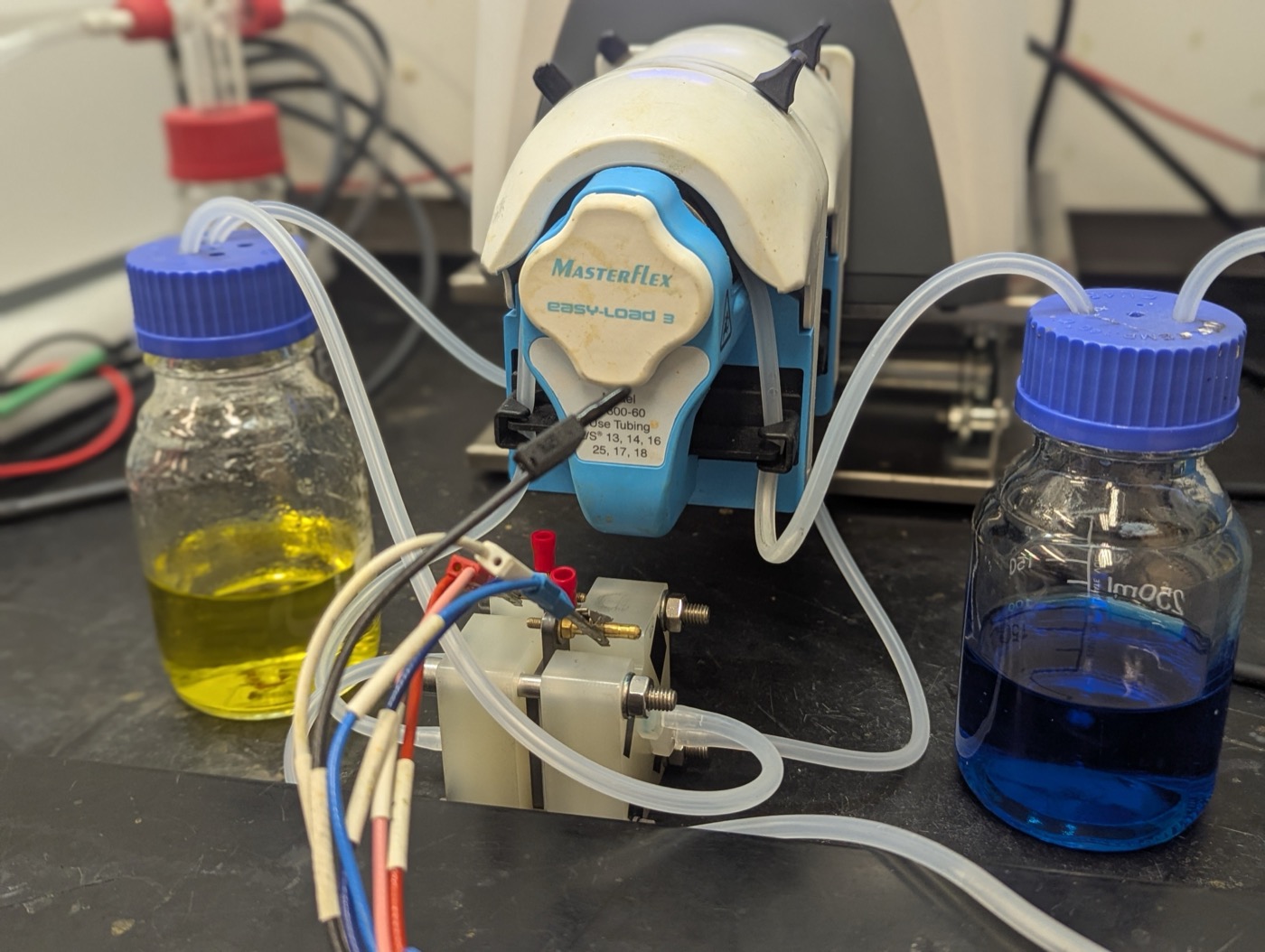
The printed electrodes were tested in lab flow cells and in a working vanadium redox flow battery. The study, Enhancing Mass Transport in Redox Flow Batteries with 3D-Printed Triply Periodic Minimal Surface Electrode Structures, appears in the Journal of Energy Storage.
Source: eurekalert.org