The best ABS filament today is defined by what it does not do: warp off the bed, crack along layers, and stink out the room quite like the ABS of five years ago. Low-warp formulations and affordable enclosed printers have quietly made ABS and its sun-proof sibling ASA practical home materials again, and for parts that live near engines, in hot cars, or outdoors for years, nothing this affordable touches them. This guide explains the ABS-or-ASA decision, the warping physics and how the good brands beat it, and ranks eight spools across both materials.
Both materials assume an enclosed printer; if yours is open-frame, our enclosures guide fixes that for less than a new machine, and the engineering filaments guide covers where these materials sit in the wider high-performance family.
Jump to menu
Jump to material
Our top ABS and ASA picks at a glance
ABS or ASA: the five-minute decision
They are siblings from the same styrene family with near-identical strength, heat resistance to roughly 95 to 100°C, and printing behavior. The difference is one ingredient: ASA swaps butadiene rubber for an acrylate that does not break down in sunlight. ABS left outside chalks, yellows, and embrittles within a season or two; ASA holds color and toughness for years of direct UV. ASA also warps slightly less and smells milder, at one to a few dollars more per kilogram.
So the decision is location: parts that live indoors or inside machines, ABS; anything that sees regular sun, garden fittings, automotive exterior, house numbers, drone shells, ASA. If you only stock one, stock ASA and pay the small premium for never having to think about it. Both sand beautifully and both dissolve in acetone, which enables acetone vapor smoothing, the trick that turns layered prints into glossy injection-molded lookalikes.
Why ABS warps, and what beats it
ABS shrinks roughly one percent as it cools, and it cools unevenly: the bottom layers are clamped warm to the bed while upper layers contract, so the part curls its corners up and, on tall prints, cracks between layers. Every fix attacks that temperature difference. An enclosure traps a 40°C+ ambient; a heated chamber does it properly; a 95 to 110°C bed keeps the foundation expanded; a draft-free room and a brim finish the job. This is also why the modern low-warp formulations matter: less shrinkage to fight in the first place.
One paragraph on safety, because it is real: styrene materials emit fumes and ultrafine particles while printing, so run them in an enclosed printer in a ventilated space, ideally with filtration, and never in a bedroom. Our 3D printing safety guide covers ventilation setups in depth.
The best ABS and ASA filaments compared
Prices are per kilogram and approximate; they vary by color, bundle, sale period and region, so click through for current pricing.
Best ABS filament
For everything indoors that needs to survive heat, impacts, and post-processing.
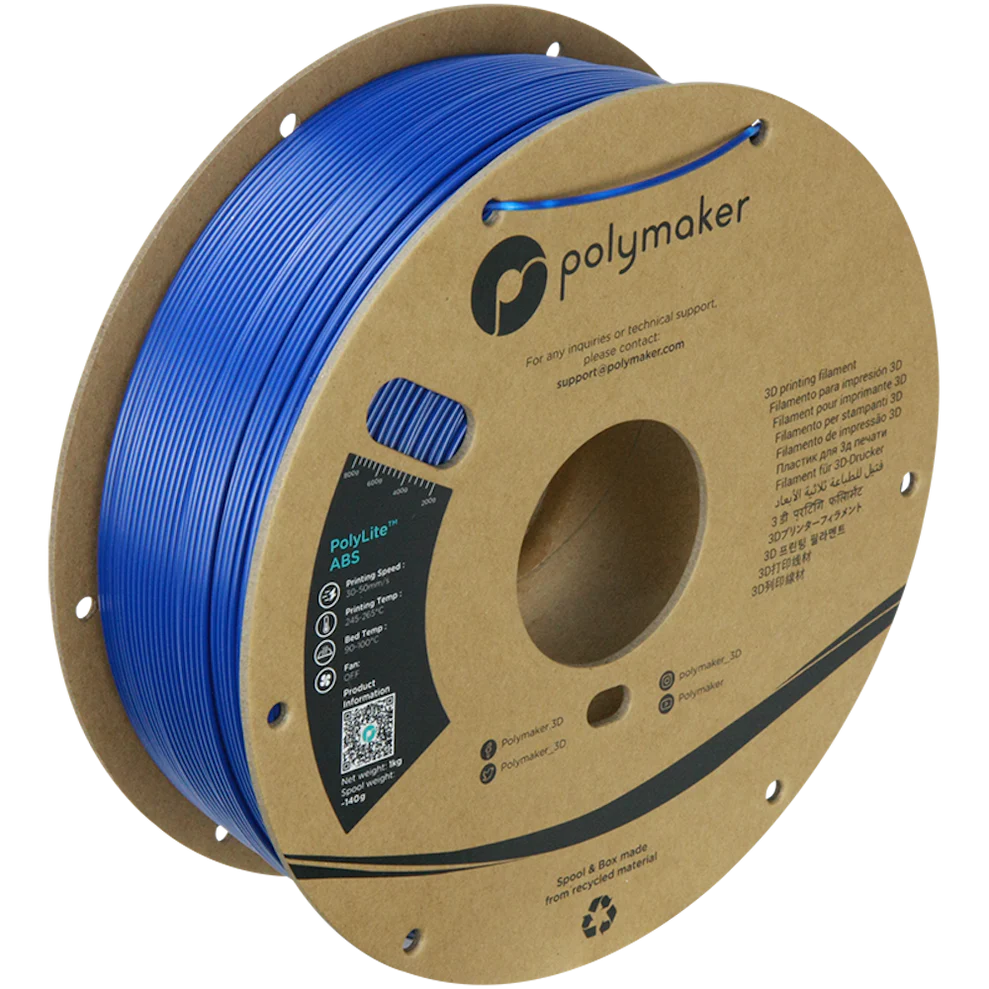
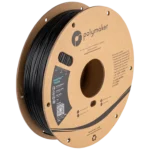
Polymaker PolyLite ABS
Best for: ABS that prints like it has read the complaints. Polymaker’s Warp-Free technology is the most effective low-shrink formulation we have used: corners stay down in a merely enclosed (not chamber-heated) printer, tall parts stop splitting, and the mechanical properties stay genuinely ABS, stiff, tough, and 100°C-capable. If old ABS scared you off, this is the spool that changes the verdict.
Price: ~$20/kg (approximate; varies by color, sale period and region, click through for current pricing)
- Nozzle 245 to 265°C, bed 90 to 100°C; enclosure recommended
- Warp-Free formulation; tall prints stop cracking
- Sands and acetone-smooths beautifully
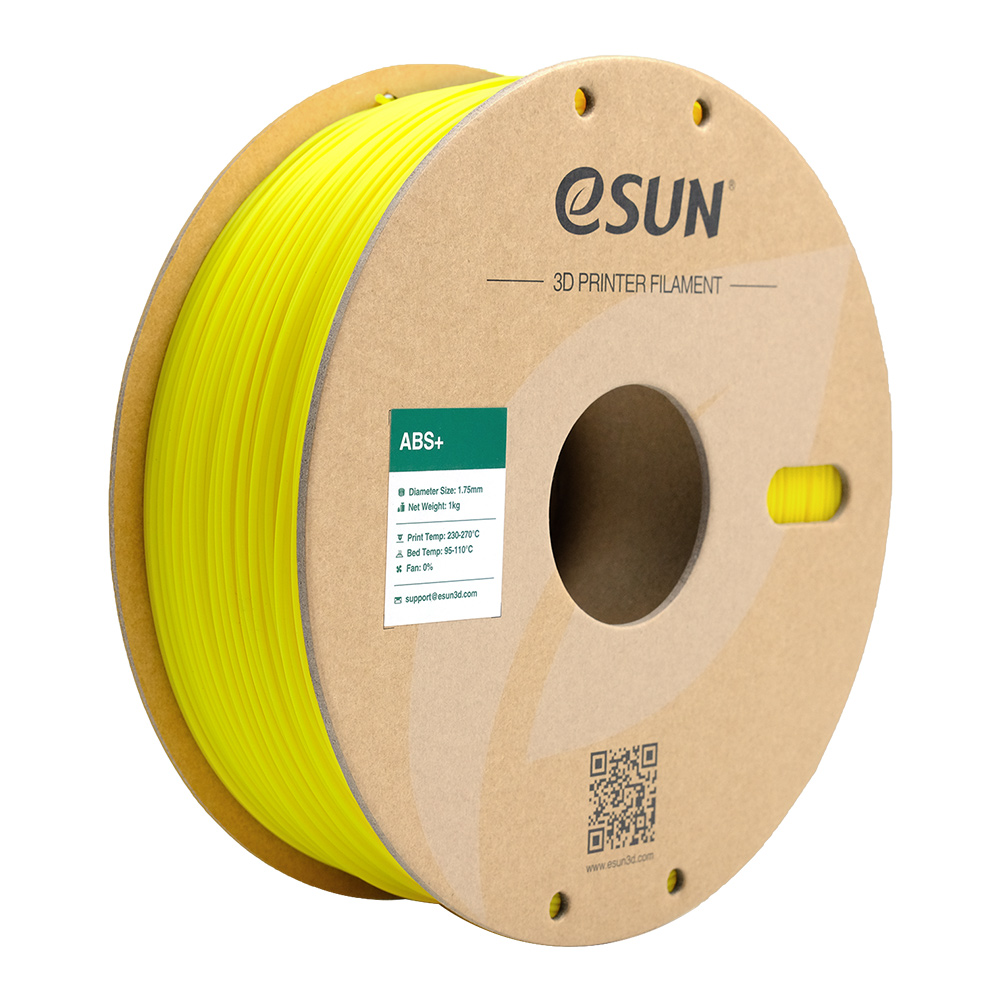
eSUN ABS+
Best for: reliable ABS at commodity prices. The plus is an anti-warp additive that genuinely works: in a sealed enclosure with the chamber warmed, ABS+ lays down almost as drama-free as PLA, and it costs less than most PETG. Layer adhesion is strong, the matte-satin surface hides lines well, and it has become the default farm ABS for good reason. Diameter control is the only average spec.
Price: ~$17/kg (approximate; varies by color, sale period and region, click through for current pricing)
- Nozzle 240 to 260°C, bed 95 to 110°C; enclosure required
- Anti-warp additive; prints calmly when enclosed
- Cheaper than most PETG
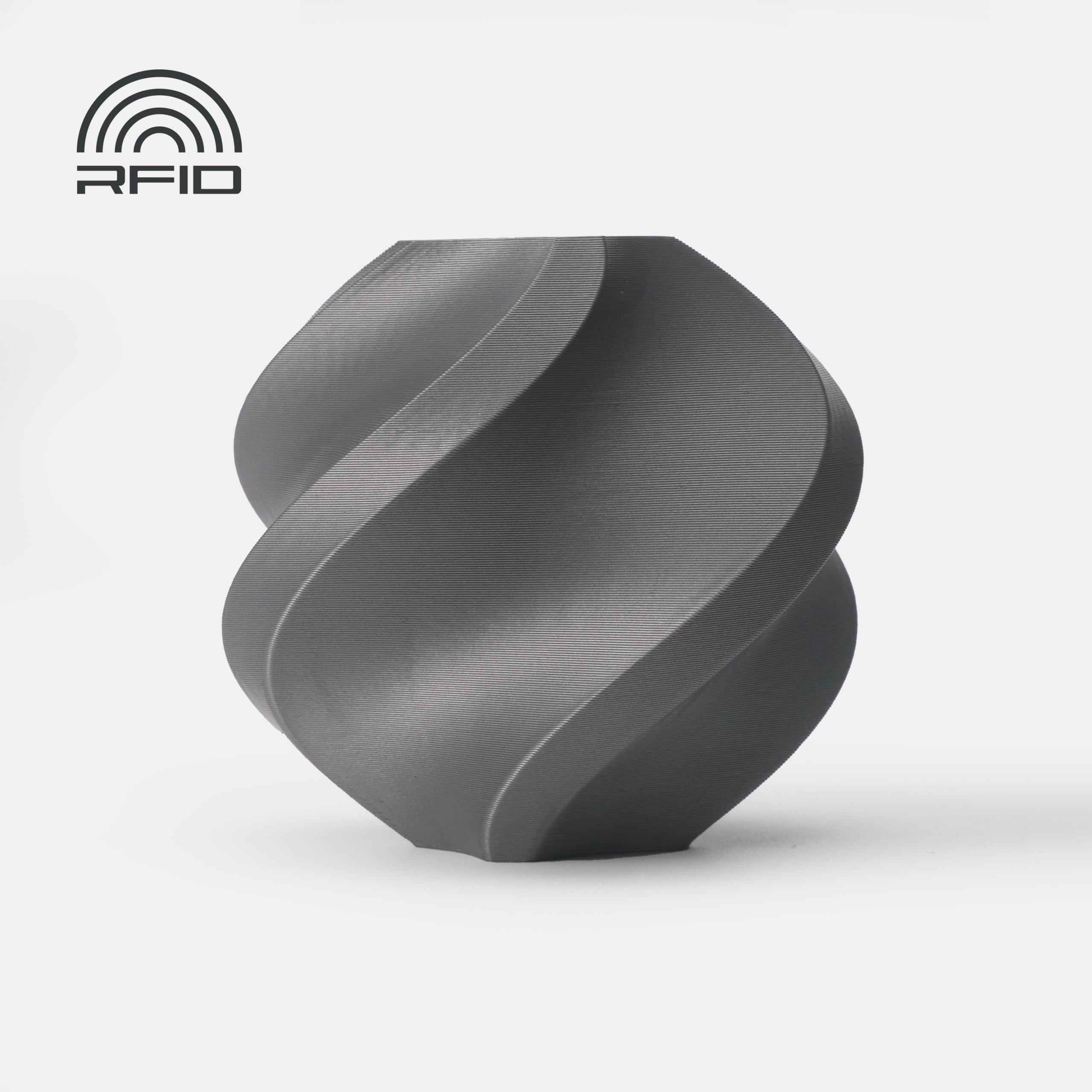
Bambu Lab ABS
Best for: one-click ABS on the printers most people now own. The RFID tag loads a profile tuned to the exact chamber behavior of Bambu’s enclosed machines, which removes the entire tuning phase that makes ABS intimidating. Quality matches the rest of Bambu’s filament line: tight diameter, consistent color, bulk discounts. On a P or X series with the door closed, it just prints.
Price: ~$20/kg (approximate; varies by bundle, sale period and region, click through for current pricing)
- Nozzle 240 to 270°C, bed 90 to 100°C; enclosed Bambu printers
- RFID profile tuned to Bambu chambers
- Bulk pricing in multi-spool orders
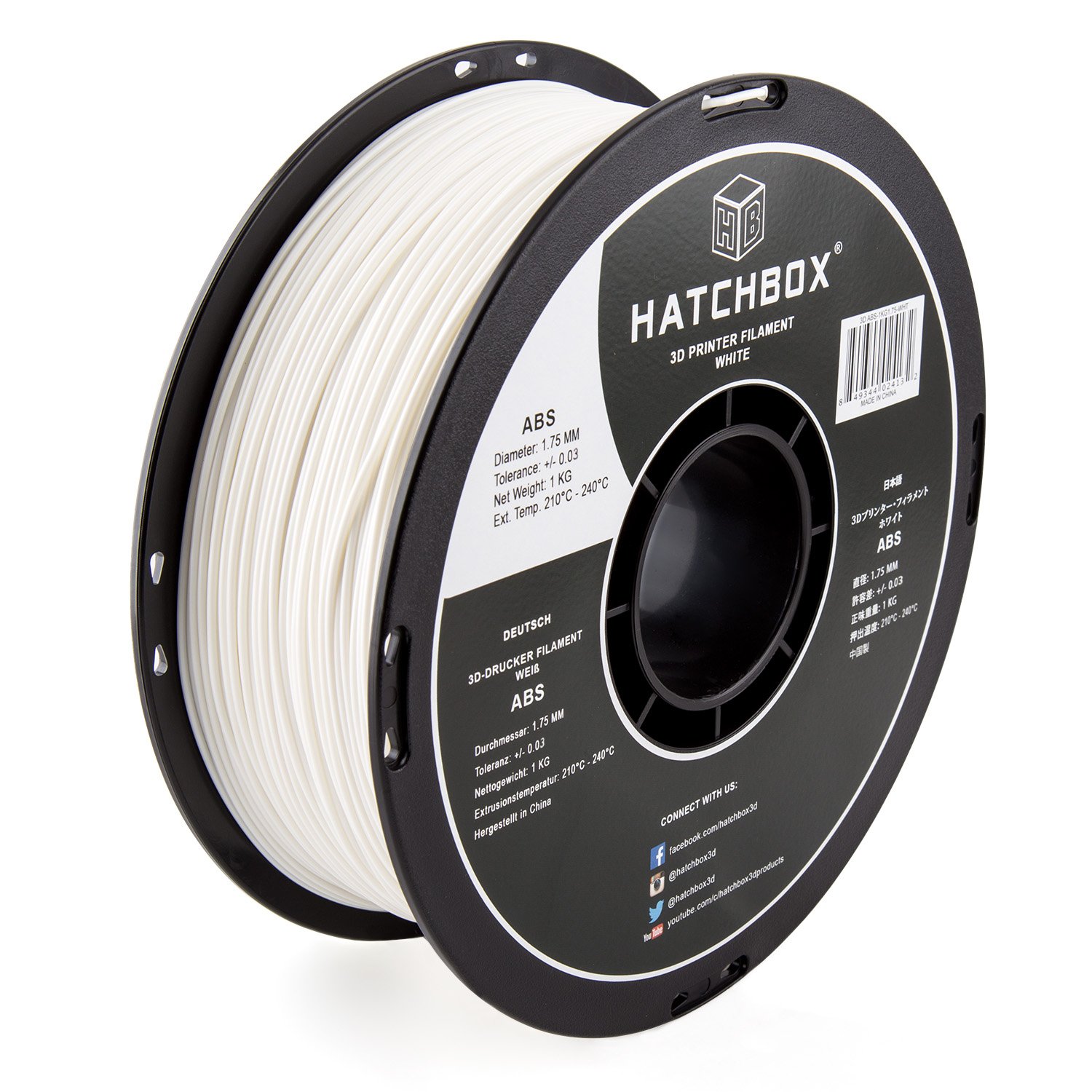
Hatchbox ABS
Best for: the post-processing classic. Hatchbox ABS is a standard formulation, so it wants a proper enclosure and a hot bed, but it rewards the setup with the nicest sanding and acetone-smoothing behavior on this list; the finish after a vapor bath is glass. Years of consistent QC and next-day availability do the rest. Buy it for cosplay armor, smoothed enclosures, and anything that gets finished by hand.
Price: ~$22/kg (approximate; varies by color, sale period and region, click through for current pricing)
- Nozzle 230 to 240°C, bed 100 to 110°C; enclosure required
- The best sanding and vapor-smoothing finish here
- Consistent QC, Prime availability
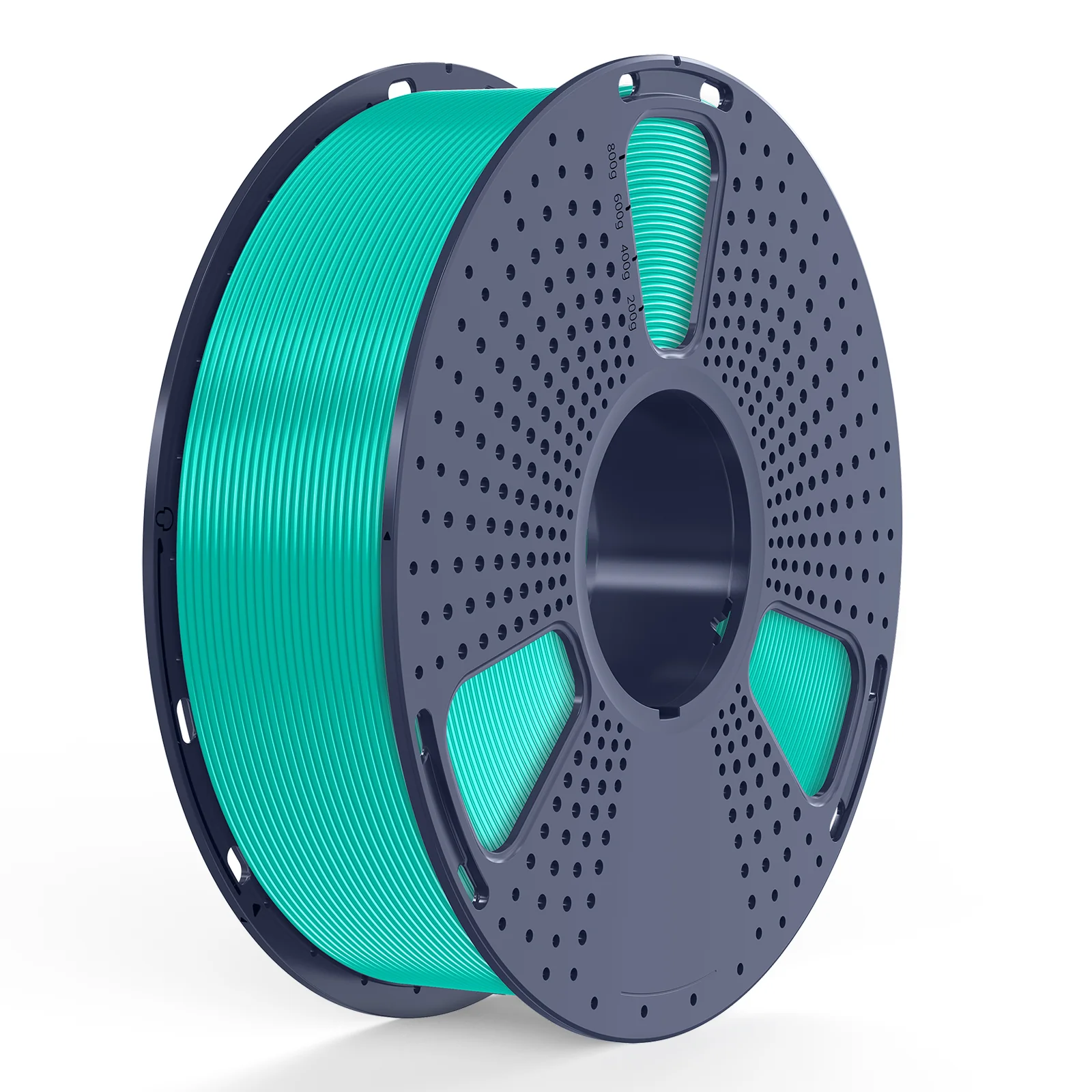
Sunlu ABS
Best for: volume ABS for enclosed farms. At around $14, and less in Sunlu’s frequent multipack deals, this is the cheapest ABS we trust in a printer overnight. It is a standard-shrink formulation, so give it a warm chamber and a brim, and check the first layers on the occasional spool. For jigs, fixtures, and parts where unit cost rules, it earns the slot.
Price: ~$14/kg (approximate; varies by bundle, sale period and region, click through for current pricing)
- Nozzle 230 to 250°C, bed 95 to 110°C; enclosure required
- Cheapest dependable ABS; multipack deals common
- Standard shrink: use a brim and warm chamber
Best ASA filament
Everything ABS offers, plus years of sunlight. For most people this is the styrene to stock.
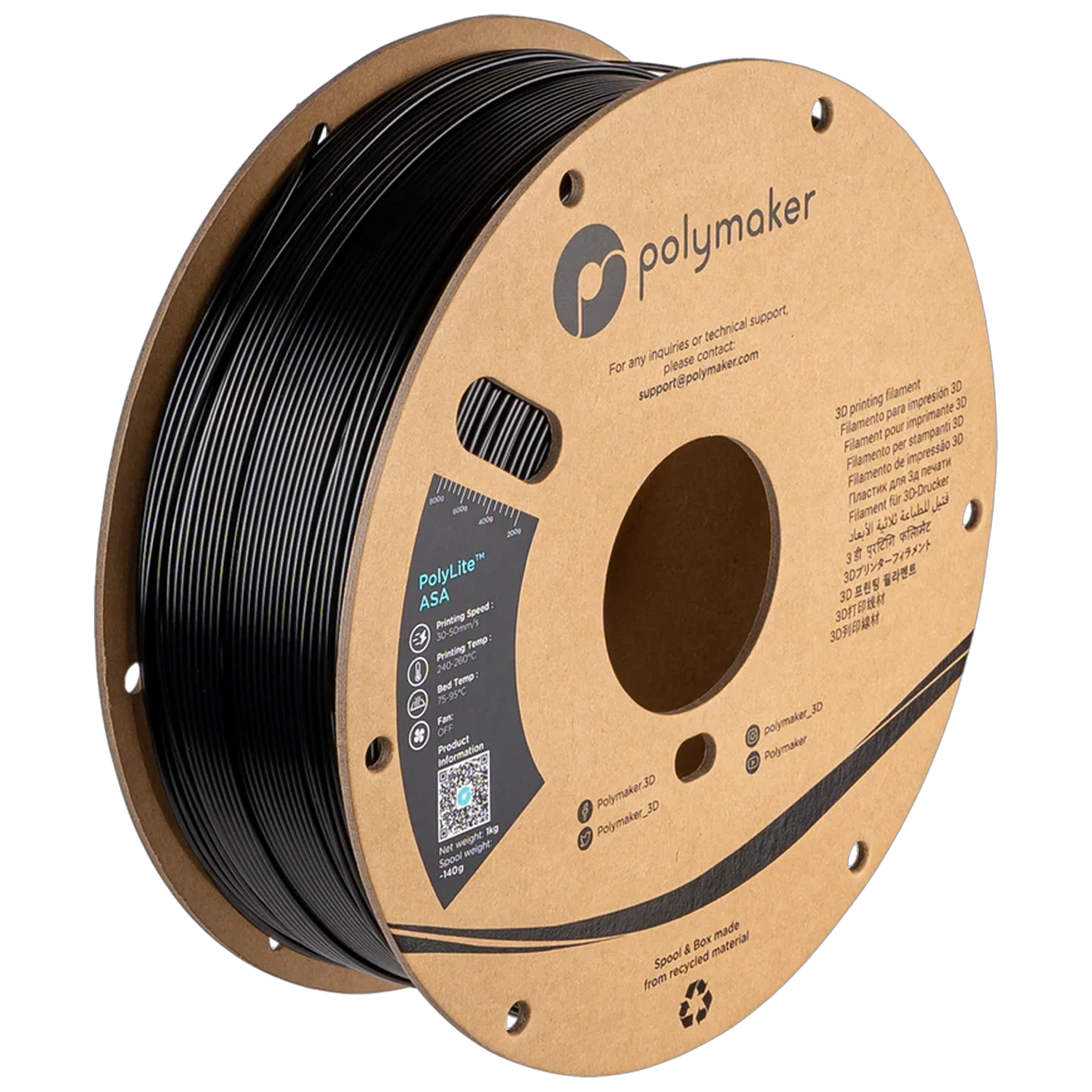
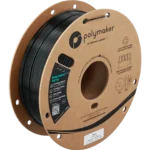
Polymaker ASA
Best for: outdoor parts you print once. Polymaker applies the same warp-control chemistry as PolyLite ABS to its ASA, making the easier-anyway material easier still, and the UV stability is the real thing: parts we have left outside through full summers hold color and toughness. Garden brackets, exterior clips, antenna mounts, trailer parts; this is the default answer.
Price: ~$25/kg (approximate; varies by color, sale period and region, click through for current pricing)
- Nozzle 240 to 260°C, bed 90 to 100°C; enclosure recommended
- Genuine multi-year UV stability; warp-controlled
- Milder odor than ABS while printing
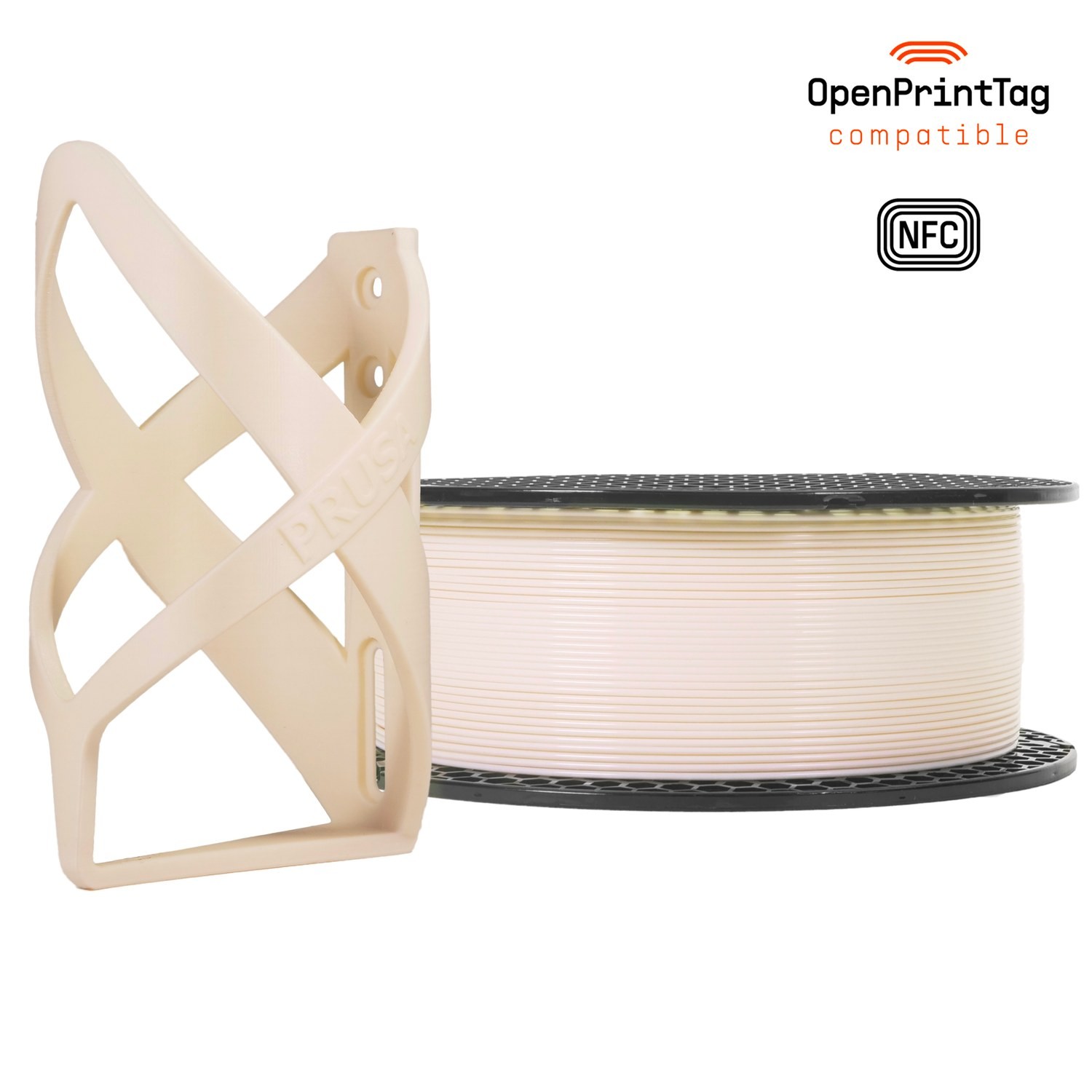
Prusament ASA
Best for: production outdoor parts with paperwork. Prusa’s in-house ASA carries the guaranteed ±0.02mm tolerance and per-spool QR production data of the Prusament line, plus the best dimensional stability we have measured in a styrene: large flat outdoor parts come off the bed true and stay true. For sellable products and fleet parts, the premium pays for itself in rejects you never print.
Price: ~$33/kg (approximate; varies by color, sale period and region, click through for current pricing)
- Nozzle 255 to 265°C, bed 100 to 110°C; ±0.02mm guaranteed
- Per-spool QR production data
- Excellent dimensional stability on large parts
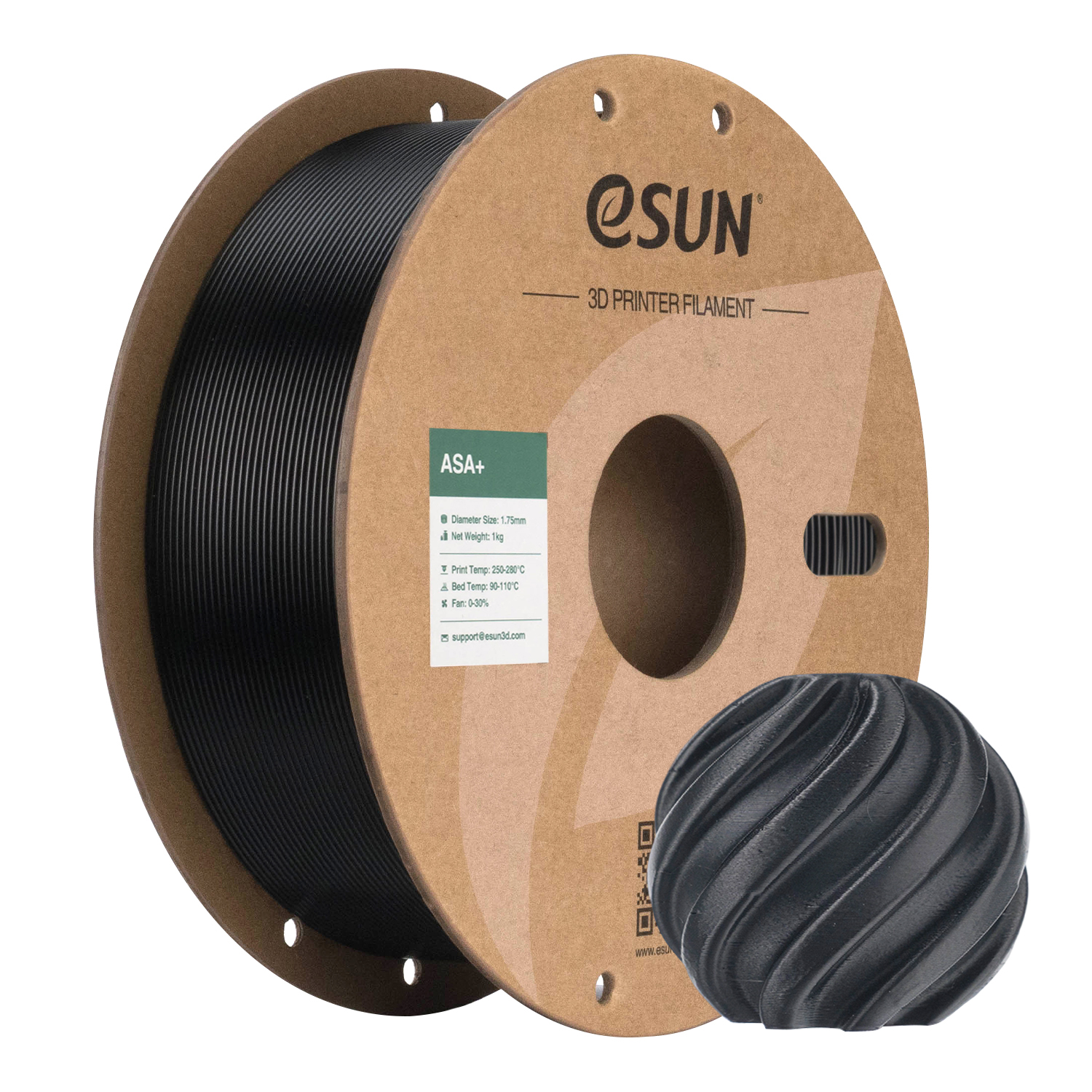
eSUN ASA+
Best for: UV resistance at the lowest entry price. eSUN’s ASA+ is a standard formulation without the warp-control additives of the picks above, so treat it like classic styrene: enclosure, hot bed, brim, patience. Do that and you get genuine ASA weather resistance for under $20, which for fence-line and garden parts in quantity is exactly the right trade.
Price: ~$19/kg (approximate; varies by color, sale period and region, click through for current pricing)
- Nozzle 240 to 260°C, bed 95 to 110°C; enclosure required
- Real UV stability at the category’s lowest price
- Standard shrink: brim + chamber warmth needed
How to choose ABS and ASA
Confirm the printer first. These materials assume an enclosure; chamber-heated machines extend what you can print (tall parts, large flat parts) but a passive enclosure plus a 95°C+ bed covers most work. Open-frame printing of ABS is a coin-flip that usually lands badly; fix the enclosure first via our enclosures guide.
Low-warp formulations are worth their premium for anyone not running a heated chamber: they are the difference between ABS as a specialty material and ABS as a daily driver. With a proper chamber, standard formulations (Hatchbox, Sunlu, eSUN ASA+) close most of the gap and save money.
Ventilate like you mean it. Enclosed printer, ventilated room, ideally filtration; styrene fumes are the one non-negotiable in this category. The safety guide has the full setup.
And if the part does not actually need 95°C or sunlight endurance, PETG delivers most of the toughness with none of the ceremony; the filament guide draws that line clearly.
Frequently asked questions
Should I buy ABS or ASA?
Decide by where the part lives. Indoors or inside machines: ABS, slightly cheaper with identical mechanics. Anywhere with regular sunlight: ASA, because ABS chalks and embrittles under UV within a season or two while ASA holds for years. If you stock only one styrene, make it ASA and stop thinking about it.
Do I really need an enclosure for ABS and ASA?
For anything beyond small, squat parts, yes. These materials shrink as they cool, and an enclosure keeps the air around the print warm enough that it cools evenly instead of curling and cracking. A passive enclosure plus a 95°C+ bed handles most prints; heated chambers extend you to tall and large flat parts.
Why do my ABS prints crack between layers?
The upper layers cooled too fast and contracted against layers below, a vertical version of warping. Raise the ambient temperature (close the enclosure, stop all drafts, warm the chamber if you can), increase nozzle temperature 5 to 10°C for stronger layer bonds, and switch off part cooling entirely for ABS.
Is it safe to print ABS indoors?
In an enclosed printer in a ventilated room, with the printer not in a bedroom or nursery, yes, this is how thousands of workshops run styrene daily. The emissions are real, so treat ventilation as part of the print settings rather than an accessory. Our safety guide covers room setups and filtration in detail.
How does acetone smoothing work?
Acetone vapor melts the outer surface of ABS and ASA prints, fusing the layer lines into a gloss. The hobby method: a sealed container, paper towels damp with acetone on the walls, the print on a riser inside, 15 to 40 minutes of vapor exposure, no heat and no open flames anywhere near it. ASA smooths the same way, slightly slower.
What temperatures do ABS and ASA print at?
Start at 250°C nozzle, 100°C bed, cooling fan off, enclosure closed. Working ranges run roughly 230 to 270°C nozzle and 90 to 110°C bed depending on brand. The chamber matters as much as the nozzle: even 35 to 45°C of trapped ambient warmth transforms reliability.
Is ASA really UV-proof or just UV-resistant?
Resistant, properly so. ASA keeps its color and toughness through years of outdoor exposure where ABS visibly degrades in months, which is why it is the automotive-exterior plastic. Nothing printable is forever-proof: expect slight matte weathering over many years, not failure.
Where to go next
- Best engineering filaments: the full high-performance family around ABS and ASA.
- Best 3D printer enclosures: the prerequisite for everything on this page.
- 3D printing safety guide: ventilation and filtration for styrene printing.
- 3D printer filament guide: every material compared in one place.
- Best PETG filament: the easier tough material when 95°C is overkill.