
3D Printing
News Back to school deals Contact us
Home / Use Cases / Electrically Conductive Polymer Composites for 3D Printing
qidi

Electrically Conductive Polymer Composites for 3D Printing

Last week we took a look at ESD safe materials for 3D printing. These are materials that are safe against electrostatic discharge, and have uses largely in electronics manufacturing.

This article, we will look at polymer composites with lower surface resistivity, in other words, electrically conductive 3D printing feedstocks.

Conductive materials have a surface resistivity of less than 1 x 10 5 Ω/ sq. This is compared to dissivative (ESD) materials which lie in the range of 1 x 10 5 Ω/ sq to 1 x10 11 Ω/ sq.

Conductors allow electricity to flow, and so have a bunch of potential uses, ranging from 3D printed circuits, wearable tech and maybe even one day, conductive substrates for electroplating.

Here are a few options for you, depending on what type of additive manufacturing process you are using.

Extruded Materials

For a while, filaments have been available in conductive form. Similar to ESD materials, conductivity generally tends to be manipulated by addition of some form of carbon to the feedstock during filament manufacture.

There are a lot of smaller companies offering these conductive filaments, yet strangely we don’t see much from the larger companies.

Fans of tougher thermoplastics such as ABS, TPU and PC will be pleased to know there are plenty of options for conductive variants of this polymer. A google search of the term “conductive X filament” (with “X” being your thermoplastic of choice) will yield a fairly huge selection to choose from.

Sintered Materials

Anyone with access to a SLS machine will be pleased to hear that there are options available (and in development) to those who enjoy sintering things.

There is currently research underway into addition of metallic fillers such as copper and aluminium also.

There are a variety of methods involved in manufacturing electrically conductive SLS materials. Many involve the mixing of carbon into the feedstock, while others focus on actually coating the actual particles with a conductive filler, as you can see in the image below.
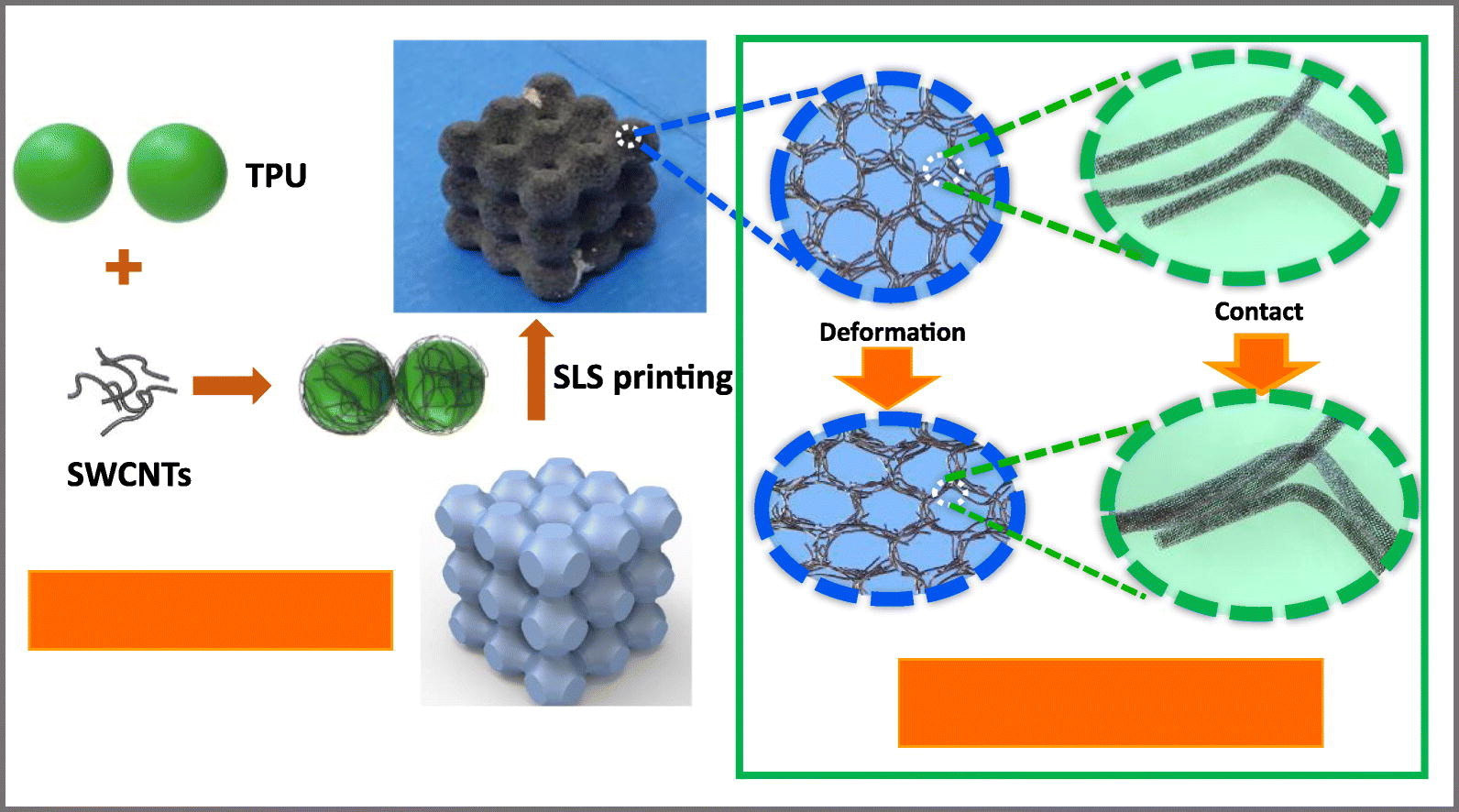
carbon nanotubes powder particles
The graphic above shows the addition of carbon nanotubes to the surface of the powder particles. Image credit: Materials & Design Journal

A lot of research is focused on the shape and size of the additive particles (for example spherical vs. flakes), to determine the optimum parameters for successful bonding and increased electrical conductivity.

Photopolymers

Similar to the ESD materials of last week, the selection of conductive resins is smaller than the extrusion & sintering feedstocks. Last week we pointed out that mixing carbon particles into a resin can result in the contents settling, which can require constant mixing immediately before printing.

This is one possible explanation for the small selection of these resins available.

While there aren’t many options for SLA/DLP printing conductive materials available commercially, conductive resins are being researched by various universities around the world, so there is potential for the market to grow, once manufacturers iron out the creases, whatever they may be.

This team from Yeungnam University, South Korea, for example, has manufactured a Polyacrylate Resin Solution with Polyaniline Nanofiber and Graphene additives, for improved conductivity.

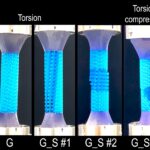
Another team, from Georgia Institute of Technology and Xi’an Jiotong University, has mixed multi-walled carbon nanotubes (MWCT) with resins and demonstrated that they show conductivity. In fact, these research resins have been shown to be very useful indeed, having been shown to be useful for electrically activated shape memory composites.

Electrically activated shape memory polymers
Electrically activated shape memory polymers. Image credit: Georgia Institute of Technology

Final Thoughts

So, those are basically your options where it comes to conductive polymer materials. Most products involve the addition of some form of carbon (typically graphene) to change the surface resistivity, but we are seeing researchers adding metals into SLS feedstocks to enhance conductivity.

Of course, if you want something truly conductive, you will be better off sticking with metal materials. Plastics are great at insulating, and not so bad at ESD protection, but for conductivity, they aren’t so great.

It’s worth remembering that while a conductive polymer may be 10^10 times more conductive than a non-conducting filament, it is still 10^10 times LESS conductive than copper.

So bear that in mind when buying a conductive polymer material, and if in doubt…always read the datasheet.
Related Story
ESD Safe Materials for 3D Printing
thermally conductive polymer materials for 3d printing
Related Story
Thermally Conductive Polymer Materials for 3D Printing
Share:
WhatsApp Twitter Facebook LinkedIn Buffer Reddit E-mail
About the author | Phillip Keane
Phillip is an aerospace engineer from UK. He is a graduate of Coventry University (UK), International Space University (France) and Nanyang Technological University (Singapore), where he studied Advanced Manufacturing at the Singapore Centre for 3D Printing.
Join our newsletter

Our newsletter is free & you can unsubscribe any time.

Latest posts

Kansas State Tests Off-Site 3D-Printed Concrete Storm Shelter Modules

A Kansas State researcher is printing full-size 4-by-4-foot concrete modules off-site, then assembling them as storm-shelter blocks meant to take tornado winds and... read more »

Construction
Reese Greenlee

LLNL Team Prints Ceramic Waveguide Lasers By Direct Ink Writing

A Livermore team 3D-printed an all-ceramic waveguide by extruding ytterbium-doped yttrium aluminum garnet filaments within an undoped garnet matrix and then drying, sintering,... read more »

News
LLNL Team Prints Ceramic Waveguide Lasers By Direct Ink Writing

Heidelberg Team Designs Recyclable Polymer for Light-Based 3D Printing

A Heidelberg University team has designed a light-curable 3D printing polymer that a chemical trigger can take apart at room temperature. Printed parts... read more »

Materials

Best Budget 3D Printers 2026: What $169 to $399 Actually Buys

The best budget 3D printer conversation changed character in the last three years. Auto bed leveling, direct-drive extruders, and 250 to 600 mm/s... read more »

3D Printers

MIT turns pine-cone mechanics into 3D-printable adaptive materials

An MIT team used category theory to break a pine cone's humidity response into independently validated building blocks, mixed some of those blocks... read more »

Materials
MIT turns pine-cone mechanics into 3D-printable adaptive materials

Only 1 in 25 3D Print Buyers Trust AI Generated 3D Models

CGTrader's 2026 market report shows a booming print market, a brutal quality premium, and one number the AI industry will not be quoting:... read more »

News

Tel Aviv Team Creates Bioactive Ink for Precise 3D Printing

Researchers at Tel Aviv University have developed a bioactive 3D-printing ink that pairs high printing precision with enhanced cell adhesion and antibacterial activity.... read more »

Bioprinting
Tel Aviv Team Creates Bioactive Ink for Precise 3D Printing

EPFL 3D-prints tiny drones that fly on sound alone

Engineers in EPFL's MICROBS Lab have 3D-printed hollow cavities that convert sound waves into thrust. The cavities power miniature boats and ultralight drones... read more »

News
EPFL 3D-prints tiny drones that fly on sound alone

3D Printed Coral-Inspired Scaffold Reprograms Immune Cells to Heal Bone Disease

Researchers have developed a 3D-printed scaffold that reprograms immune cells to repair bone damaged by steroid-induced osteonecrosis of the femoral head (SONFH), a... read more »

Medical
3D-Printed Coral-Inspired Scaffold Reprograms Immune Cells to Heal Bone Disease

Social

  • Facebook Facebook 3D Printing
  • Linkedin Linkedin 3D Printing
Join our newsletter

Our newsletter is free & you can unsubscribe any time.

Featured Industries

  • Automotive
  • Aerospace
  • Construction
  • Dental
  • Environmental
  • Electronics
  • Fashion
  • Medical
  • Military
  • Creality Hi Combo

    • - Print size: 260 x 260 x 300 mm
    • - up to 16-color printing
    More details »
    $399.00 Creality
    Buy Now
  • Creality K2 Plus

    • - Print size: 350 x 350 x 350 mm
    • - multi-color printing
    More details »
    $1,199.00 Creality
    Buy Now
  • Qidi Max 4

    • - Print size: 390 x 390 x 340 mm
    • - active cooling air control
    More details »
    $1,219.00 Qidi
    Buy Now
  • Flashforge Adventurer 5M

    • - Print size: 220 x 220 x 220 mm
    • - 600mm/s travel speed
    More details »
    $299.00 Flashforge
    Buy Now
  • Flashforge Guider 3 Ultra

    • - Print size: 330 x 330 x 600 mm
    • - dual extruder system
    More details »
    $2,999.00 Flashforge
    Buy Now
  • Anycubic Photon Mono M7

    • - Print size: 223 x 126 x 230 mm
    • - 10.1 inch 14K screen
    More details »
    $279.00 Anycubic
    Buy Now
  • Snapmaker U1

    • - Print size: 270 x 270 x 270 mm
    • - multi-color printing with SnapSwap
    More details »
    $849.00 Snapmaker
    Buy Now
  • Flashforge AD5X

    • - Print size: 220 x 220 x 220 mm
    • - dual extrusion system
    More details »
    $399.00 Flashforge
    Buy Now
  • Anycubic Kobra S1 Combo

    • - Print size: 250 x 250 x 250 mm
    • - budget multicolor printing
    More details »
    $429.00 Anycubic
    Buy Now
  • Qidi Q2

    • - Print size: 270 x 270 x 256 mm
    • - enclosed heated chamber up to 65°C
    More details »
    $580.00 Qidi
    Buy Now

Company Information

  • What is 3D Printing?
  • Contact us
  • Join our mailing list
  • Advertise with us
  • Media Kit
  • Nederland 3D Printing

Blog

  • Latest News
  • Use Cases
  • Reviews
  • 3D Printers
  • 3D Printing Metal

Featured Reviews

  • Anycubic Photon Mono M5s
  • Creality Ender 5 S1
  • The Mole 3D Scanner
  • Flashforge Creator 3 Pro

Featured Industries

  • Automotive
  • Aerospace
  • Construction
  • Dental
  • Environmental
  • Electronics
  • Medical
  • Military
  • Fashion
  • Art
2026 — Strikwerda en Dehue
  • Home
  • Join our mailing list
  • Contact us
Blog
  • Latest News
  • Use Cases
  • Reviews
  • 3D Printers
  • 3D Printing Metal
Featured Industries
  • Automotive
  • Aerospace
  • Construction
  • Dental
  • Environmental
  • Electronics
  • Medical
  • Military
  • Fashion
  • Art
Company Information
  • What is 3D Printing?
  • Contact us
  • Join our mailing list
  • Advertise with us
  • Media Kit
  • Nederland 3D Printing