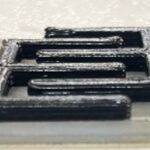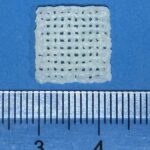

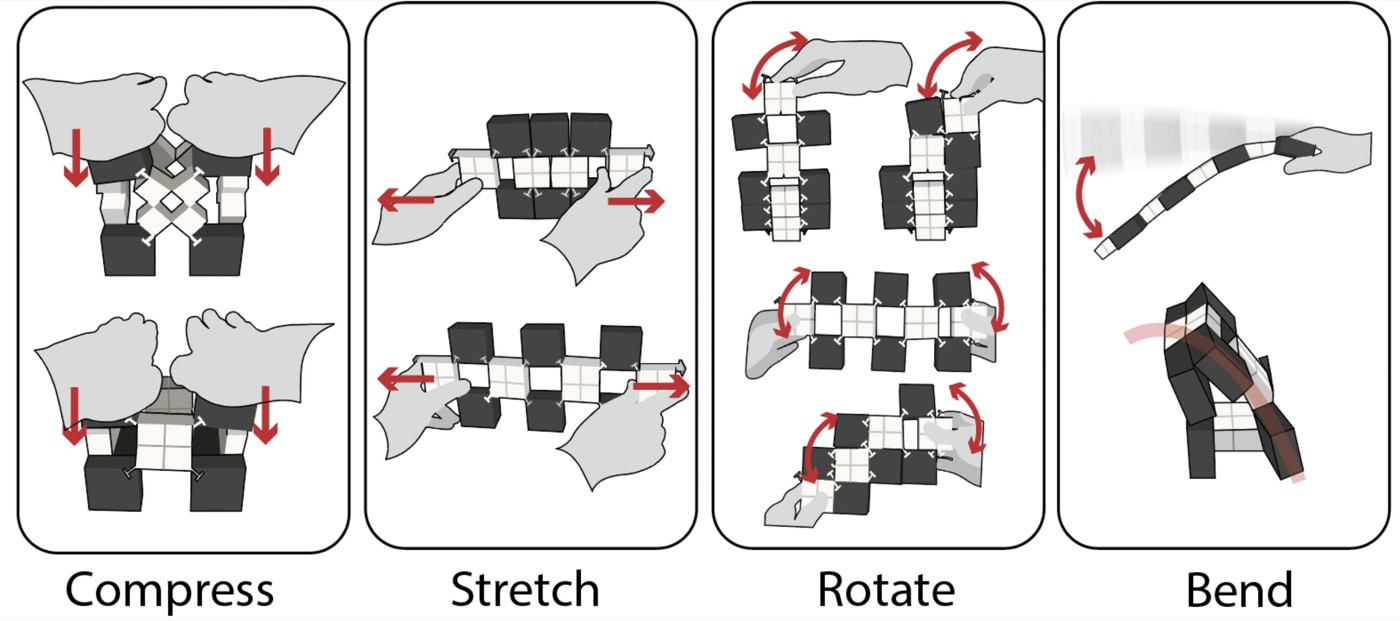
MIT researchers have 3D printed a set of modular building blocks that stay electrically connected no matter how you compress, stretch, rotate, or bend them. The units, called Bifur-circuits, let a structure sense which shape it has taken, without a tangle of external wires.
The team sees the blocks as a faster way to prototype interactive hardware: assistive furniture that changes as someone recovers from an injury, robotic grippers that reconfigure for different objects, or antennas that shift geometry to retune their frequency. In one demo, a chair folds into a table with storage, then flattens for stowing, and the assembly reports its configuration to an electronic display.
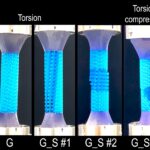
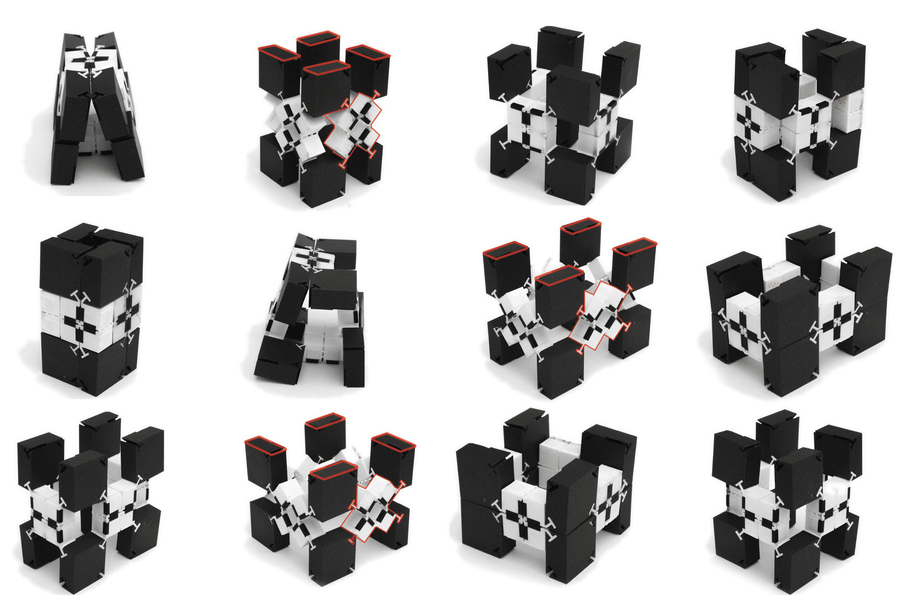
Bifur-circuits are a mechanical metamaterial, a repeating 3D geometry that bends or twists in a programmed way when you push or pull it. The MIT group previously used auxetic metamaterials, which get wider when stretched, to build [shape-changing antennas](https://news.mit.edu/2025/shape-changing-antenna-more-versatile-sensing-and-communication-0818) with three fixed states. The new blocks go further. Connecting and rotating units around a pivot triggers mechanical bifurcation, a sudden change in behavior once a force passes a tipping point, which produces many more stable shapes than a single auxetic cell.
“Metamaterials can make complex mechanical assemblies easy to manufacture just by using repeating units. Our work expands on this design space,” said Marwa AlAlawi, a mechanical engineering graduate student and lead author. “If we think of mechanical metamaterials as building blocks, then our work is one way to take advantage of their geometry to embed intrinsic intelligence into hardware.”
Each assembly is made from two printed parts: auxetic metamaterial units and connector blocks. Both are internally routed with conductive traces. Snap them together and a unique circuit forms between neighbors, so the structure can tell which configuration it is in. That sensing held up after more than 10,000 compressions, with no drop in electrical connectivity.
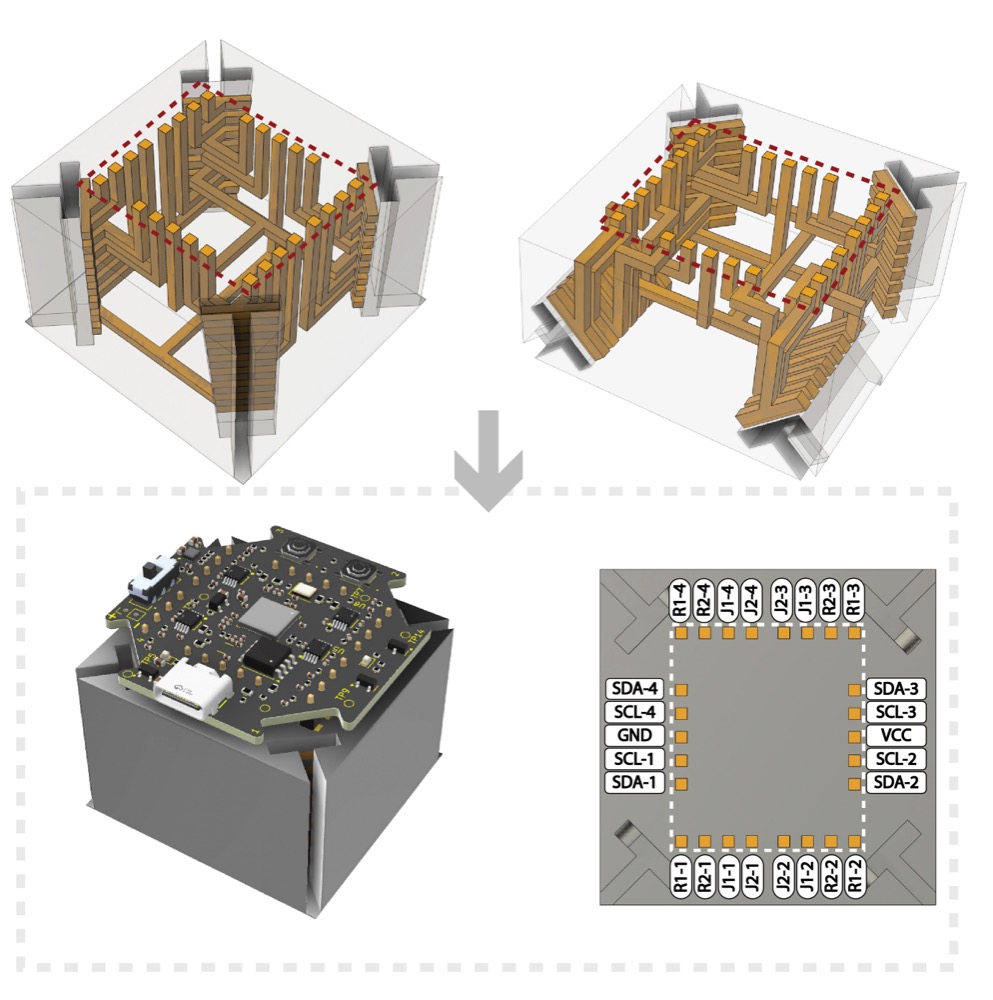
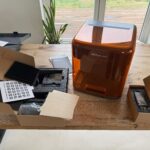
The fabrication pipeline is multimaterial FDM. Metamaterial units print in non-conductive Sainsmart TPU 95A with Filaflex 92A traces; connectors use rigid PLA for the body and the same conductive TPU for the circuits. A Fusion 360 plugin generates printer-ready geometry, and a companion simulation tool maps the physical assembly so users can assign interactions to each saved shape.
Besides the furniture piece, the researchers printed a shape-shifting game controller that launches a different title depending on whether it is a steering wheel, a sponge-like block, or a pump. Other proposed uses include modular soft-robot grippers, reconfigurable shelters, and interactive rehab tools.
AlAlawi wrote the paper with co-senior authors Ticha Sethapakdi, an EECS graduate student, and Stefanie Mueller, an associate professor in EECS and Mechanical Engineering who leads the Human-Computer Interaction Group at CSAIL. Collaborators include researchers at MIT, the University of Tokyo, and the University of Michigan. The work will be presented at the ACM Symposium on User Interface Software and Technology.
Source: news.mit.edu