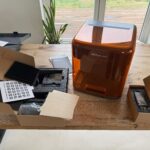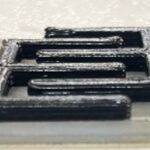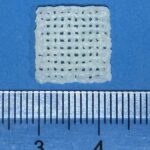

Queen’s University Belfast pharmacy researchers have 3D-printed a dissolving microneedle patch that carries two skin-cancer drugs in the resin itself, in a single print step. The needles are meant to pass the outer skin without drawing blood and then dissolve, delivering curcumin and 5-fluorouracil at the treatment site.
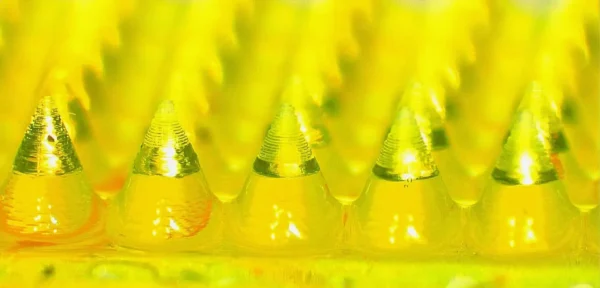
That is different from coating drugs onto needles that are already made. Blending both compounds into a printable resin before the patch is built is intended to raise drug load, improve penetration, and allow a two-stage release the team says can be tuned per patient. The work comes from Rutuja N. Meshram, a final-year PhD student, and Dimitrios A. Lamprou, Chair of Biofabrication and Advanced Manufacturing in the School of Pharmacy.
“Minimally invasive microneedle systems that dissolve after application could provide a more patient-friendly, simpler and less painful way to deliver cancer medicines. Because the microneedles dissolve after use, they may also help reduce the risk of needle-stick injuries and decrease medical sharps waste,” Lamprou said.
The study was published 24 August 2026 in Advanced Healthcare Materials. Support came from the Joint Commissioner, Education Branch, Social Welfare in Maharashtra, India.
Source: qub.ac.uk